
The Official Lie: The SpaceX IPO as a Triumph of Free-Market Innovation
Let’s talk about the headlines, shall we? You’ve seen them. The financial news outlets, breathless with excitement, are reporting that SpaceX is on track for a massive Initial Public Offering in 2026, targeting a raise far above $30 billion, all while boasting an $800 billion valuation. They’re telling you this is the pinnacle of American ingenuity, the ultimate realization of a singular visionary’s dream to colonize Mars and connect the world via satellite internet, and that this IPO is your golden ticket to participate in the future of humanity. They’re whispering sweet nothings about how the company’s value, which has already soared to levels that defy traditional metrics for a private entity, is fueled by not just the Starlink satellite network and the reusable Starship rocket, but also by some ‘underrated AI business’ that Elon Musk himself suggests is a significant driver of this near-trillion-dollar valuation, creating a perfect storm of FOMO that makes every pension fund manager and retail investor salivate at the thought of getting in on the ground floor.
This narrative, designed to create a frenzy of demand for the stock, completely ignores the historical context of how a company like this actually operates, painting a picture of pure entrepreneurial genius that simply doesn’t hold up under scrutiny. They want you to believe that a company built on massive government subsidies and taxpayer money is somehow a free-market success story that you, the small investor, should rush to support with your hard-earned savings, just because it has a shiny rocket and a charismatic leader who promises the moon. The media acts as a public relations arm for these financial maneuvers, ensuring the narrative is clean, inspiring, and completely divorced from the messy reality of corporate welfare and market manipulation, positioning this impending IPO not as a desperate cash-out for insiders, but as a celebratory event for all mankind.
The Unvarnished Truth: A Government-Funded Exit Strategy for Insiders
Let’s pull back the curtain and look at what’s actually happening here because the reality is far more cynical than the space-age fantasy presented in the press releases. This isn’t a story about innovation; it’s a story about financial engineering and a very sophisticated form of public-private partnership where the public takes all the risk and the private investors take all the profit. SpaceX’s valuation isn’t $800 billion because it’s generating $800 billion worth of actual, stable, predictable income from commercial customers; it’s $800 billion because it’s a government contractor with a near-monopoly on high-value, high-risk contracts from NASA and the Department of Defense, a fact conveniently glossed over when they talk about a ‘visionary’ leading the charge. The vast majority of SpaceX’s early funding, and a significant portion of its current revenue streams, come directly from taxpayer dollars, meaning you already paid for this company, and now they want you to pay again by buying into the IPO.
The 2026 timeline for the IPO isn’t an arbitrary date; it’s likely a calculated decision based on a few key factors that have everything to do with maximizing insider returns and nothing to do with market readiness. First, it gives them time to finish rolling out enough Starlink satellites to present a stable, recurring revenue stream narrative, even if that revenue stream is still dependent on government contracts and highly competitive international markets. Second, it allows them to time the IPO to coincide with a projected bull market cycle, ensuring the valuation is as inflated as possible when they finally go public, which means they can sell their shares for maximum profit. This isn’t about raising capital to innovate; it’s about providing liquidity for venture capitalists and early employees who are ready to cash out their high-risk bets from years ago.
The AI Smokescreen: Attaching Buzzwords to Inflate Value
And then there’s the AI angle. Musk suggesting that an ‘underrated AI business’ could be a big driver of SpaceX’s valuation is classic market manipulation. It’s a buzzword strategy. The financial markets are currently obsessed with AI; anything with the letters A and I attached to it gets a premium valuation, regardless of whether that AI generates profit or merely supports operations. By explicitly linking SpaceX’s valuation to AI, Musk isn’t telling you about a revolutionary new product; he’s telling you a story designed to trigger algorithms and pump up the perceived value of the company to new highs. The idea that a private company built on rocketry and satellite communications has a secret AI business that’s worth hundreds of billions of dollars, more valuable than some established tech giants, is a pendejada of the highest order, but it’s a pendejada that works on a naive public hungry for the next big thing. It’s financial theater designed to create FOMO in every investor who missed out on Nvidia, convincing them that this is the next high-growth stock they simply can’t afford to ignore, when in reality it’s just another layer of high-risk speculation being dressed up as a sure thing.
The truth is, all of these ‘visionary’ companies eventually go public, and when they do, they follow the exact same script. The insiders, the VCs who took the initial risk, get to sell their shares at an enormous profit to the general public, who are buying in at the peak of the hype cycle. The public, driven by emotion and fear of missing out, buys shares at a valuation that is simply unsustainable, leading inevitably to a market correction where the small investors lose everything while the original backers walk away with billions. This IPO isn’t a celebration of a new era; it’s a transfer of wealth from the uninitiated public to a handful of financial elites who have perfected the art of leveraging government contracts and media hype to enrich themselves. It’s a high-stakes shell game, and you are being set up to be the mark in this elaborate financial spectacle, left holding the bag when the bubble finally bubble bursts, which it inevitably will. The whole thing stinks of a pump-and-dump scheme on a galactic scale we haven’t seen since the dot-com bubble burst, where a compelling narrative about the future masks the underlying financial risks that makes it a house of cards.
The Retail Investor Trap: The Unavoidable Correction
Don’t be fooled by the $800 billion valuation, or the $30 billion raise, or the promise of AI-driven success. The real story here is about risk transfer. SpaceX has managed to secure government backing for high-cost, high-risk endeavors like Starship development, effectively socializing the risk while privatizing the potential rewards. When the company goes public, this risk will be transferred directly to the retail investor, who will be buying shares at a valuation that assumes perfect execution of Starship development, continued government contracts, and complete domination of a highly competitive satellite internet market. The potential for failure in any of these areas, which is significant given the technical complexity of spaceflight, is completely overlooked in the media hype leading up to the IPO. When the inevitable problems arise—delays in Starship, competition from Amazon’s Kuiper, or changes in government contracting priorities—the retail investors will be the first ones to suffer the losses.
This entire process, from the initial government subsidies to the hype-fueled IPO, is a perfect illustration of how the financial establishment works, using charismatic figures and high-tech narratives to mask a fundamentally extractive process. They’re selling you a dream, but you’re buying a nightmare, where the only thing guaranteed is that the people at the top will make out like bandits while everyone else gets left behind in the dust. The ‘Angry Rebel’ persona isn’t just about being contrary; it’s about seeing through the carefully constructed narratives and understanding that these large-scale financial maneuvers are rarely about genuine innovation and almost always about transferring risk from the wealthy to the unsuspecting public. The 2026 IPO isn’t a new beginning for SpaceX; it’s the final act of a complex financial operation designed to extract maximum value for a select few before the underlying challenges catch up with the valuation, making the entire thing a highly profitable, carefully orchestrated exit strategy that leaves the average investor holding nothing more than an empty bag full of broken promises.
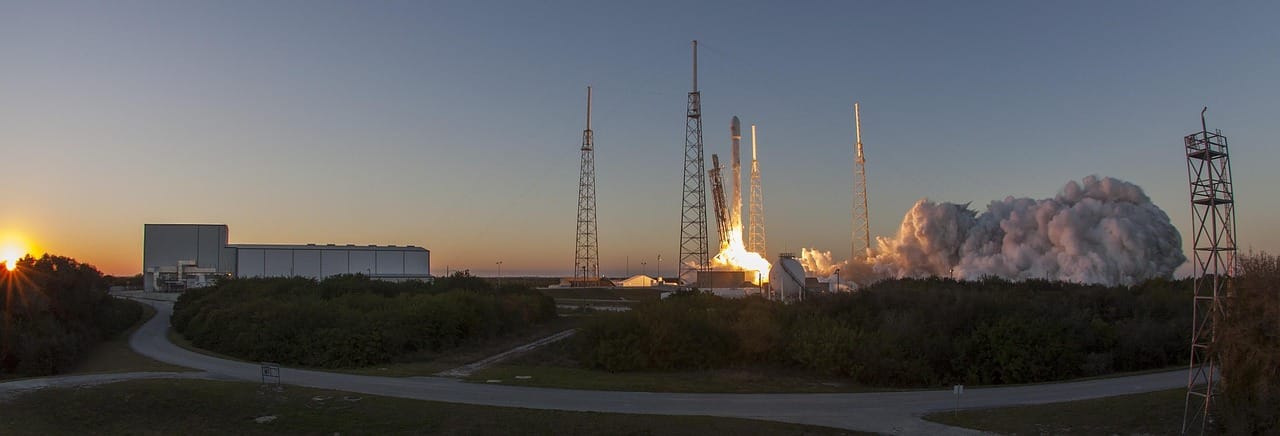
Cover photo by viktorleon960 on Pixabay.