
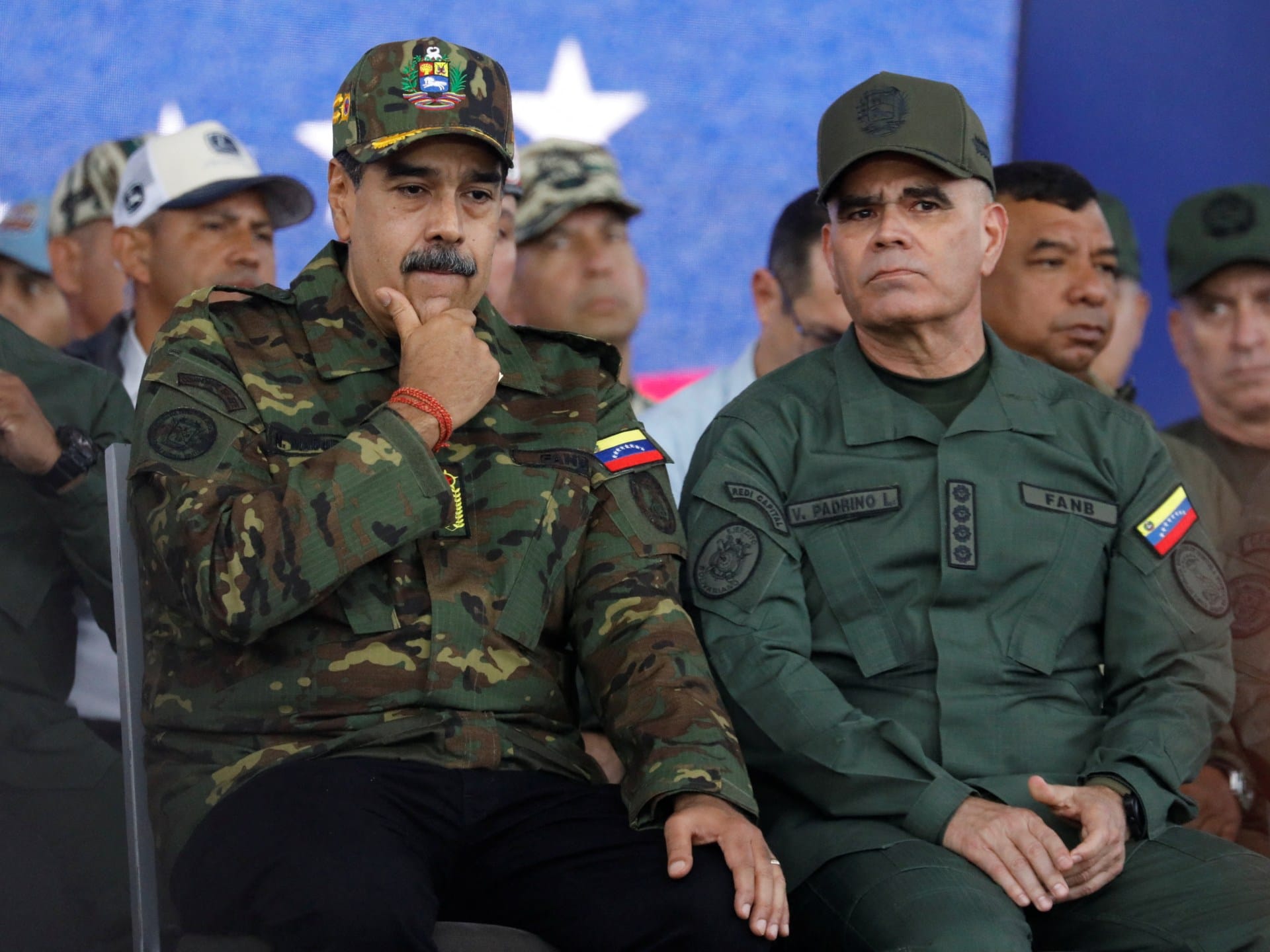
Maduro’s Wild Ride: A Defiant Strongman, Washington’s Fading Threats, and the Pandora’s Box of Intervention
Let’s get real for a minute. The whole world has been watching this telenovela unfold in Venezuela for years now, and if you thought this was just about oil or a simple political power struggle, you haven’t been paying attention. It’s a high-stakes game of chicken between Nicolás Maduro and the United States, and right now, the guy in Caracas is winning the long game by doing absolutely nothing. He’s shaken, sure, but he’s standing there with a defiant grin while Washington scrambles for a plan B that isn’t completely insane.
The entire narrative from US policymakers was simple: ratchet up the sanctions, back a hand-picked opposition leader—Juan Guaidó, remember him?—and watch the whole regime collapse like a house of cards. Well, that house of cards turned out to be made of concrete reinforced with geopolitical self-interest from Russia and China, and Maduro, the former bus driver, has proven to be a surprisingly durable survivor. He has effectively navigated the international pressure campaign designed to depose him, all while his country slides into economic oblivion, creating a humanitarian crisis on a scale that should have triggered a much stronger response, yet here we are still debating whether or not to actually pull the trigger on something serious.
The Wait-and-See Strategy: Outlasting the White House
Maduro’s brilliant (or terrifyingly opportunistic, depending on your view) strategy has always been to wait out the opposition. The man has patience, perhaps because he truly believes in the ‘Bolivarian Revolution’ or perhaps because he just knows that the US political attention span for a faraway crisis fades faster than a cheap suit in the sun. He correctly calculated that US policy towards Venezuela, especially under certain administrations, would be highly personalized and thus subject to change with a new election cycle. He gambled that he could survive the sanctions long enough for the US focus to shift to something else, like another election cycle or a new global hotspot, and so far, he’s been right. This is a guy who has survived multiple coup attempts, assassination attempts, and a collapsing economy, all while maintaining the loyalty of key military figures in the Venezuelan armed forces. He’s not going anywhere easily.
But let’s not pretend this is a victory for the people. While Maduro sits tight, the humanitarian disaster deepens. People are starving. The country’s infrastructure is crumbling. The exodus of millions of Venezuelans into neighboring countries like Colombia and Peru has destabilized an entire region. This isn’t just a political crisis; it’s a human catastrophe that the international community, including the US, has utterly failed to mitigate. The sanctions, while aimed at squeezing the regime, have absolutely decimated the general populace, leading to a situation where the cure might be worse than the disease. So, a new question arises: what do you do when sanctions fail, and the strongman simply refuses to fold?
Pandora’s Box: The US Intervention Dilemma
This brings us to the real elephant in the room: military intervention. This isn’t some abstract possibility; it’s a talking point that pops up every time frustration in Washington reaches a boiling point. The input data itself warns about opening ‘Pandora’s box’ if the US attacks Venezuela. Experts are shouting from the rooftops that a US strike on Venezuela would likely trigger instability rather than a peaceful transition, and frankly, history backs them up completely. Look at Iraq. Look at Libya. The idea that a quick, surgical strike would magically install a democratic government is naïve at best and dangerously delusional at worst. Are we really going to try the same old tricks again, expecting a different result?
The risks are absolutely through the roof. First, there’s the military aspect. Maduro has support from Russia and China, both of whom have significant investments in the country and would view a US intervention as a direct challenge to their influence. We’re talking about a potential proxy war right in America’s backyard. Second, there’s the instability factor. If Maduro is removed by force, who takes control? The opposition is fractured, and the military is highly factionalized. A power vacuum could lead to a full-blown civil war, where various factions fight for control over a nation already on its knees. We’ve seen this movie before, and it ends with massive casualties, increased regional instability, and a long-term US military occupation.
The Geopolitical Tug-of-War: China, Russia, and Cuba
It’s time to face facts: Venezuela isn’t just a Latin American issue; it’s a geopolitical battleground. China has poured billions into Venezuela’s oil industry, effectively buying influence and assets in exchange for loans. Russia has a naval presence in the region and views Venezuela as a vital strategic partner, a thorn in America’s side, and a way to project power globally. And let’s not forget Cuba, which has close ties with the Maduro regime, providing intelligence and security support in exchange for cheap oil. These aren’t just minor players; they are major world powers with significant interests at stake. A US attack would not just be against Maduro; it would be a direct confrontation with these global players, and that’s a dangerous game for a regional conflict to spiral into.
The sanctions strategy, while failing to topple Maduro, actually drove Venezuela further into the arms of these international adversaries. When the US and Europe stopped buying Venezuelan oil, China and Russia stepped in to fill the gap, providing a financial lifeline that kept the regime afloat. The US tried to isolate Maduro, but in doing so, created a deeper dependency on powers that are directly hostile to American interests. The entire strategy has backfired spectacularly, leaving Washington with few good options left, and every one of them carries a significant risk of escalation. It really makes you wonder if anyone in Washington understands cause and effect. Are they really this clueless?
A Look at the Future: What Happens When the Smoke Clears?
Let’s play out the scenarios. Scenario one: Maduro continues to survive. The sanctions continue to punish the Venezuelan people, but the regime adapts. The economy stabilizes at a lower, more sustainable level, relying on its international allies and bypassing US financial systems. The US eventually gives up, lifting sanctions in exchange for minor concessions, and Maduro declares victory. This seems increasingly likely, especially if global attention remains focused on other conflicts. The problem with this scenario is that the Venezuelan people continue to suffer under authoritarian rule, and the region remains unstable. The US, having failed to achieve its goals, looks weak on the international stage.
Scenario two: A military intervention. This is the big risk. As mentioned, a US strike would likely create more problems than it solves. The resulting instability could lead to a humanitarian crisis exponentially worse than the current one, creating millions more refugees and turning Venezuela into a failed state. The US would be forced to occupy the country for years, draining resources and attention away from other global priorities. The international community, already wary of US interventionism, would condemn the action, further eroding American credibility. The experts warning about Pandora’s Box aren’t just being dramatic; they’re looking at the historical data.
The Takeaway: A Shaking But Standing Regime
Maduro’s loyalty to the ‘Venezuelan people,’ as he claims, is highly debatable. His actions have led to widespread suffering. However, his ability to outmaneuver US pressure and survive in power is undeniable. The core issue remains: US policymakers underestimated Maduro’s resilience and overestimated the power of sanctions and a fractured opposition. The result is a stalemate where the only losers are the citizens of Venezuela. The ‘wait out Trump’ strategy proved effective, but it leaves us with a critical question: what does the future hold for a country teetering on the edge, especially as the threat of intervention continues to hang in the air? The options are grim, and none of them point to a peaceful resolution anytime soon. The US needs to rethink its entire approach to this region, because clearly, what they’ve been doing isn’t just failing; it’s actively making things worse problems worse.
Photo by Ernest_Roy on Pixabay.