
The Anatomy of a Perfectly Modern Failure
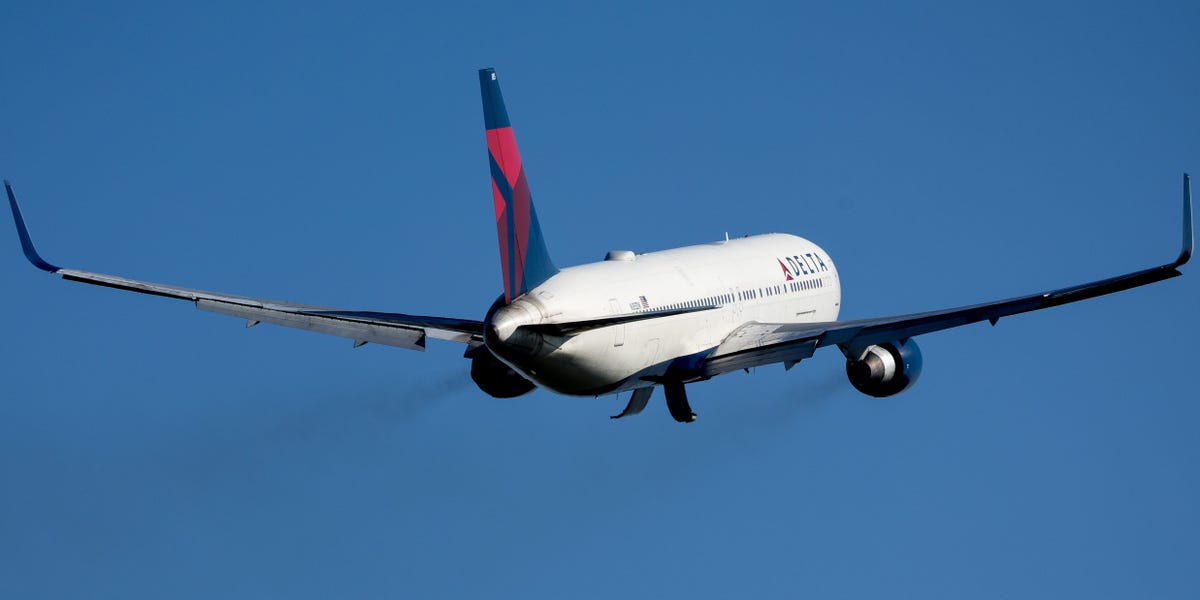
Let us dissect the event with the cold precision it deserves. A Delta flight, a tube of aluminum and composites carrying hundreds of human beings, travels over three thousand miles across the vast, unforgiving expanse of the North Atlantic Ocean. It is a miracle of 21st-century engineering, a testament to humanity’s mastery over physics. And upon arriving at its destination, Edinburgh, it is met not with a runway, but with a digital shrug. The airport, a critical node in the global transportation network, has ceased to function. It has been felled by an “IT issue.” That sterile, infuriatingly vague term is the corporate lexicon’s equivalent of a magician’s puff of smoke, a phrase designed to obscure, not illuminate. But what it really means is that the entire, complex, kinetic ballet of air travel ground to a screeching halt because a computer, somewhere in a basement, decided to throw a tantrum. The plane, full of tired and confused passengers who had just spent hours suspended over an icy ocean, was forced to circle for twenty minutes—a holding pattern of pure absurdity—before finally giving up and diverting to Dublin. To Ireland. A different country.
Think about that. You fly all the way to Scotland, you can probably see the rain-slicked runway from your window, but you have to land in Ireland. Because of a computer glitch.
The Lie of the “IT Issue”
And we are expected to simply accept this. To nod along and say, “Oh, technology, it’s so complicated.” But this is not an acceptable answer. Because this isn’t about one airport on one bad day. This is a symptom of a deep and pervasive sickness infecting the very skeleton of our civilization. The “IT issue” is the catch-all excuse for a generation of deferred maintenance, of cost-cutting disguised as efficiency, of building dazzlingly complex systems on foundations of digital sand. They have constructed a global house of cards and are now shocked when a stiff breeze blows through the server room. This is not a bug; it is a feature. A feature of a system that has relentlessly prioritized short-term profit and sleek user interfaces over the boring, unsexy, and expensive work of building robust, resilient, and redundant infrastructure.
So let’s deconstruct this “issue.” Was it a server failure? A database corruption? A botched software update pushed to production without proper testing because the quarterly budget for the QA department was slashed? Or was it something more sinister? We live in an age of persistent, low-grade cyber warfare. Is it not plausible that a hostile actor, seeking to test the fragility of Western infrastructure, decided to poke a major European airport to see what would happen? But the authorities will never tell us that. No. It is always just an “IT issue.” It is a phrase that infantilizes the public, treating us like children who cannot possibly comprehend the complexities of the modern world. The truth is, they don’t want us to comprehend it. Because if we did, we would be furious. We would demand accountability. We would demand to know who signed off on a system with a single point of failure so critical that it could paralyze an entire international hub.
A Brittle Empire of Code
Because the core of the problem is a fundamental misunderstanding of risk that has taken hold in every boardroom and government office. They have embraced a philosophy of radical efficiency, stripping away every ounce of perceived fat from the system. Redundancy—the practice of having backup systems for your backup systems—is now seen as wasteful. Why pay for two power supplies when one will *probably* do? Why keep a team of experienced, in-house engineers on the payroll when you can outsource the whole mess to the lowest bidder in a different time zone? This logic, applied over decades, has hollowed out our institutions from the inside. We are left with a brittle facade, a glittering technological empire built on neglected legacy code and managed by contractors who have no long-term stake in its stability. They are not building cathedrals; they are playing Jenga with critical infrastructure.
And the flight to Edinburgh is the perfect, tragicomic metaphor for this state of affairs. All that power, all that speed, all that technological prowess, rendered completely impotent by a failure in the last mile. We can launch telescopes that see to the edge of time and build particle accelerators that unlock the secrets of the universe, but we apparently cannot guarantee that the air traffic control system at a G7 nation’s airport will remain online. This is beyond parody. It is a damning indictment of our priorities. The systems we rely on for our very lives—for travel, for finance, for healthcare, for energy—are a tangled mess of interconnected dependencies, a Rube Goldberg machine of such complexity that no single person truly understands how it all works anymore. So when it breaks, the response is not a swift, confident repair. It is a panicked scramble. A frantic search for the one person who still remembers how the old mainframe communicates with the new cloud server. Sometimes, they can’t find that person. And an airport shuts down.
The Human Debris of System Failure
And let us not forget the actual people caught in this digital crossfire. The passengers on that Delta flight are not just data points in a story about systemic risk. They are people who had plans. People meeting family, attending funerals, starting new jobs, going on long-awaited holidays. Their lives were thrown into chaos, not by an act of God or a freak weather event, but by sheer, unadulterated incompetence. They are the collateral damage of a thousand tiny, greedy decisions made in boardrooms years ago. They are the human cost of a line item in a budget that was deemed too high. Their trust in the system—the implicit promise that when you buy a plane ticket, you will arrive at your destination—has been broken. And that trust, once eroded, is incredibly difficult to rebuild.
But the problem is, we are becoming accustomed to this. We are being conditioned to accept failure as the new normal. Flight cancelled? IT issue. Bank website down? Unprecedented traffic. Power grid fails? A squirrel chewed a wire. These excuses are becoming a form of background noise, the static of a declining civilization. We sigh, we rebook, we complain on social media, and we move on. We have been trained to have low expectations. This is perhaps the most dangerous part of it all. Our outrage is being sedated by the sheer frequency of the failures. The boiling frog does not realize its predicament until it is too late.
The Inevitable Cascade
So what comes next? It will get worse. This is not a prediction; it is an observation of a clear and present trajectory. Because the same flawed logic that governs the Edinburgh airport’s IT department also governs our power grids, our financial markets, our hospital networks, and our water supply systems. Each is a patchwork of aging hardware and hastily written software, of proprietary systems that don’t talk to each other, all held together with digital duct tape and a prayer. The next failure may not be as benign as a diverted flight. What happens when the “IT issue” is in the system that manages a nation’s electrical grid on the coldest day of the year? What happens when it’s in the software that runs the stock market, and it wipes out trillions in value before anyone can pull the plug? What happens when it’s in a hospital’s patient record system during a major public health crisis?
We have seen the previews. We have had the warnings. Every grounded flight, every data breach, every unexplained outage is a small tremor before the earthquake. But the people in charge, the so-called leaders and innovators, are too busy chasing the next quarter’s earnings report to care. They have kicked the can of systemic risk so far down the road that they think it has disappeared. But it has not. It is sitting there, waiting, accumulating interest. And one day, there will be no more road. The bill for our decades-long worship at the altar of false efficiency is coming due. The incident at Edinburgh wasn’t a story about a flight. It was a postcard from the future. And it was postmarked “catastrophe.”
