1. The Absurd Theater of a Name
Let’s start with the branding.
They called it “Catahoula Crunch.” Let that sink in. Someone in a sterile government office, likely hundreds of miles from the humid streets of New Orleans, decided on a name that sounds less like a federal law enforcement operation and more like a new flavor of dog food or a monster truck rally. The Catahoula is the state dog of Louisiana, a rugged, determined hunting breed. “Crunch” implies pressure, force, a final, decisive action. The name itself is a piece of carefully crafted propaganda, designed to project an image of localized, tough, and effective enforcement. It’s a marketing slogan for a crackdown. But what does it really tell us? It reveals that this operation is, from its very inception, a performance. It’s a dog and pony show. The objective isn’t just enforcement; the primary objective is to be *seen* enforcing.
Why brand an immigration sweep at all? Do they name FBI gang raids “The Al Capone Takedown”? Does the DEA christen every drug bust with a snappy title for the evening news? Rarely. The branding here is a tell. It signals that the metric for success isn’t necessarily the number of arrests, but the amount of fear and media attention it generates. It’s an exercise in psychological warfare waged not against a cartel, but against laborers, families, and the fabric of a city. The name itself is the first piece of evidence that this entire affair misses the forest for the trees.
2. The Misapplication of a Hammer
Border Patrol. In New Orleans.
Let’s deconstruct the core premise. The U.S. Border Patrol’s primary mission, by its own definition, is to secure the U.S. borders between ports of entry. New Orleans is a major American city located over 100 miles from the Gulf of Mexico and hundreds of miles from the nearest land border. So why is a specialized agency, trained and equipped for tracking in rugged desert and rural terrain, being deployed to climb ladders onto residential rooftops in Kenner? Is this truly the most logical use of this specific federal resource? Or is it a case of having a hammer and seeing every problem as a nail? The agency has been granted sweeping authority to operate within a 100-mile zone of any “external boundary,” a legal gray area that effectively covers two-thirds of the American population. This operation is a stark visualization of that overreach.
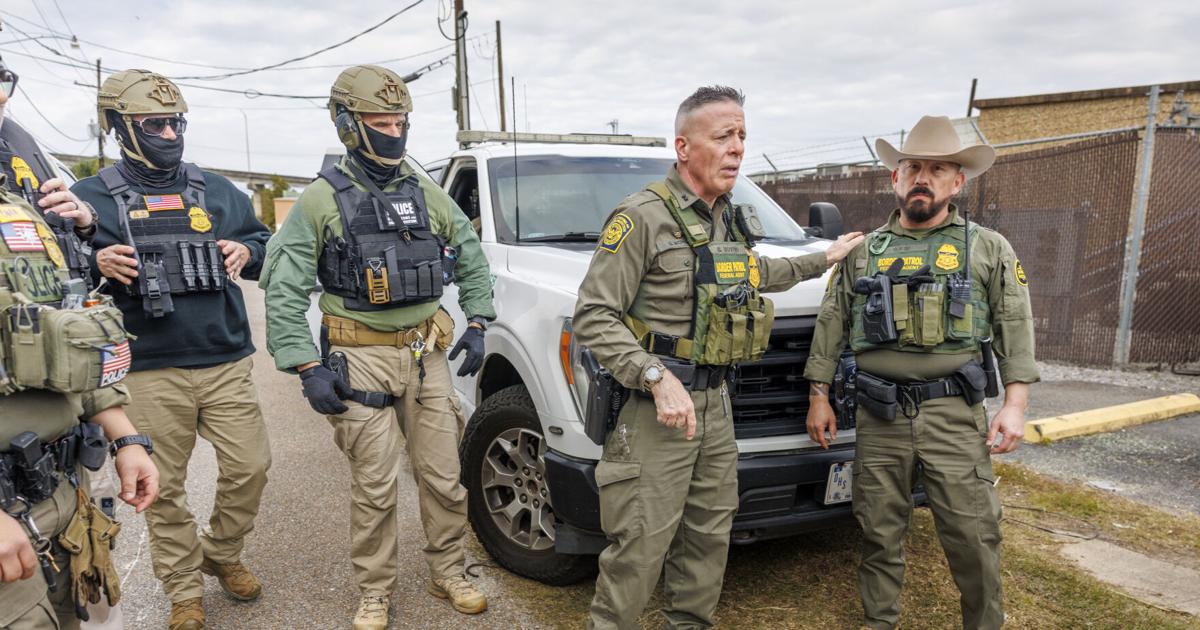
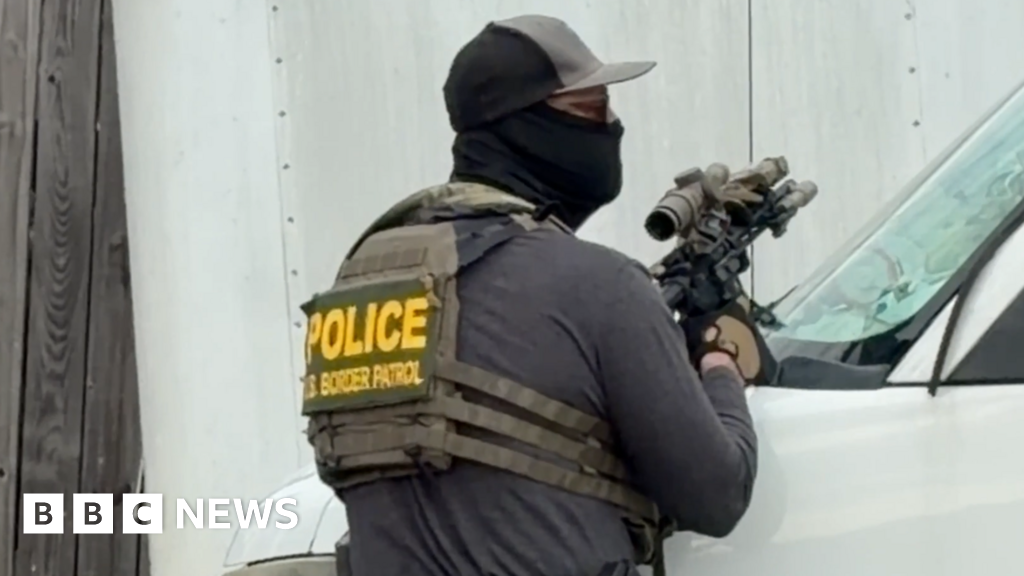
Sending Border Patrol into a dense urban environment is like sending a submarine to patrol a desert. The tools are wrong, the environment is wrong, and the potential for collateral damage is immense. These agents are trained for interdiction, not for nuanced community policing. Their presence, often in tactical gear, immediately escalates any situation from a civil immigration matter to something that looks and feels like a paramilitary occupation. It’s an intimidation tactic, pure and simple, and one that fundamentally misunderstands the city it’s meant to be “securing.”
3. The Chilling Case of the Chased Citizen
Performance becomes pathology.
The story of the 22-year-old American citizen in Marrero is not an outlier; it is the logical conclusion of this strategy. She saw masked men in an unmarked vehicle chasing her. Her instinct was not to stop for law enforcement, but to flee what she perceived as a kidnapping attempt. Can you blame her? This is the direct result of a policy that prioritizes aggressive, intimidating tactics over clear, identifiable policing. When federal agents look and act like a threat to be escaped, they have already failed. The surveillance footage doesn’t show a lawful stop; it shows a pursuit that terrorized an American on her own property.
Her cry of “Leave me alone!” is the cry of an entire community caught in the gears of this machine. This single incident rips the mask off the entire operation. If the goal is to target undocumented immigrants, how do you logically explain chasing down a U.S. citizen with such aggression that she believes she’s about to be abducted? You can’t. The only logical explanation is that the strategy is not precision. It’s chaos. It’s about casting a wide, terrifying net and hoping to catch the “right” people, with zero regard for the citizens, the legal residents, or the basic sense of safety that is supposed to be a hallmark of a free society. The agents didn’t know her status. They just chased. That’s the whole plan.
4. The Economics of Stupidity
Cost versus… what exactly?
Let’s analyze this from a purely logistical and financial perspective, stripping away all emotion. What is the cost of Operation Catahoula Crunch? You have to calculate the salaries of dozens of federal agents, their travel, their accommodations, the fuel for their vehicles, and the administrative and logistical support required to sustain a multi-day operation in a major city. The price tag is easily in the hundreds of thousands, if not millions, of dollars. Now, what is the return on that investment? The arrest of laborers. Roofers. People who form the backbone of the city’s post-disaster reconstruction economy.
Think about the economic impact. New Orleans is a city that has been perpetually rebuilding for nearly two decades. It relies heavily on immigrant labor to do the difficult, often dangerous work that many citizens will not. By rounding up these workers, what has the government achieved? It has slowed down construction, increased labor costs for contractors, and injected instability into a fragile local economy. You are spending millions of taxpayer dollars to deport people who are, ironically, generating economic activity and contributing to the tax base through consumption. It is a spectacular act of economic self-harm. You spend a fortune to remove a person who was working, paying rent, and buying groceries, leaving a hole in both the labor force and the local economy. Where is the logic in that?
5. The Jurisdictional Shell Game
Whose job is this anyway?
The presence of CBP and Border Patrol in New Orleans raises a fundamental question of jurisdiction and purpose. Immigration and Customs Enforcement (ICE) is the agency typically tasked with interior enforcement. So why bring in Border Patrol? The answer, again, seems to be about optics. Border Patrol has a different connotation. They are the “front line,” evoking images of a nation under siege. Deploying them in New Orleans is a deliberate choice to frame the city’s immigration situation not as a domestic policy issue, but as a border crisis that has somehow metastasized 300 miles inland.
This is a dangerous blurring of lines between federal agencies. It creates confusion for the public and for local law enforcement. Who is in charge? What are their rules of engagement? When a citizen is being chased, should they call the local police on the federal agents? This jurisdictional mess isn’t an accident; it feels like a feature. It creates an environment where accountability is diffuse and federal power is absolute. It’s a shell game where the fundamental rights of individuals, citizen and non-citizen alike, can get lost in the shuffle.
6. The Erosion of Public Trust
A long-term liability.
Perhaps the most significant and lasting damage from an operation like this is the catastrophic erosion of public trust. How can any community, particularly immigrant communities, trust law enforcement when they see masked agents chasing their neighbors and family members? This fear doesn’t just affect the undocumented. It spreads to legal residents and citizens of Hispanic descent, who are now more likely to be profiled. The result is predictable. People will stop reporting crimes. Witnesses will refuse to come forward. Victims of domestic violence or wage theft will suffer in silence rather than risk interacting with anyone in a uniform who might be connected to immigration enforcement. They can’t tell the difference between a local cop and a federal agent. Why would they take the chance?
This operation, in its pursuit of a few dozen laborers, has actively made New Orleans a less safe city. It has undermined the work of local police departments that have spent years trying to build bridges with immigrant communities, convincing them that they can report violent crime without fear of deportation. In just a few days, “Catahoula Crunch” has likely undone decades of that work. It is a profoundly short-sighted strategy that trades a handful of symbolic arrests for the long-term safety and cohesion of the community. A terrible bargain.
7. The Inevitable, Predictable Failure
What happens next?
So, after the press releases have been sent, the news cameras have packed up, and the Border Patrol agents have returned to their actual posts, what will have changed in New Orleans? Nothing. Absolutely nothing of substance. The demand for labor that brought immigrants to the city will still exist. The complex economic and social factors that drive migration will remain untouched. The only tangible result will be a traumatized community and a few dozen disrupted lives. The jobs the arrested workers were doing will need to be filled, and others will arrive to fill them, perhaps now forced to work for even lower wages and under more exploitative conditions because they are even more afraid to speak out.
This is the ultimate folly of enforcement-only, spectacle-driven immigration policy. It is a perpetually spinning wheel that accomplishes nothing but its own motion. It doesn’t solve a problem; it just creates headlines. “Catahoula Crunch” is not a solution. It is a symptom of a deeply broken, illogical, and inhumane approach to a complex human issue. It is a noisy, expensive, and ultimately futile gesture, a crunch that signifies nothing.