The Illusion of Control Shatters in Detroit
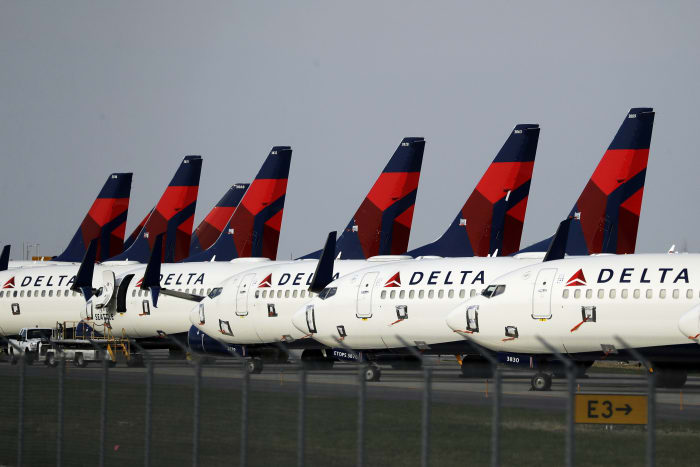
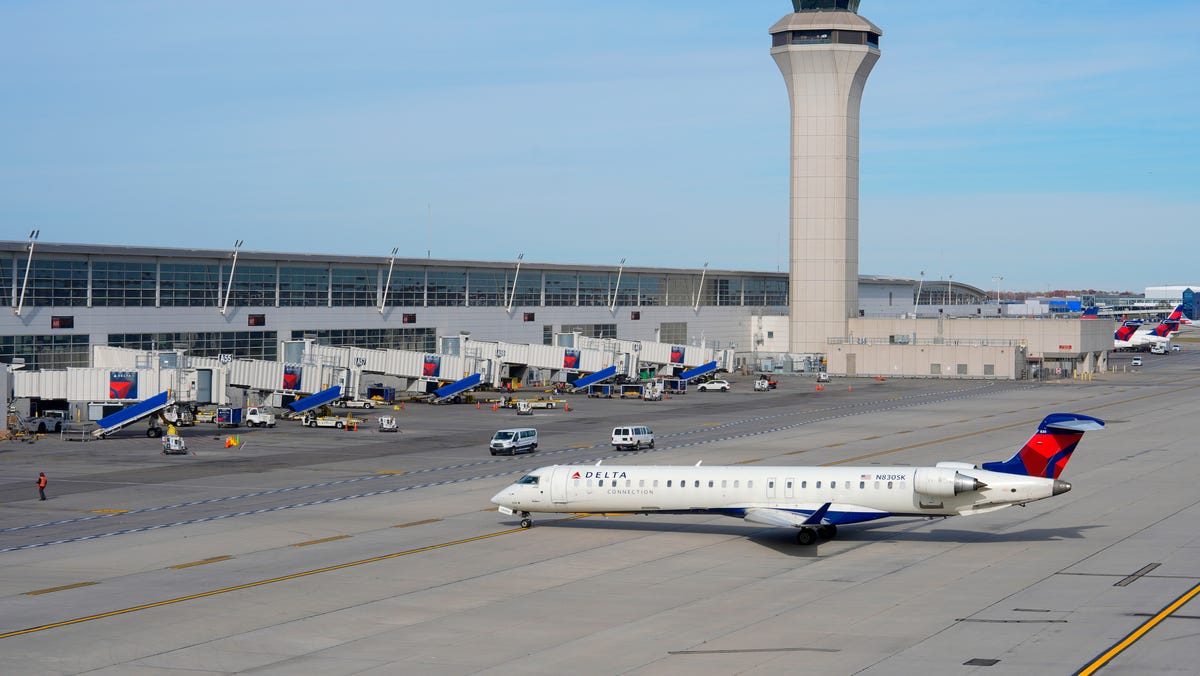
The screens flickered, the notifications stopped, and for a few crucial hours on a Friday morning, the intricate ballet of modern air travel ground to a halt. A ground stop. Specifically, a Delta Air Lines ground stop at one of its most critical nerve centers: Detroit Metro Airport (DTW). The official reason, trickling out through fragmented news reports, was a ‘network outage’ or a ‘possible computer outage.’ These are sterile, corporate-approved terms for what is, in strategic reality, a catastrophic failure of the central nervous system. This was not a broken plane or a weather delay; it was a ghost in the machine bringing a multi-billion dollar operation to its knees, demonstrating with brutal clarity the profound, unacknowledged fragility of the entire system we have come to depend on with such casual indifference.
We must dispense with the notion that this is an isolated incident, a bit of bad luck for Delta on a random Friday. That is a comforting lie. This event is a data point in a terrifying trend line, a symptom of a deep-seated disease within legacy industries that have attempted to bolt a 21st-century digital facade onto a 20th-century operational skeleton without ever fundamentally strengthening the bones. The entire edifice of global aviation, a system of such breathtaking complexity that its daily success feels like a miracle, is built on a patchwork of aging code, siloed systems, and a philosophy of deferred maintenance known in the technology sector as ‘technical debt’. Delta just had a bill come due. In Detroit.
A Timeline of Inevitability: Before the Crash
To understand the gravity of the DTW shutdown, one must look backward. The airline industry, post-deregulation in 1978, has been a brutal arena of consolidation, bankruptcies, and razor-thin margins where every single penny is squeezed from the operation. Capital expenditures on non-customer-facing infrastructure (like the back-end servers, networking hardware, and software that actually run the airline) are consistently the first things to be delayed in favor of new aircraft, flashy ad campaigns, or, more often, lucrative stock buyback programs. This is a decades-long pattern. It is not an accident; it is a choice, a strategic calculation that the risk of a systemic meltdown is lower than the immediate reward of a boosted earnings per share report. For a long time, that bet paid off.
But the cracks have been showing for years. One need only recall Delta’s own global computer crash in August 2016. A power outage at its Atlanta operations center triggered a cascading failure that led to the cancellation of over 2,000 flights over several days, costing the company an estimated $150 million in lost revenue. The post-mortem revealed a stunning lack of redundancy; critical systems lacked the fail-safes that are considered standard practice in any modern tech company (a fact that should be both shocking and deeply concerning). The promises made then—of renewed investment and hardened systems—ring hollow now as we watch the same script play out in Detroit, albeit on a smaller, more localized scale for now. Southwest Airlines offered its own spectacular case study in late 2022, when its ancient crew-scheduling software completely imploded under the stress of a winter storm, stranding millions and triggering a federal investigation. These are not anomalies. They are warnings.
The Hub as a Single Point of Failure
Why Detroit? Why does one airport grinding to a halt matter so much? Because in the modern airline ‘hub-and-spoke’ model, Detroit is not just an airport; it is a critical artery for Delta’s global network. DTW is Delta’s primary gateway to Asia and a major connecting point for traffic across the Midwest and from the East Coast to the West. A failure here does not just mean flights from Detroit are canceled; it means a passenger flying from Boston to Tokyo via Detroit is stranded, a passenger from Seoul to Orlando is stuck, and the aircraft and crews scheduled for those routes are now out of position for their next several assignments, creating a domino effect that can ripple across the entire world for days. This immense, complex, and highly optimized system is also incredibly brittle (a classic engineering trade-off). The efficiency of the hub model is also its greatest vulnerability. When the hub suffers a seizure, the limbs stop working. The outage at DTW wasn’t just a local problem; it was a precision strike, accidental or not, against a key node in a global logistics network.
The reliance on these interconnected digital platforms for everything from flight planning and crew scheduling to ticketing and baggage handling means there is no ‘manual override’ anymore. You cannot simply go back to paper tickets and whiteboards when the network goes down. The entire operation is predicated on the assumption that the network will *always* be there. This is a fool’s assumption, a dangerous fantasy entertained by executives who are often decades removed from the technical realities of their own companies, surrounded by subordinates who are incentivized to tell them that everything is fine. But it is not fine. The complex software suites that run these airlines are often a tangled mess of code from the 70s, 80s, and 90s, merged and acquired and patched together over and over again, creating a Frankenstein’s monster of a system that few, if any, living engineers fully understand. This is the very definition of technical debt: making short-term development choices that have a long-term cost. The cost is now being paid by passengers stuck in a terminal in Detroit.
The Unspoken Question: Outage or Attack?
In the current geopolitical climate, the distinction between a ‘network outage’ and a deliberate cyberattack becomes dangerously blurred. While there is no public evidence to suggest this DTW incident was malicious, we must operate from a position of strategic paranoia. State actors and sophisticated cyber-criminal groups view critical infrastructure like airlines as prime targets. The goal is not always theft; sometimes, it is simply chaos. Disrupting a major airline at a key hub achieves that goal with spectacular efficiency, causing economic damage and eroding public trust in fundamental systems. Is it more likely that this was a case of a server failing or a poorly-written software patch being pushed to production? Yes, statistically. Hanlon’s razor suggests we should not attribute to malice that which is adequately explained by stupidity (or in this case, corporate negligence). But we can no longer afford to dismiss the alternative out of hand.
The very fact that we do not know, and that the initial reports are so vague, is part of the problem. Airlines, like all major corporations, have a powerful incentive to downplay security concerns. Admitting to a breach is a PR and legal nightmare far worse than admitting to aging hardware. The ‘computer outage’ line is a convenient, non-falsifiable explanation that shuts down further inquiry. But what does it really mean? A power failure? A fiber cut? A database corruption? A ransomware attack? A Distributed Denial-of-Service (DDoS) attack? The public is given a child’s explanation for a graduate-level failure, and we are expected to simply accept it. This is unacceptable when the security and functioning of national infrastructure are at stake. Every unexplained outage must now be viewed through a security lens until proven otherwise.
The Long, Cold Winter of Reckoning
What happens next is predictable because it has happened before. Delta will issue an apology. They will offer vouchers and frequent flyer miles as a token gesture. There will be internal reviews and promises of investment to ‘ensure this doesn’t happen again.’ It is a well-rehearsed play. But nothing will fundamentally change until there is a forcing function, either from the market or from regulation. The cost of these outages, when amortized over years of smooth operation, is still calculated by the board of directors as being cheaper than the proactive, multi-billion dollar overhaul required to truly fix the underlying problem. It’s a cold, hard calculation. They are betting that you, the consumer, have a short memory and few other choices. And they are probably right.
The solution is neither simple nor cheap. It involves ripping out the digital guts of the airline and replacing them with modern, resilient, cloud-native architecture—a project so vast and risky it could cripple the airline if it goes wrong. It requires a cultural shift away from short-term shareholder value and toward long-term operational stability. It may even require government intervention, classifying airline IT networks as critical national infrastructure subject to federal oversight and mandated standards of resilience, much like the power grid or the banking system. Because that is what they are. This ground stop in Detroit was not just an inconvenience for travelers. It was a tremor. It was the system screaming under the strain of decades of neglect, a warning that the big one—a nationwide, multi-airline shutdown lasting for days—is not a matter of if, but when. And we are utterly unprepared for it.