
Let’s Dissect The Absurdity, Shall We?
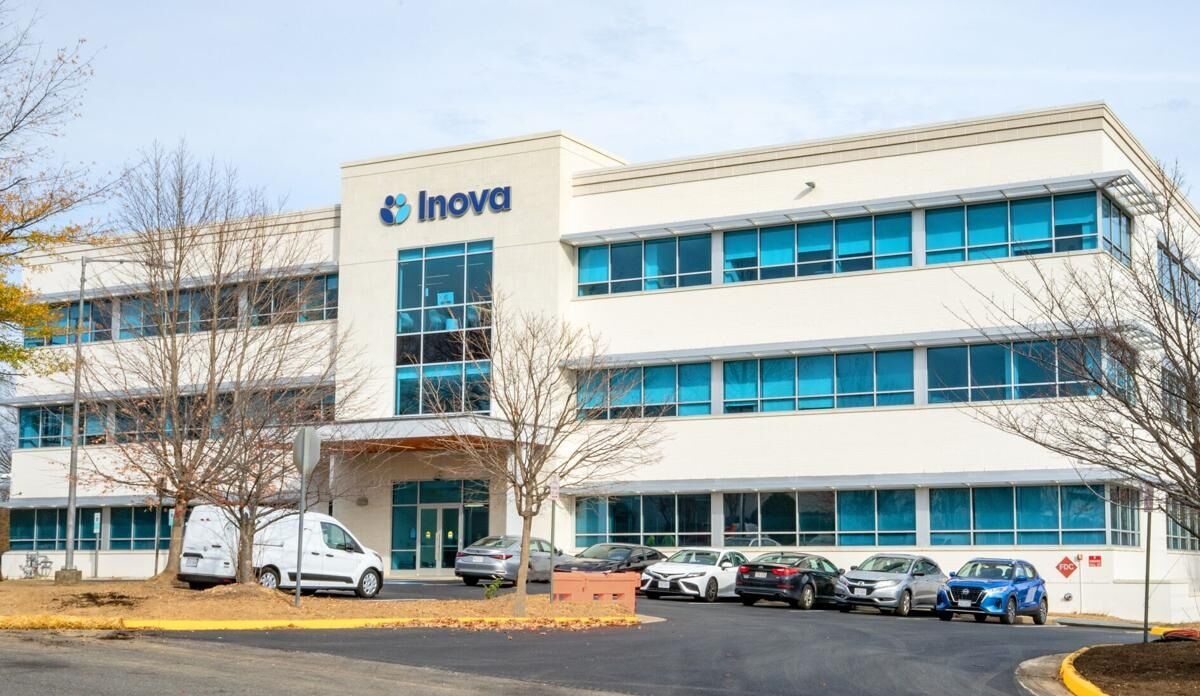
So, we are presented with two seemingly disconnected fragments of information from the local news feed. On one hand, Inova Health System, a titan of Northern Virginia’s medical-industrial complex, is planting a new flag in Woodbridge, opening a gleaming outpatient center to service the masses of eastern Prince William County. And on the other hand, we are being prepped for the manufactured celebration of “National Cookie Day,” a corporate holiday designed with the singular purpose of offloading excess sugar, flour, and processed fats onto a willing public under the guise of “deals and freebies.” A rational observer is expected to see these as separate events. One is about health. The other is about treats.
But that is a failure of imagination. It is a failure to see the machine for its component parts. Because these are not separate events. They are two ends of a perfectly closed, exquisitely profitable, and deeply cynical economic loop. One announcement is the setup, the other is the punchline. They are cause and effect, supply and demand, the poison and the antidote, all sold to you by different departments of the same vast, societal-scale enterprise. It’s brilliant, really. A masterclass in systems design.
Is This Not Just The Free Market At Work?
One might argue, with a certain naive optimism, that this is simply the market responding to needs. People get sick, so Inova builds a clinic. People like cookies, so companies promote them. And what’s the harm? Everything in moderation, personal responsibility, and all that jazz. This is the convenient narrative that allows the system to function without scrutiny. It’s a lie.
Let’s be clear. The modern food industry, the one that invents “National Cookie Day,” is not in the business of nourishment. It is in the business of addiction. It employs armies of chemists and psychologists to engineer products that are hyper-palatable, products that hit the bliss point of our primitive brains with a precise combination of salt, sugar, and fat, overriding our natural satiety signals. They spend billions of dollars on advertising to create cultural events out of this consumption, wrapping it in the warm, fuzzy blanket of tradition and fun. “Sesame Street” is even roped in, using cherished childhood characters to legitimize the affair. It is a relentless, calculated campaign to create cravings and habits. They have hacked your biology for profit.
And then there is Inova. It is, by its own designation, a “non-profit” entity, a label that in the context of American healthcare is functionally meaningless. It does not mean they don’t make money; it just means they don’t have shareholders. Inova is a multi-billion dollar corporation with a CEO who earns a multi-million dollar salary. Its primary objective, like any corporation, is to grow. To expand its market share, to increase its revenue streams, to become indispensable. The new Inova Health Center in Woodbridge isn’t just an act of public service; it is a strategic business decision to capture a customer base in a growing suburban corridor. It’s a forward operating base for the business of medicine.
So when one industry spends billions creating the conditions for metabolic syndrome, obesity, type 2 diabetes, and heart disease, and another industry expands its infrastructure to treat those exact same chronic conditions, you are not looking at a free market. You are looking at a symbiotic, predatory partnership. It’s a racket.
Why Prince William County? A Case Study in Demographics
The choice of location is not random. It is forensic. Eastern Prince William County, centered around Woodbridge and the Potomac Mills monolith, is not Fairfax or Loudoun. It is a deeply diverse, economically varied, and rapidly growing suburban landscape. It is a microcosm of middle America. This is the perfect petri dish for the cycle to flourish. You have a population of working families, often with multiple jobs and long commutes, for whom the convenience and low cost of processed foods is not a luxury but a necessity. They are time-poor and cash-strapped. The marketing for National Cookie Day isn’t aimed at the wealthy who can afford artisanal, organic kale; it is aimed squarely at the family that sees a BOGO deal as a genuine relief to their budget.
And because this population is the target of the hyper-palatable food industry, it will inevitably become the target of the chronic disease management industry. The new Inova center is an outpatient facility. It’s not for catastrophic, one-off emergencies. It’s designed for the long haul. It’s for managing diabetes. It’s for cardiology check-ups. It’s for physical therapy and primary care that will oversee a patient for decades. It is the subscription model of healthcare. And the customer acquisition strategy for this subscription model is being run, for free, by every fast-food chain and snack company celebrating National Cookie Day. Inova doesn’t have to spend a dime to create its future patients. The rest of the corporate world is doing it for them.
Think of the sublime efficiency. A family grabs some free or cheap cookies from a promotion near Potomac Mills. Over years, habits like these, encouraged and subsidized by the food industry, contribute to predictable health outcomes. And when a diagnosis finally comes, where do they go? To the convenient, brand-new Inova Health Center right there in their neighborhood. They become a reliable revenue stream for decades. It’s a cradle-to-grave business plan, where the cradle is a box of cookies and the grave is preceded by a lifetime of billable appointments.
The Illusion of Choice and The End Game
The entire apparatus is propped up by the myth of “personal responsibility.” The system whispers in your ear that it’s your fault. You should have had more willpower. You should have read the label. You chose to eat the cookie. But this ignores the monumental imbalance of power. On one side, you have an individual with a tired brain and a limited budget. On the other, you have a multi-trillion dollar global industry complex that has invested more money than is spent on cancer research into figuring out how to make you say “yes.” It is not a fair fight. It was never intended to be.
And where does this road lead? To a future that looks a lot like the present, only more so. More boutique, outpatient clinics designed for perpetual disease management. More pharmaceuticals designed not to cure, but to manage symptoms for a lifetime, creating another subscription model. More processed foods engineered to be even more irresistible, perhaps even fortified with vitamins to create the illusion of health. It leads to a society where being chronically ill is normalized, a baseline state of being that is simply managed with a cocktail of pills and regular specialist visits. The goal is not health. The goal is a manageable, profitable level of sickness.
So when you see the announcement for the new Inova clinic, don’t just see a building. See a node in a network. See the logical conclusion of a system. And when you see the ads for National Cookie Day, don’t just see a fun promotion. See the customer acquisition funnel. See the bait. Because they are not separate stories. They are the same story. It’s just business.
