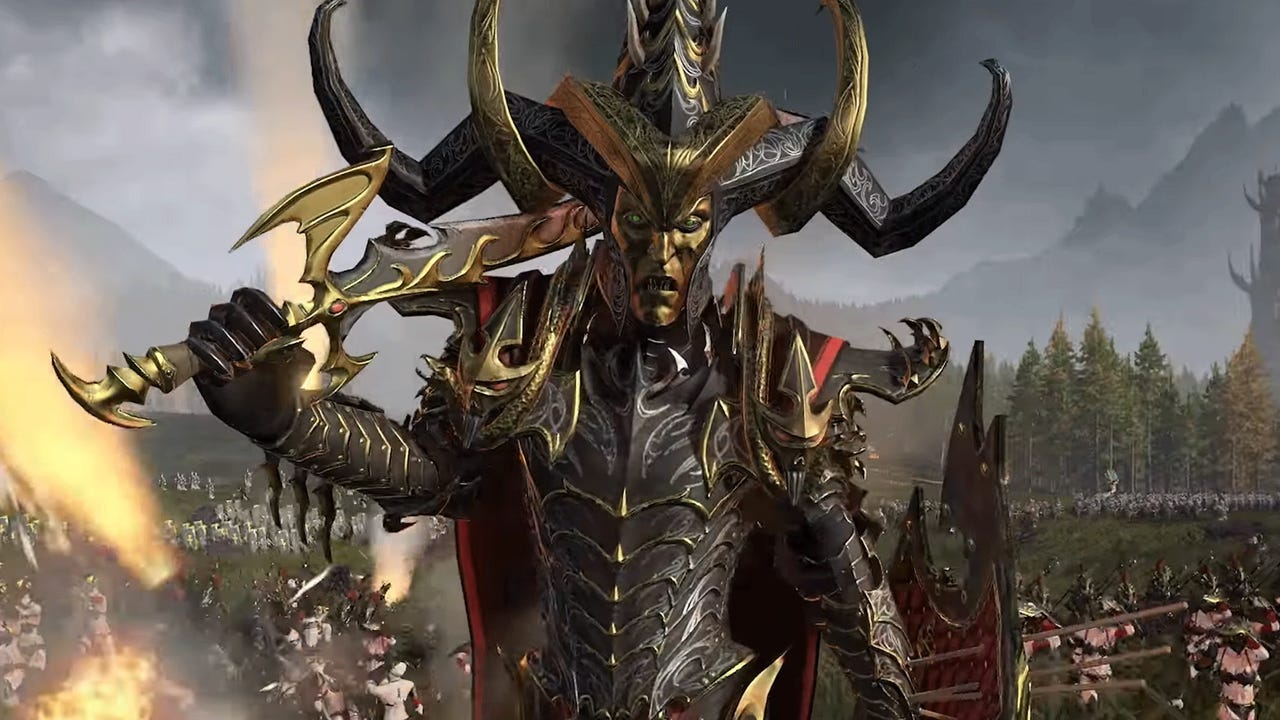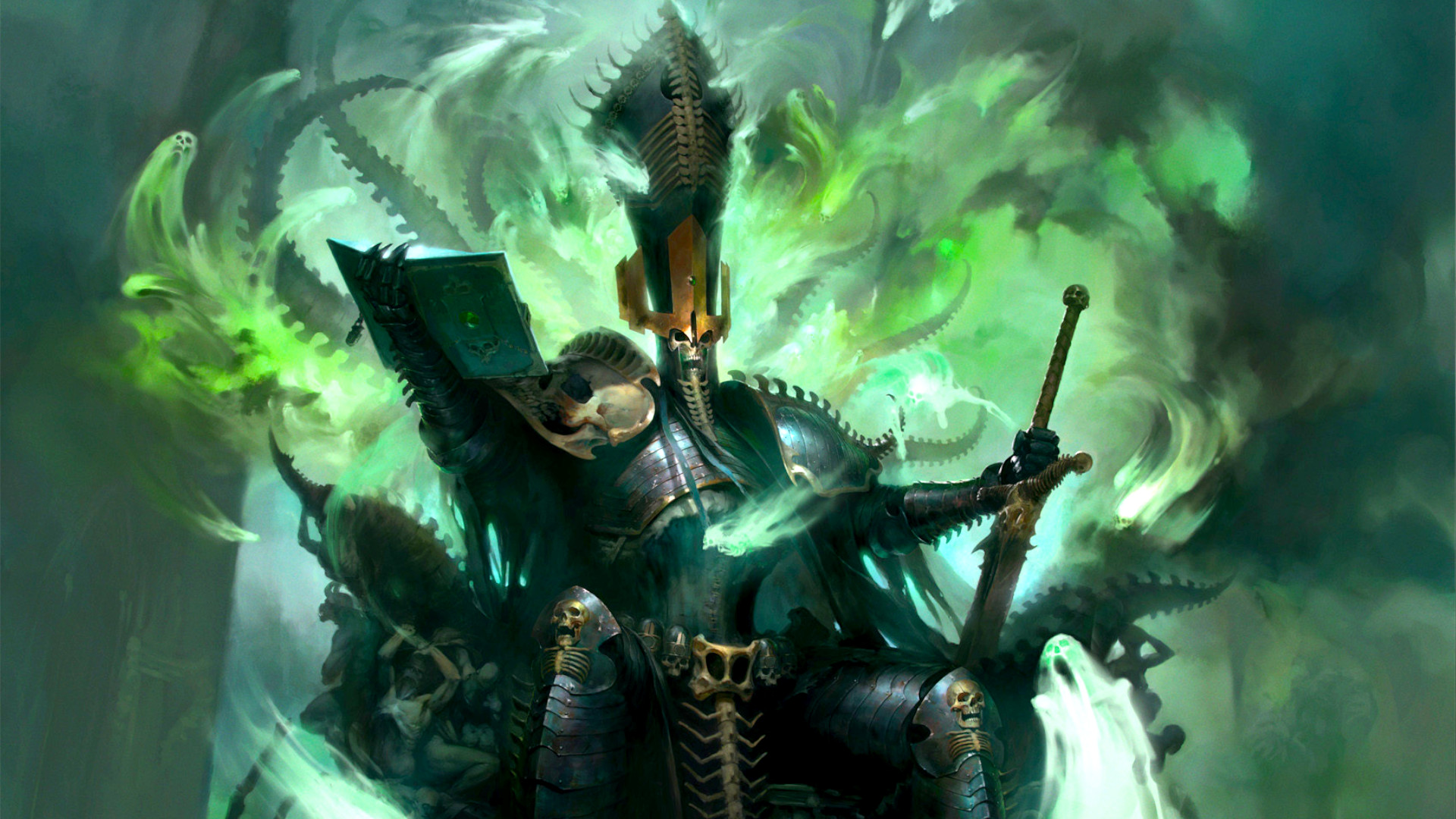
The Declaration in the Dark
Let us be clear from the outset. That teaser, the little morsel dropped for Creative Assembly’s anniversary, was not a simple marketing beat. It was a declaration of war on the status quo. It was the sounding of a horn that many players have been both eagerly anticipating and deeply dreading for the better part of a decade. He’s back. The message is simple, but the strategic implications are anything but. The return of Nagash, the Great Necromancer, the ultimate lord of the undead, is not just another Legendary Lord pack; it is the deliberate triggering of a narrative doomsday device that has the potential to either elevate the Total War: Warhammer franchise to its zenith or shatter its foundations completely.
This is not hyperbole. This is a cold assessment of the facts. For years, the developers have danced around the subject, leaving Nagash as a specter in the lore, a background force whose full power was too immense, too game-breaking, to ever be truly implemented. To bring him into the fold now, after the trilogy is supposedly complete and the colossal Immortal Empires map has unified the world, is to signal a fundamental shift. They are moving past the sandbox and into the apocalypse. The question is not *if* the End Times are coming, but what form they will take and whether Creative Assembly has the strategic foresight to navigate the fallout of detonating their own universe.
A Chronology of Inevitability
To understand the gravity of this moment, one must view the entire Total War: Warhammer project not as three separate games, but as a single, decade-long strategic deployment. It began with the Old World in the first game, a relatively contained theater of operations. Then came the second installment, expanding the map and introducing conflicts on a global scale, a necessary logistical step. The third game brought the existential threat of Chaos, the ultimate antagonist force. Each was a piece being moved into position. And through it all, there were hints, deliberate breadcrumbs for those paying attention. The Mortarchs (Arkhan, Mannfred, Neferata) were all implemented, each a powerful subordinate whose true master was conspicuously absent. It was a power vacuum by design.
The release of Immortal Empires was the masterstroke, the final preparation of the battlefield. It combined the maps and factions of all three games into a world-spanning campaign of unprecedented scale, a digital diorama of the entire Warhammer world on the brink. Players celebrated it as the ultimate sandbox, a place for infinite replayability. A strategist, however, saw it for what it truly was: the perfect, fully-realized stage for a story with a definitive, cataclysmic ending. You cannot have a story called ‘The End Times’ without first having the whole world to end. Immortal Empires was never the destination; it was the staging ground for the final campaign. Nagash is the trigger for that campaign. It’s so obvious in retrospect.
The Mechanics of a God
The primary strategic challenge facing the developers is one of scale and balance. How does one implement a character who, in the lore, is a literal god of death? Nagash is not just another powerful wizard; he is the architect of necromancy itself, a being who challenged the gods of his own accord and very nearly won. To simply make him a Legendary Lord with high stats and a unique spell lore would be an insult to the character and a profound disappointment. It would be like trying to represent a strategic nuclear weapon with a slightly bigger hand grenade. No. His implementation must break the game’s established rules.
One can speculate on several potential mechanics. He may not lead a conventional faction but instead act as a unifying force for all undead, able to confederate the Vampire Counts, Tomb Kings, and Vampire Coast through a unique, forceful mechanic (a diplomatic option they simply cannot refuse). His campaign could revolve around collecting his ancient artifacts of power, with each one unlocking abilities that fundamentally alter the campaign map—perhaps raising entire dead armies from major battle sites instantly, or inflicting massive, permanent attrition on all living factions across entire continents. It’s possible his economy won’t be based on gold at all, but on a new resource: souls. This would create a strategic imperative to seek out and destroy population centers, not merely to conquer them, but to fuel his ascent to true godhood. His victory condition cannot be the simple domination of the map. His victory condition must be the *extinction* of all other life, turning the Immortal Empires map into a silent, sprawling necropolis. Anything less would be a failure of vision.
The End Times Gambit: A Calculated Risk
From a business perspective, initiating the End Times is Creative Assembly’s most audacious and dangerous gambit. The original End Times event in the tabletop lore, orchestrated by Games Workshop, was monumentally controversial. It systematically destroyed the beloved Old World and every faction in it to pave the way for a new, more marketable product line, Age of Sigmar. It alienated a huge portion of the fanbase, a wound that for some has never healed. To willingly walk this path in their digital recreation is a move that requires an iron will and a clear objective.
What is that objective? It’s twofold. First, it is the ultimate ‘final’ DLC. A campaign of this magnitude, featuring a cataclysm that alters the map and potentially removes factions permanently as it progresses, can be priced at a premium. It is the capstone on the entire franchise, the last big payday before the lights go out. It creates a sense of urgency and finality that no other DLC could possibly match. It isn’t just another story; it is *the* story. Secondly, and more cynically (or perhaps, more realistically), it serves the same purpose the original did: it clears the board. By bringing the Total War: Warhammer 3 narrative to a definitive close, it frees Creative Assembly from the obligation of supporting it with endless minor updates and lord packs. It provides a clean break, allowing them to pivot their fantasy teams to the next logical project—a project that Games Workshop would be all too happy to see happen: Total War: Age of Sigmar.
This is a high-risk, high-reward play. They risk enraging the player base that loves the sandbox nature of Immortal Empires by introducing a narrative that, by its very definition, destroys that sandbox. The backlash could be severe. But the reward is a conclusive, epic finale to their most successful series and a perfect, lore-justified launching point for a brand new one. It is a cold, calculated corporate decision dressed in the epic robes of fantasy storytelling. A masterclass in long-term portfolio management, if they can pull it off without the entire community turning on them. A tough sell.
The World After the End
So, what happens next? What does the landscape of Total War look like after the dust settles on a ruined world? If the End Times campaign is a success, it sets a new precedent for what a strategy game finale can be. It moves beyond simple map-painting and into genuine, interactive narrative. But the cost is the game world itself. Post-End Times, the Immortal Empires we know would cease to exist, perhaps replaced by a shattered, Chaos-infested remnant map for a more narrative, almost survival-horror style of play. Or maybe it’s a one-way trip; once you start the End Times campaign, that save file is on a path to oblivion.
The logical path forward for the developer is clear. Having concluded the story of the Old World, the stage is set for the Age of Sigmar, a setting of mythic realms and demigods that would require a complete overhaul of Total War’s core mechanics. It’s a designer’s dream (and a nightmare), filled with far more high-fantasy concepts that would push the game engine to its limits. This Nagash DLC, then, is the bridge. It’s the eulogy for Warhammer Fantasy and the prologue for what comes next. It’s how you get your audience to accept the death of a beloved world—by making them an active participant in its spectacular, tragic demise.
The announcement of Nagash is therefore not a beginning. It is the signal of the end. It’s the final piece being placed on the board, the checkmate that has been in development for three full games and countless DLCs. Whether players will see it as a brilliant, epic conclusion or a cynical, destructive cash grab depends entirely on the execution. But make no mistake, the decision has been made. The storm is coming. The Great Necromancer is here, and the world of Total War: Warhammer will never, ever be the same. A cold, hard fact.