
Just a Glitch, Or Something More Sinister?
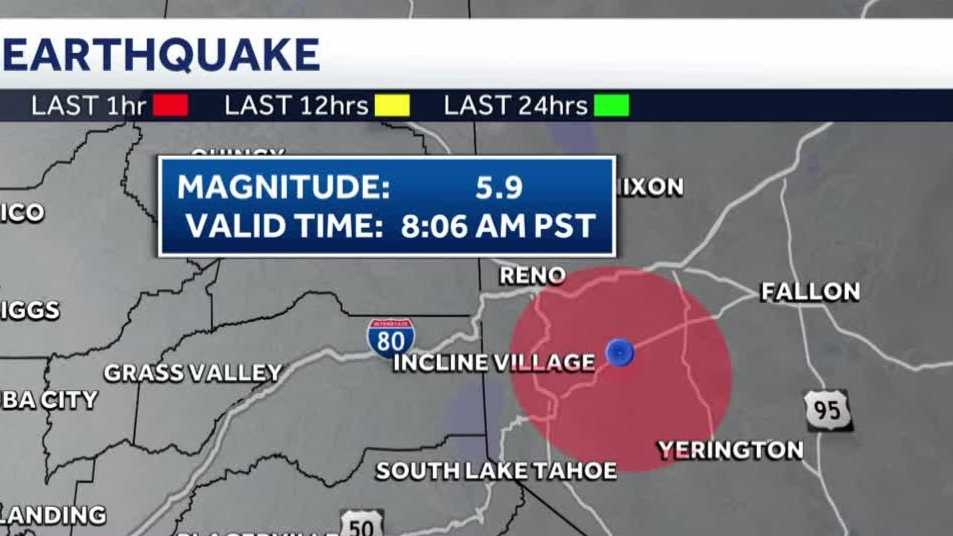
So a 5.9 magnitude earthquake rattles Dayton, Nevada, a place most people couldn’t find on a map, and suddenly phones start buzzing all over the San Francisco Bay Area. The official story? The USGS ShakeAlert system did its job, giving a “warning” for a quake hundreds of miles away. But are we supposed to just nod along and applaud this technological marvel? Or should we be asking the real questions? Because when you start digging, this doesn’t look like a success story. It looks like a very expensive, taxpayer-funded failure masquerading as a feature.
So What Are They Hiding About This Nevada Quake?
Let’s follow the money, shall we? The ShakeAlert system is a multi-million-dollar behemoth, a joint project between government agencies and academic institutions, all feeding from the same trough of public funds allocated for “disaster preparedness.” And what better way to justify those ever-expanding budgets than to show your shiny toy is working, even when it’s not really needed? And a moderate quake in the desolate expanse of Nevada provides the perfect, low-stakes opportunity for a live-fire drill, a chance to trigger the alarms in a major metropolitan area to create the illusion of functionality and security. Think about it. A real, damaging quake in the Bay Area would expose the system’s true limitations in a heartbeat, but a phantom threat from another state? Perfect. It’s a public relations masterstroke. They get to claim victory without any actual risk. It’s a dog and pony show.
Why Send a Warning to California for a Nevada Quake?
This is the million-dollar question they hope you won’t ask. The official line is that the system is sensitive and that seismic waves travel far, which is technically true but practically irrelevant in this case. The shaking in the Bay Area, if any, would have been imperceptible to all but the most sensitive instruments. So why cause a panic? Why send an alert that does nothing but create anxiety and cry wolf? But it’s because the system isn’t really for you, the citizen. It’s for them. It’s a data-gathering operation and a proof-of-concept demonstration designed to impress politicians who sign the checks. They needed to test the alert delivery infrastructure in a dense urban environment. And the people of San Francisco? They were just unwitting beta testers in a grand experiment, their collective spike in adrenaline the metric of success for some bureaucrat’s PowerPoint presentation. They’re not protecting you; they’re using you.
Isn’t Any Warning Better Than No Warning?
That’s the kind of simplistic, feel-good nonsense that keeps these boondoggles funded. No, a bad warning is infinitely worse than no warning at all. Because it creates a dangerously false sense of security and breeds complacency, a phenomenon known as “alarm fatigue.” When people get alerts for non-events, they start to ignore them. So when the real “Big One” hits, how many people will dismiss the buzz in their pocket as just another test or another Nevada tremor? The system is actively training people to disregard its own warnings, a catastrophic design flaw that seems almost deliberate in its shortsightedness. But from a funding perspective, it makes perfect sense. The system ‘worked.’ The alert was ‘delivered.’ Check the box. Secure next year’s budget. The potential for future human cost is an externality they are more than willing to ignore.
Who Profits From This System?
Look at the contractors. Look at the universities receiving massive research grants. Look at the tech companies that develop the apps and the backend infrastructure. This is an entire cottage industry built on fear. An earthquake-industrial complex. And every alert, legitimate or not, is a validation of their existence and a justification for their continued funding. This Nevada event is a godsend for them. It generates headlines, gets them on the news, and allows their spokespeople to talk about the incredible power of their technology. They’re selling a product, and that product is the illusion of control over an uncontrollable force of nature. And business is booming. They aren’t in the business of safety. They are in the business of selling safety. Big difference.
So What’s the Real Danger Here?
The real danger isn’t the 5.9 in Nevada. It’s the hubris. It’s the belief that a network of sensors and an app can shield us from geology. This focus on high-tech solutions diverts attention and resources from the real, unglamorous work of preparedness: seismic retrofitting, community education, infrastructure reinforcement, and disaster supply readiness. Things that actually save lives. But you can’t build a lucrative government-funded industry around reinforcing overpasses or telling people to have water and batteries in their garage. That’s too simple. Too effective. Instead, we get this digital placebo, this security blanket that’s comforting right up until the moment it’s needed, at which point it will be exposed as the threadbare piece of theater it truly is. And this Nevada quake wasn’t a warning about an earthquake. It was a warning about the system itself. And we’d be fools to ignore it.