Another Round of Theater in the Indian Ocean
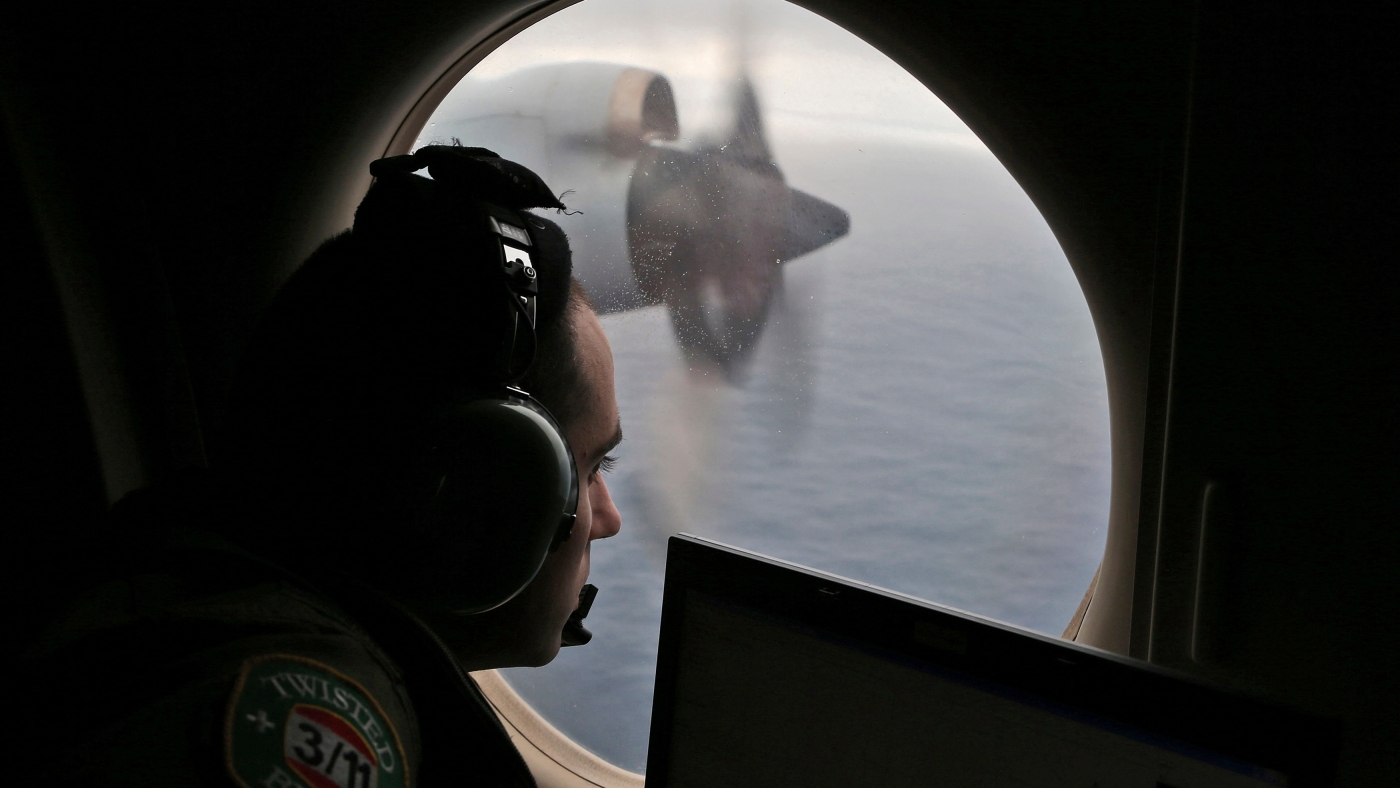
So, here we go again. More than a decade—eleven long years—of silence, speculation, and suffering, and suddenly the Malaysian government wants to play hero. They’ve announced the deep-sea hunt for MH370 will resume. Ocean Infinity, a private company with shiny new toys, is ready to dive back into the abyss on a “no find, no fee” basis. It all sounds so noble, doesn’t it? A valiant new chapter in one of modern aviation’s greatest mysteries. Don’t buy it. This isn’t a quest for truth. It’s a calculated move, a public relations masterstroke designed to manage a narrative that spun out of control years ago.
Let’s be brutally honest. Nothing about this case has ever been straightforward, and this new search is no exception. It’s a performance, and we’re all expected to applaud. But I’m not clapping. I’m asking the questions that were ignored in 2014 and are being conveniently swept under the rug today.
So, why now? What’s the real catalyst after 11 years of inertia?
You think this is about a sudden pang of conscience? A burning desire for justice for the 239 souls on board? Please. That ship sailed a decade ago. This is about opportunity and optics. The Malaysian government has been haunted by the ghost of MH370, a symbol of its catastrophic incompetence (or something far worse) during the initial crisis. A new search, especially one fronted by a private firm, allows them to look proactive without spending a dime upfront. It’s a political win-win. They get to posture as compassionate leaders finally bringing closure, while Ocean Infinity foots the bill for the gamble. What a deal.
And let’s talk about Ocean Infinity. This “no find, no fee” model is brilliant marketing. They portray themselves as benevolent crusaders, but they are a for-profit business, and a massive one at that. They are betting that their new robotic technology can succeed where a multi-national, government-funded effort failed spectacularly. If they find the plane, the payday will be astronomical—not just from the Malaysian government, but from the global prestige and future contracts that will flood their way. They become the company that solved the unsolvable. If they fail? Well, they tried, didn’t they? They get points for effort and a ton of free press showcasing their cutting-edge tech. It’s a low-risk, high-reward bet for them. This isn’t altruism; it’s speculation with submarines.
Is this just another multi-million dollar wild goose chase?
Remember the first search? The one that cost hundreds of millions of dollars and scanned an area the size of a small country, only to turn up absolutely nothing. They dragged the ocean floor for years based on flimsy satellite data pings—pings that were, let’s not forget, interpreted and re-interpreted to fit a narrative. Now we’re told that new analysis has narrowed the search area. How convenient. After a decade of poring over the same limited data, suddenly there’s a new “eureka” moment? Forgive me for being skeptical.
This entire effort hinges on the assumption that the plane went down in the southern Indian Ocean based on those Inmarsat satellite handshakes. That theory has always been the “official” one because it’s the neatest. It allows for a simple story: a mechanical failure or a hypoxic crew, leading to a ghost flight that flew on autopilot until it ran out of fuel. It’s a tragedy, but a containable one. It avoids confronting much darker, more complicated possibilities—possibilities that involve human intervention and intent. This new search is just a doubling down on that same, potentially flawed, foundational premise. It’s not a new investigation; it’s an expensive retread of an old theory.
Let’s follow the money and the power. Who really benefits?
The beneficiaries are clear, and the families of the victims are, tragically, just pawns in this game. Malaysia benefits by offloading the financial risk and political heat onto a private company. They can say, “We are doing everything we can,” while doing very little themselves. China, which had the most citizens on board, gets to see a semblance of action without having to get its own hands dirty again. Ocean Infinity, as we’ve established, is playing for a jackpot of money and fame.
But who doesn’t benefit? Anyone seeking the unvarnished truth. A successful search under these terms is one that finds the wreckage in the pre-approved search area. This discovery would validate the official ghost flight narrative. It would be a neat little bow on a very messy story. The black boxes would (conveniently) be recovered, and the tale they tell would almost certainly align with the story we’ve been fed for years. A story that absolves multiple governments of any responsibility for their bungled response, their failure to track a Boeing 777 flying for hours through their airspace, and their suspicious reluctance to release all radar data from day one. (Remember the military radar that saw the plane turn back but did nothing? Yeah, that.)
Are we honestly expected to believe the official narrative is the only possibility?
This is the core of the issue. The entire multi-million dollar search is predicated on a story that has more holes than a block of Swiss cheese. A veteran pilot, Captain Zaharie Ahmad Shah, supposedly decides to commit the most complex mass murder-suicide in history, perfectly disabling multiple communication systems (but not all of them) while flying a complex, pre-planned route to nowhere? It’s a movie plot, not a reality. It’s the narrative that was settled on because it blamed a dead man who couldn’t defend himself and required no accountability from anyone else.
What about the other possibilities? A hijacking gone wrong? A remote cyber-hijacking (a capability that governments will neither confirm nor deny exists)? An onboard fire that took out communications before the crew tried to turn back to a safe runway? Or the most uncomfortable possibility of all: that the plane was shot down, accidentally or otherwise, and its disappearance was a massive, coordinated cover-up? These theories aren’t just for the tinfoil-hat crowd. They are born from the complete lack of transparency and the bizarre, contradictory actions of officials in the first few weeks of the crisis. By focusing all resources on a tiny patch of the southern Indian Ocean, they ensure that none of these other, more damning, possibilities are ever explored.
What are they really afraid of finding? Or not finding?
Maybe the biggest fear isn’t that they won’t find the plane. Maybe the biggest fear is that they *will*, but in the wrong place. Or that they’ll find it and the wreckage tells a story that contradicts the official one. What if the cockpit voice recorder reveals a struggle? What if the fuselage shows evidence of an explosion from the outside in? The “no find, no fee” contract likely has very specific parameters. Find the plane *here*, and you get paid. A search that goes off-script is probably not on the table.
So as the world tunes in to watch this new high-tech drama unfold, remember what you’re seeing. It’s a well-funded, technologically advanced effort to confirm a pre-existing conclusion. It’s a mission to close a file, not to uncover a truth. The real mystery of MH370 isn’t just where the plane is. It’s why so many powerful people have worked so hard for so long to control what we’re allowed to think about it. Don’t expect closure. Expect a carefully managed ending to a story whose most important chapters were ripped out long ago.