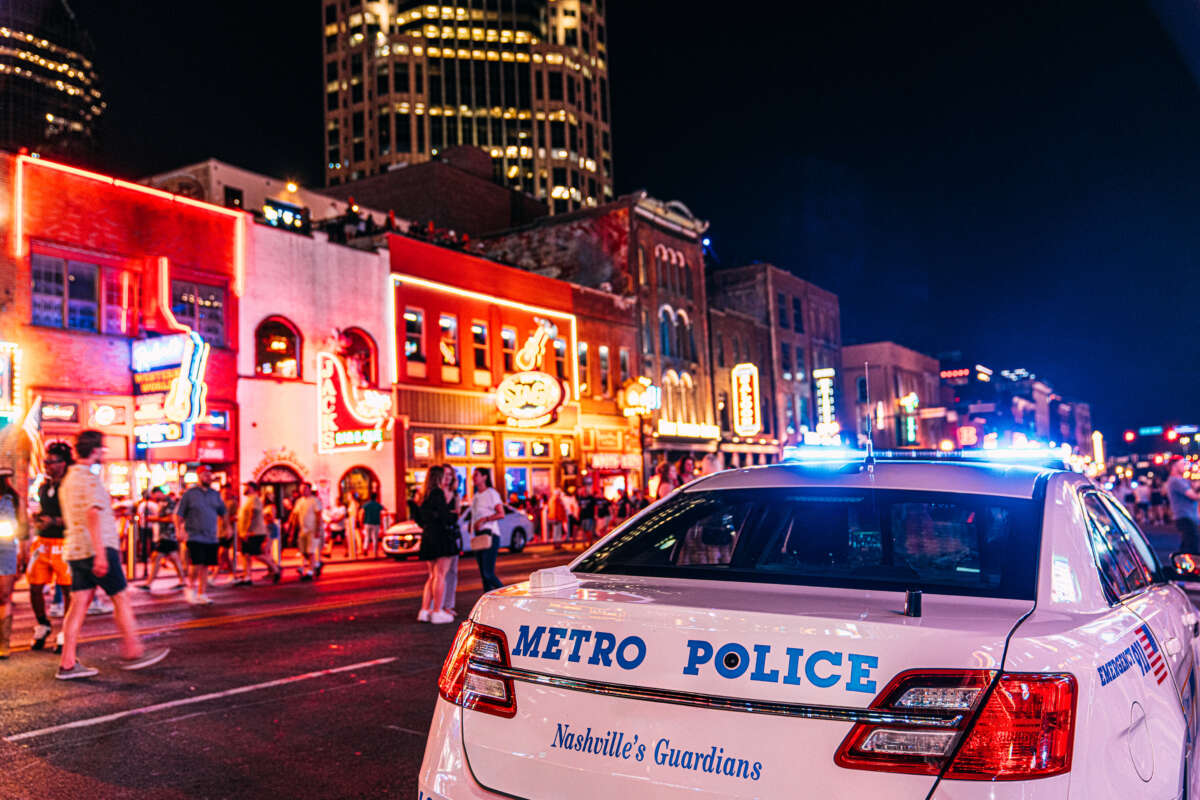
The Official Story: A Benevolent Grant for Urban Harmony
The Fairy Tale of ‘Public-Private Partnership’
Let’s examine the narrative being spoon-fed to the public, the polished and press-released version of events. Mayor Freddie O’Connell’s administration, in its infinite wisdom, has procured a handsome $15 million state grant. The stated purpose? To enhance safety in downtown Nashville. It’s a simple, elegant solution to a complex problem. The city, you see, is forming a “partnership” with a trusted local stakeholder, the Nashville Downtown Partnership, a nonprofit organization supposedly dedicated to the betterment of the urban core. This money will fund more “eyes on the street,” improved lighting, and a general spruce-up of the downtown area to make it more welcoming for tourists and residents alike. It’s about collaboration. It’s about proactive solutions. It’s about safety.
They will tell you this is just an extension of the work the Partnership’s uniformed “ambassadors” already do—providing directions, reporting graffiti, being helpful. This grant simply supercharges their ability to do good. It allows them to install and monitor advanced technology to deter crime before it happens, creating a seamless blanket of security that will benefit everyone. This is presented as a modern, efficient model of urban management, a way to leverage private sector agility with public sector funding for the common good. A win-win. Who could possibly argue with a cleaner, safer downtown? It is, they insist, a simple administrative resolution to allocate funds for an unambiguously positive outcome. A formality.
The Unvarnished Truth: A Corporate Coup Dressed in Khakis
Deconstruction #1: This Isn’t About Safety, It’s About Control
Let’s tear down the facade. This has very little to do with public safety and everything to do with social and economic control. The Nashville Downtown Partnership is not a benevolent collection of concerned citizens; it’s a consortium of downtown property owners, hoteliers, and major business interests. Their primary objective is not your constitutional rights; it is the protection of their property values and the maximization of their revenue. The “undesirables”—the homeless, the street performers who don’t fit the corporate aesthetic, the peaceful protestors, the teenagers just hanging out—are bad for business. They disrupt the carefully curated consumer experience. The police, constrained by pesky things like probable cause and public accountability, can be inefficient tools for sanitizing a streetscape. But a private security force? Funded by the state but accountable only to a board of directors whose portfolios you’re protecting? That’s a different animal entirely.
This $15 million isn’t for more friendly neighborhood guides. It’s for creating a privately operated surveillance network. We are talking about a massive expansion of CCTV cameras, potentially equipped with facial recognition software and AI-powered behavioral analysis. We are talking about license plate readers cataloging the movements of every vehicle that enters the downtown core. This data won’t be held by the Metro Nashville Police Department, subject to public records requests and oversight. It will be held by a private entity. A nonprofit. Think about that. The data of your movements, your associations, your patterns, will be the proprietary asset of a corporation. They get to decide who has access, how it’s used, and who it’s sold to. This isn’t a safety plan; it’s the beta test for a privatized panopticon, a system designed to enforce a specific, commercially-approved version of public order. It is the architectural blueprint for a two-tiered society where the rights of an individual are secondary to the commercial viability of a city block.
Deconstruction #2: The Shell Game of Accountability
This entire structure is a masterclass in the deliberate erosion of accountability. It is a feature, not a bug. When a uniformed officer of the state violates your civil rights, there is a clear, if often difficult, path for recourse. You can file a complaint with an internal affairs division. You can sue the police department. You can appeal to the city council. The chain of command, however flawed, is visible. Now, imagine an incident with one of these privately employed “ambassadors” who, armed with real-time surveillance data, oversteps their authority. Who do you hold responsible? The employee? The nonprofit Downtown Partnership? The city that gave them the money but claims to have no operational control? The state that provided the grant?
It’s a labyrinth. A shell game. The city can point to the nonprofit, saying it’s not their employee. The nonprofit can point to the grant’s stipulations, claiming they are just fulfilling a contract. This diffusion of responsibility is intentional. It creates a buffer between the state and the potentially unconstitutional actions required to maintain the desired level of corporate sterility downtown. It effectively outsources the state’s monopoly on force and surveillance to a third party that is insulated from public scrutiny. This is how you build an unaccountable system of power right under everyone’s noses. You call it a “partnership.” You wrap it in the language of safety and community. You make it seem boring and bureaucratic. And then you have a private police force that answers to a board of executives instead of the electorate. It’s a quiet coup.
Deconstruction #3: The Thanksgiving Gambit
The timing of this resolution is not an accident; it is a calculated political maneuver that reeks of contempt for the democratic process. The Mayor’s office filed this just before the Thanksgiving holiday. A time when citizens are distracted, families are traveling, and the press corps is operating with a skeleton crew. It’s a classic tactic used to slide controversial legislation through with minimal public debate or organized opposition. They know what this is. They know it’s a radical shift in civic governance and that it raises profound questions about privacy, accountability, and the very nature of public space. They did not want a robust debate. They wanted a rubber stamp.
This quiet filing reveals the administration’s true intentions. If this were truly just a simple, benevolent plan to improve safety, it would have been trumpeted from the rooftops. There would have been press conferences, community engagement sessions, and a full-throated public relations campaign. Instead, it was slipped onto the council’s agenda in the dead of a holiday week, hoping nobody would notice the Trojan Horse being wheeled through the city gates. This procedural dishonesty tells you everything you need to know about the substance of the policy itself. It’s a proposal that cannot withstand the light of day, so it was conceived and executed in the shadows. It is an admission of guilt. They know they are selling out the public trust. They just hoped they could get it done before anyone had time to read the fine print. This isn’t just policy; it’s a betrayal.