The Anatomy of a Non-Event
Let’s Dismantle the ‘Supermoon’
And so it begins again. The annual, or rather multi-annual, ritual of collective delusion orchestrated by the global content machine. You will be told to “look up.” You will be given precise times, down to the minute, as if you are witnessing a celestial ballet of profound significance. But you are not. You are being sold a lie, a beautifully packaged, easily digestible, and utterly meaningless spectacle: the “Supermoon.”
Because what we are witnessing is not an astronomical marvel, but a marvel of marketing. It’s a masterclass in manufacturing consent for a non-event. The term itself, “supermoon,” has all the scientific legitimacy of a superhero’s origin story, coined not by a peer-reviewed astronomer but by an astrologer in 1979. Think about that. The very foundation of this entire spectacle is rooted in pseudoscience, yet it is parroted with journalistic solemnity by news outlets that would, in the next breath, debunk psychic hotlines. The hypocrisy is staggering. It’s also brilliant. A perfect product.
They have successfully branded the moon. They have turned a simple, predictable orbital wobble into a must-see, limited-time-only event. And we, the eager consumers of content, gobble it up without question, because the alternative is to confront the void, the quiet truth that most nights, nothing particularly special happens in the sky that is visible to our naked, untrained eyes. So we choose the illusion. The spectacle.
Deconstructing the Lie: A Matter of Perspective
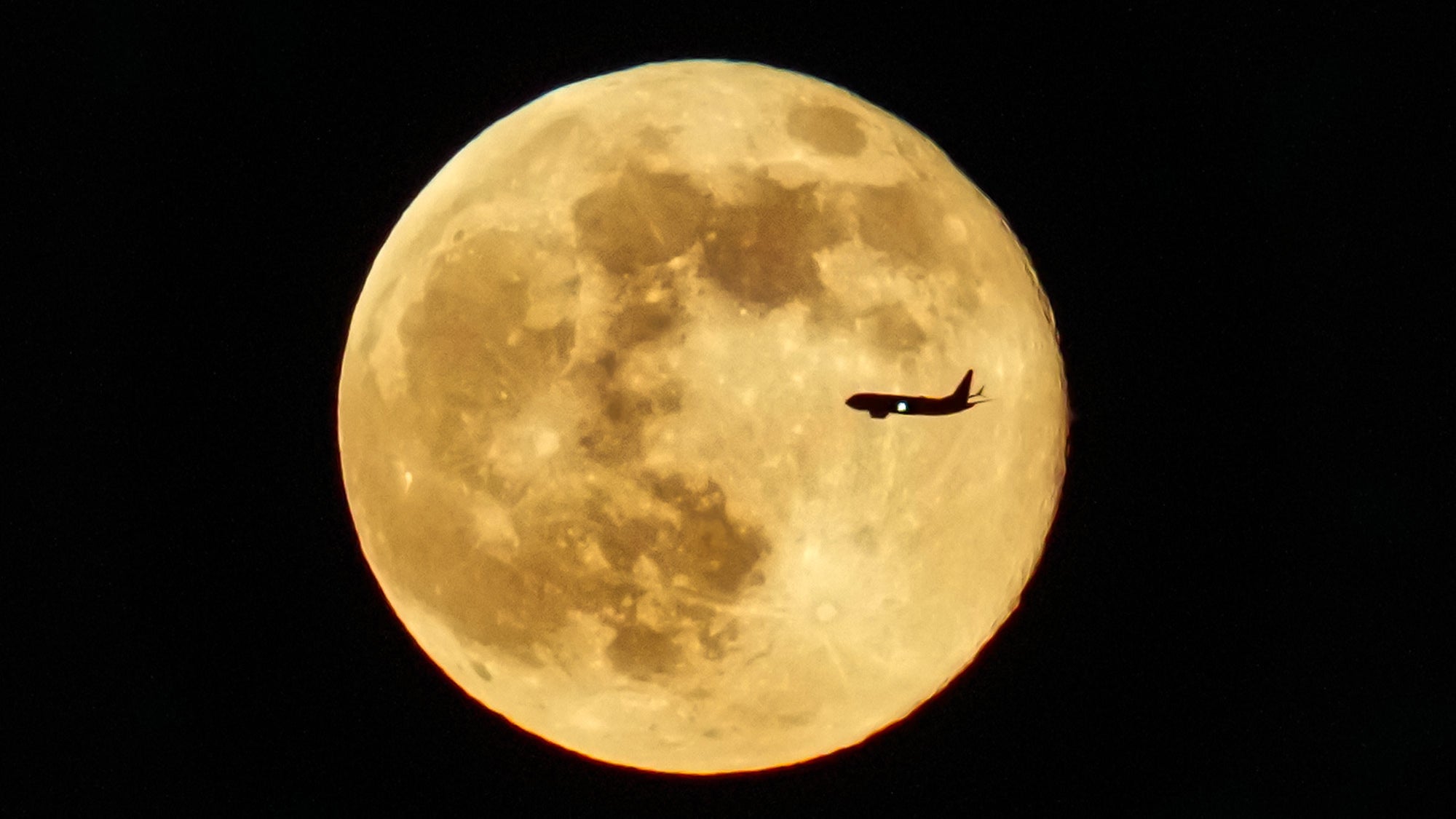
So let’s perform the autopsy. What is a supermoon, really? It’s a full moon that happens to occur when the moon is at or near its closest point to Earth in its orbit—a point known as perigee. The moon’s orbit is not a perfect circle; it’s an ellipse. Sometimes it’s a bit closer, sometimes a bit farther away. That’s it. That is the entire scientific basis for this global media frenzy.
But the numbers betray the hype. At its absolute closest, a perigee full moon might appear up to 14% larger in diameter and 30% brighter than a full moon at its farthest point, or apogee. These numbers sound impressive in a headline. They are designed to. They are large percentages. But they are percentages of something our eyes are fundamentally terrible at judging without a reference point. There is no “regular” moon sitting next to the “super” one in the sky for you to compare. It’s an isolated object in a sea of black.
Here’s a more honest analogy: it is the difference between a 12-inch pizza and a 13.7-inch pizza. Yes, one is technically larger. But if you were served one tonight and the other six months from now, would you genuinely perceive the difference without a ruler? Of course not. You would simply see a pizza. It’s the same with the moon. You simply see the moon. Any perceived increase in size is almost entirely due to the power of suggestion and a well-known phenomenon called the Moon Illusion, where the moon appears larger near the horizon due to our brain comparing it with terrestrial objects. This illusion happens with *any* full moon, not just a “super” one. And yet, media outlets conveniently conflate the two, leveraging a real psychological quirk to sell their astronomical fiction.
The Naming Fallacy: Branding the Void
And then there’s the nomenclature. The “Cold Moon.” The “Wolf Moon.” The “Sturgeon Moon.” These names are presented as if they are ancient, hallowed traditions passed down through millennia of stargazing wisdom. They are not. Most are anachronistic branding exercises, a grab-bag of names loosely appropriated from the Farmer’s Almanac, which itself compiled them from a mix of Native American and European folklore, often without context or consistency. They are brand names. They are labels.
Because calling it “the December Full Moon at Perigee” is accurate, but it’s sterile. It has no romance. It doesn’t generate clicks. But the “Cold Moon”? That has feeling. It evokes imagery of crisp winter air and frosty landscapes. It allows the journalist to write a few poetic lines before getting to the SEO-optimized viewing times. It’s a narrative device. It transforms a predictable orbital position into a story. And stories sell. Stories get shared. Stories make you feel like you are part of something, even when that something is, objectively, almost nothing.
This is a critical function of modern media: to fill the silence. To create events where none exist. A supermoon is the perfect content filler. It requires zero investigative journalism. It is entirely predictable. It comes with built-in, royalty-free visuals. It is universally accessible. It offends no one. It is the beige sofa of news stories, and its only purpose is to take up space on a webpage and attract eyeballs for a 48-hour cycle. It is a hollow spectacle, and the names are the colorful wrapping paper on an empty box.
The Cycle of Manufactured Wonder
But why do we fall for it, time and time again? Because we are pattern-seeking creatures who crave meaning and shared experience. In a secular, fragmented world, we have lost many of the communal rituals that once bound us together. The content machine, in its relentless pursuit of engagement, has stepped in to create new, artificial ones. The supermoon is a temporary, digital tribe. For a night, people across the world are looking at the same thing, sharing their blurry phone pictures on social media, participating in a collective, albeit shallow, experience. #supermoon.
The media provides the script, and we perform our roles perfectly. The articles tell us when to look, what we are supposed to feel, and how special this moment is. And we obey. We feel a flicker of manufactured wonder, a sense of connection to the cosmos that has been pre-approved and scheduled for us by a push notification. It is wonder-on-demand. It is a cheap substitute for genuine curiosity, for the act of going outside on any random night and learning the constellations for yourself, for tracking the phases of the moon because it interests you, not because a headline told you to.
The forensic truth is that the supermoon phenomenon is a symptom of a deeper cultural sickness: an inability to appreciate reality without a narrative overlay. The moon, in its silent, majestic, and predictable journey across the sky, is not enough. We need it to be “super.” We need it to be named. We need it to be an event. We need to be told when to care. It exposes a profound lack of imagination, a reliance on external validation for what should be an internal sense of awe.
The Inevitable Future: The Micro-Moon and Beyond
So what comes next? The logical conclusion is an escalation of the absurd. Because the hype cycle demands novelty. Once “supermoon” becomes commonplace, its power to generate clicks will diminish. So new events must be invented. We already have “blood moons” (lunar eclipses, which are genuinely interesting but are now saddled with apocalyptic branding) and “blue moons” (an arbitrary calendrical quirk).
Prepare for the next wave. We will be told to witness the “Micro-Moon,” the apogee full moon, celebrated for its special, subtle smallness. There will be articles about the “Gray Moon,” the “Slightly-Off-Center Moon,” the “Tuesday Moon.” Each will be given a folksy name, a backstory, and a set of viewing times. Each will be presented as a unique and fleeting event. Each will be a lie. A beautiful, harmless, and deeply cynical lie designed to feed the beast. An algorithm that demands our attention.
The ultimate irony is that the moon doesn’t need a public relations team. It is a quarter of a million miles away, a silent gravitational anchor that has dictated the rhythm of our planet for eons. It pulls our oceans, stabilizes our axis, and has inspired genuine art, science, and religion for all of human history. Its significance is real and profound. But we are encouraged to ignore all of that in favor of a cheap marketing trick about its apparent size. The tragedy is not the hype; it’s what the hype distracts us from.
So when they tell you to go out and see the last supermoon of 2025, by all means, go outside. Look up. But don’t do it because you were told to. Do it because it is the moon. And it is enough.