A Requiem for Relics
Let us dispense with the pleasantries and the breathless, manufactured hype peddled by broadcasters desperate to sell a subscription. The spectacle tonight between FC Barcelona and Atlético de Madrid is not a clash of titans, nor is it a pivotal moment that will define the trajectory of European football. It is something far more somber, far more strategically significant. It is a shared wake. A public mourning for two dominant, era-defining footballing philosophies that are now, for all intents and purposes, functionally extinct at the highest level. We are not watching a battle for the future; we are watching two ghosts fight over the scraps of a glorious past while the world moves on without them. The whistles from the few early fans in the stands are not for the opposition. They are the sound of an empire’s slow, grinding collapse.
The Pedri Paradox: A Savior or a Symptom?
The return of Pedri is being heralded as the second coming, the magic key that will unlock Barcelona’s stagnant attack and restore fluidity to a midfield that has looked pedestrian and devoid of ideas. This narrative is both naive and profoundly revealing of the institutional rot that has set into the Catalan club. Pedri is not the solution; he is the most glaring symptom of the disease. The fact that an entire superclub’s tactical identity and competitive viability rests on the fragile hamstrings of a 21-year-old is a catastrophic indictment of their recruitment strategy, their academy pipeline, and the tactical rigidity of their manager, Xavi Hernández. This isn’t strategy. It’s hope. A desperate, foolish hope.
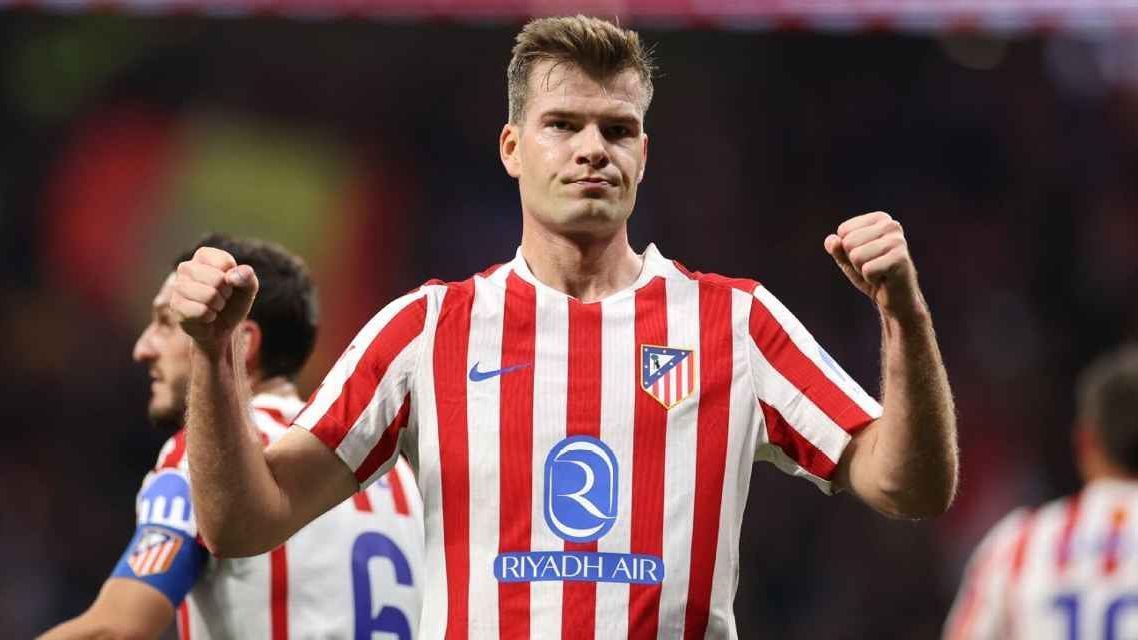
The system Xavi is attempting to implement is a faded photocopy of Pep Guardiola’s masterpiece. It demands a level of technical security, positional intelligence, and pressing intensity that this current squad simply does not possess. They lack a true Busquets-archetype pivot to shield a defense that is already structurally unsound, leaving them perpetually vulnerable to the most basic forms of direct attack. Which brings us to the Norwegian problem. Alexander Sørloth. His record against Barcelona—six goals and three assists in nine appearances—is not an anomaly. No. It is a data point proving a thesis. He is not a world-class phenomenon who happens to torment Barça; he is precisely the type of physical, direct, and aggressive forward that this fragile, ideologically-obsessed Barcelona system is utterly incapable of containing. He doesn’t need to be brilliant. He just needs to be present. The system will do the rest, collapsing under the slightest physical duress. It is a house of cards built on a memory, and players like Sørloth are the gust of wind that proves the point. Every single time.
The Attrition of Cholismo: Survival Is Not Victory
Across the pitch stands the other relic. Diego Simeone’s Atlético Madrid, the great disruptor of the last decade, has become a victim of its own success. Cholismo, once a revolutionary and pragmatic antidote to the Barça-Real duopoly, has stagnated into a predictable, attritional, and ultimately self-limiting doctrine. It is a philosophy built for a different era of football. An era before the coordinated, high-octane pressing systems of the Premier League and Germany became the gold standard. Simeone’s tactics are built on absorbing pressure, ceding territory, and striking on the counter. It is a strategy of the underdog, a warrior’s creed. But what happens when you are no longer the underdog? What happens when you have a roster filled with world-class technicians like Antoine Griezmann, who are asked to spend eighty minutes of a match chasing shadows and making thankless defensive runs?
You get this. An Atlético team that is perpetually caught between its manager’s spartan ideals and the talent of its players. A team that can grind out a 1-0 victory against Getafe but looks tactically bereft against a truly elite, modern opponent. They don’t control games; they endure them. The fire, the grit, the ‘partido a partido’ mantra still resonates, but it’s a hollow echo. It has become a performance of what Atlético *used* to be, rather than a clear vision of what it should become. The silbidos from the Barcelona fans as the Atleti players emerge are predictable, but the real silent judgment comes from the evolution of the sport itself, which has rendered Simeone’s brand of reactive anti-football a tactical dinosaur. It can still bite. It can still win. But it can no longer dominate. It cannot evolve.
The Irrelevant Result
So who wins? Who cares. The result of this specific ninety minutes is a footnote in a much larger, more devastating story. A win for Barcelona will be hailed as a ‘return to the DNA,’ a confirmation that Xavi’s path is the righteous one, papering over the deep structural cracks that will reappear against the next competent opponent. A win for Atlético will be praised as a ‘masterclass in suffering,’ a vindication of Simeone’s timeless methods, ignoring the fact that these methods are capping the club’s ceiling in a rapidly changing European landscape. A draw serves only to prolong the mutual agony and the shared delusion that either of these clubs, in their current state, are genuine contenders for the Champions League. They are not.
The true battle is not on the pitch at Montjuïc. It’s in the boardrooms. It’s in the philosophical tug-of-war between clinging to a sacred identity and embracing a pragmatic, modern evolution. Both clubs are trapped by their own legends—Barça by Cruyff and Guardiola, Atleti by Simeone himself. This match is a collision of two pasts, not a signpost for the future. While they are busy re-enacting the glories of 2014, the rest of Europe is building the armies of 2028. Real Madrid, with its ruthless accumulation of young, versatile talent, and the financial juggernauts of the Premier League are operating on a different strategic plane. This LaLiga ‘choque de trenes’ is a heritage match. A museum piece. Enjoy the nostalgia, by all means. But do not mistake it for progress. It is anything but.