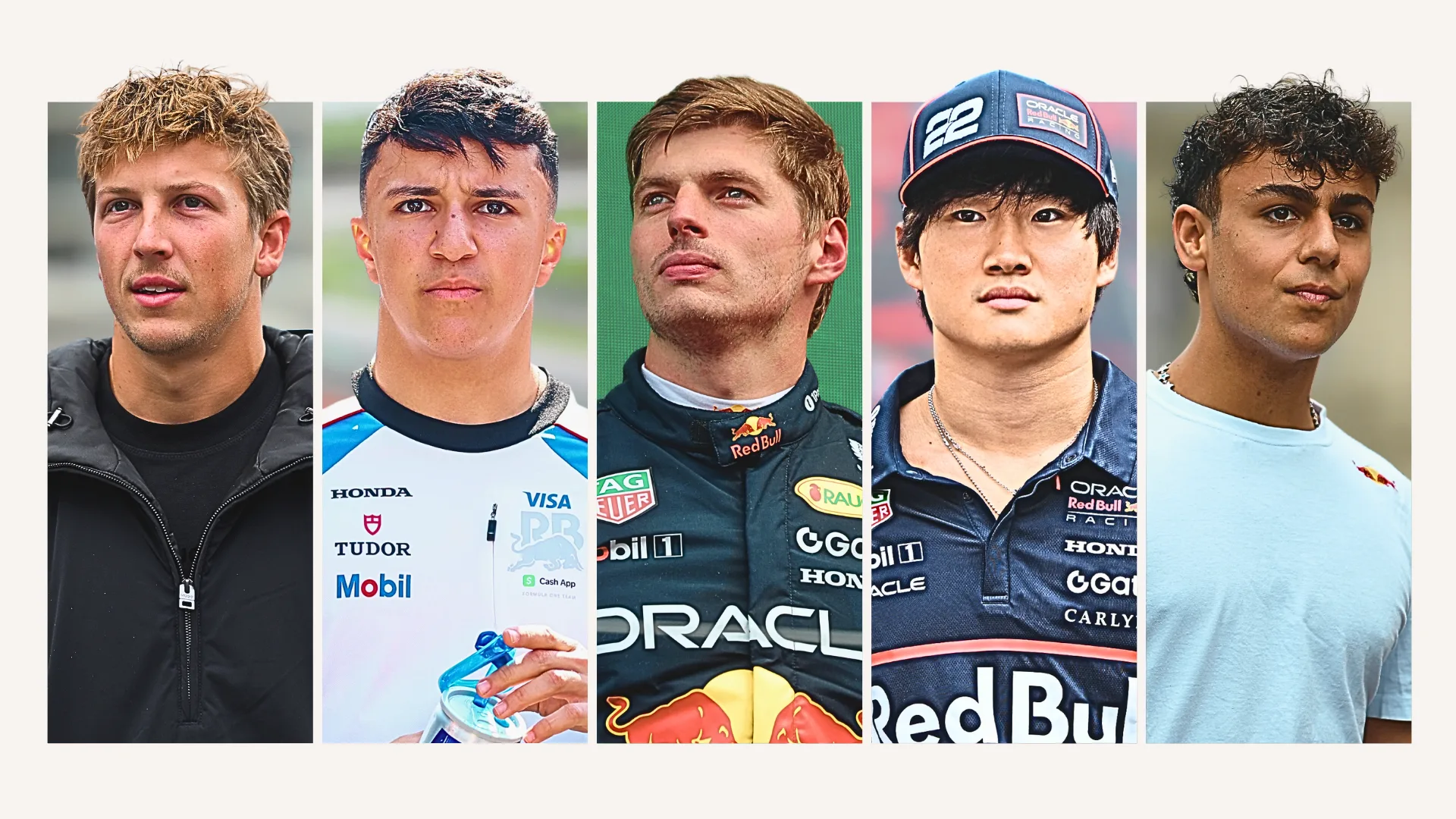
So, Red Bull just detonated their driver lineup for 2026. Is this genius or madness?
Let’s not mince words. This isn’t genius. It’s a calculated, high-stakes gamble born from a systemic failure within the Red Bull Junior Team. For years, the program that once unearthed Sebastian Vettel and Max Verstappen has been sputtering, forcing the team into a cycle of promoting drivers prematurely, discarding them unceremoniously, and then looking outside the family for a fix. This announcement, dressing up Isack Hadjar’s promotion and Arvid Lindblad’s debut as a masterstroke, is nothing more than putting a fresh coat of paint on a crumbling foundation. They are doubling down on a broken model.
Genius would have been cultivating a talent so undeniable that this move felt inevitable. Instead, it feels forced. It reeks of Helmut Marko trying to prove his system still works, even if it means throwing unproven quantities into the fire of a new regulation era. A very expensive fire.
But isn’t promoting from within the Red Bull way?
Is it? Or is that just the marketing talking? The ‘Red Bull way’ has lately involved hiring a driver from outside their program, Sergio Pérez, to do the job their own juniors couldn’t. The ‘Red Bull way’ involved the brutal and rapid shuffling of Pierre Gasly and Alex Albon, damaging careers and revealing the immense pressure cooker that is the second seat next to Verstappen. The system has become a meat grinder, not a talent incubator. What they’re doing now isn’t a return to form; it’s a frantic attempt to create the illusion of one because their last external hire, who helped them win multiple constructors’ championships, is presumably being shown the door.
They are promoting Hadjar not because he’s the next Verstappen, but because he’s the next available option who ticks the ‘homegrown’ box. It’s a move made for the sake of ideology, not necessarily for the sake of logic. And ideology rarely wins championships on its own. Does it?
Let’s deconstruct the pieces. Isack Hadjar to Red Bull. Is he ready?
The objective answer is no. Of course not. Readiness for a top F1 seat isn’t just about flashes of speed in a junior category. Hadjar has talent, certainly. He can be aggressive, he can pull off a stunning qualifying lap. But his career has been a rollercoaster of inconsistency. His F3 campaign was a mix of brilliance and blunders. His first F2 season was largely anonymous before finding his footing in his second. Is that the resume of a driver ready to partner with a generational talent like Max Verstappen in a team defending championships under brand-new, fiendishly complex 2026 regulations? It’s a monumental leap of faith.
Red Bull is betting that the raw material is so good that they can mold him under the intense heat of the main team. But we’ve seen this movie before. The pressure to perform against Max is a career-killer. It broke Gasly. It broke Albon. These were drivers with more experience and arguably more consistent junior careers than Hadjar. What evidence is there to suggest he will be any different? He’s being set up as a sacrificial lamb, a placeholder until the next ‘real’ prodigy comes along, or until the team is forced to look outside again. A risky bet.
And what about the kid, Arvid Lindblad, at Racing Bulls?
An 18-year-old in an F1 car. It’s the kind of story the marketing department dreams of. The next British hero, plucked from F3, fast-tracked to the big leagues. It’s Verstappen 2.0, right? Wrong. The circumstances are entirely different. Verstappen was a singular, once-in-a-generation phenomenon whose talent was so glaringly obvious it warped the entire junior formula landscape around him. Lindblad is a promising, talented driver. One of many.
Throwing him into F1 at 18, likely bypassing F2 entirely, is an act of profound arrogance by the Red Bull program. They are betting their reputation on the idea that they can identify and develop talent better than anyone else, even when it means skipping crucial developmental steps. It could work. Or, more likely, it could shatter the confidence of a young driver who isn’t physically or mentally prepared for the sheer brutality of Formula 1. He’ll be learning on the world’s biggest stage, where every mistake is magnified and dissected. It’s trial by fire, and Red Bull has a habit of leaving its drivers with third-degree burns.
This brings us to the collateral damage. Yuki Tsunoda.
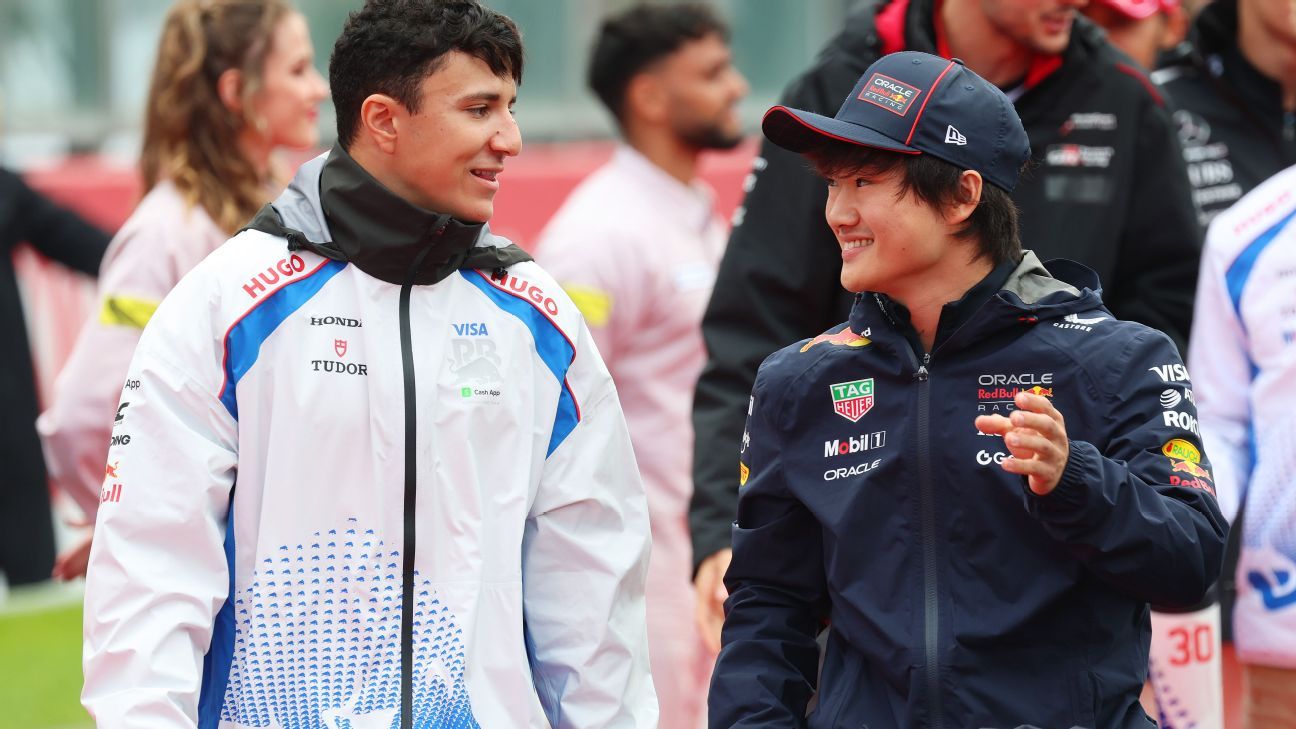
Yuki Tsunoda’s demotion to a reserve role is perhaps the most illogical and indefensible part of this entire charade. Here is a driver who has done exactly what was asked of him. He was raw, erratic, and emotional. He refined his craft, matured immensely, and this season has been consistently outperforming a highly-rated teammate in Daniel Ricciardo. He is leading the Racing Bulls team, scoring the lion’s share of their points, and has demonstrated clear, linear progression. His reward? A seat on the bench.
What message does this send to any driver in the Red Bull system? It says that performance, growth, and results are secondary to a pre-determined narrative. It says that loyalty is a one-way street. They’ve invested years in Tsunoda, sanded down his rough edges, and just as he’s becoming the complete package they imagined, they toss him aside for a newer, shinier toy. It’s a stunningly poor piece of asset management. They’ve essentially ripened the fruit for another team to pick in 2027. It makes no sense.
And Liam Lawson? The forgotten man?
Ah, Liam Lawson. The man who actually stepped into an F1 car mid-season, under immense pressure, and scored points almost immediately. He did everything right. He proved his mettle. And he’s still stuck at the junior team, now tasked with babysitting a teenager. While Hadjar, a driver with a less impressive F2 record, gets the golden ticket. How can you justify this? You can’t, not with pure logic.
This signals that Lawson has hit his ceiling in the eyes of Red Bull’s management. They see him as a dependable, solid hand for the B-team, but not as championship material for the A-team. He is the new Jean-Éric Vergne or Sébastien Buemi – good enough to be in the family, but never good enough to sit at the main table. His role in 2026 is clear: be the stable benchmark against which Lindblad is measured. It’s a thankless, career-stagnating job. He has become a tool for evaluation, not a prospect for promotion.
So what is the real endgame here? What’s the strategy?
The strategy is a desperate throwback to a bygone era. It’s Helmut Marko attempting to recreate the lightning-in-a-bottle success of the Vettel and Verstappen discoveries. He’s chasing the high of finding the ‘chosen one’, and he’s willing to burn through half a dozen other careers to do it. The problem is, talent like that isn’t found on a predictable schedule. You can’t just decide it’s time for another prodigy and pluck one from the assembly line.
This is also about control and cost. Young, inexperienced drivers are compliant. They are cheap. They don’t have the leverage to challenge the team’s number one driver or make significant contractual demands. Hadjar and Lindblad will be grateful just to be there. They won’t rock the boat. They are perfect, malleable number twos and juniors, entirely beholden to the system that created them. This move reasserts the power of the program over the individual driver, a core tenet of the Marko philosophy.
Ultimately, this isn’t a strategy for winning. It’s a strategy for maintaining a certain internal power structure and financial model. They are sacrificing proven talent and stability for the mere chance of finding the next superstar, a lottery ticket that is highly unlikely to pay off. For a team that operates with such ruthless efficiency on track, their long-term driver strategy looks frighteningly chaotic and emotional. It’s a mess.