The Illusion of Control Has Been Grounded
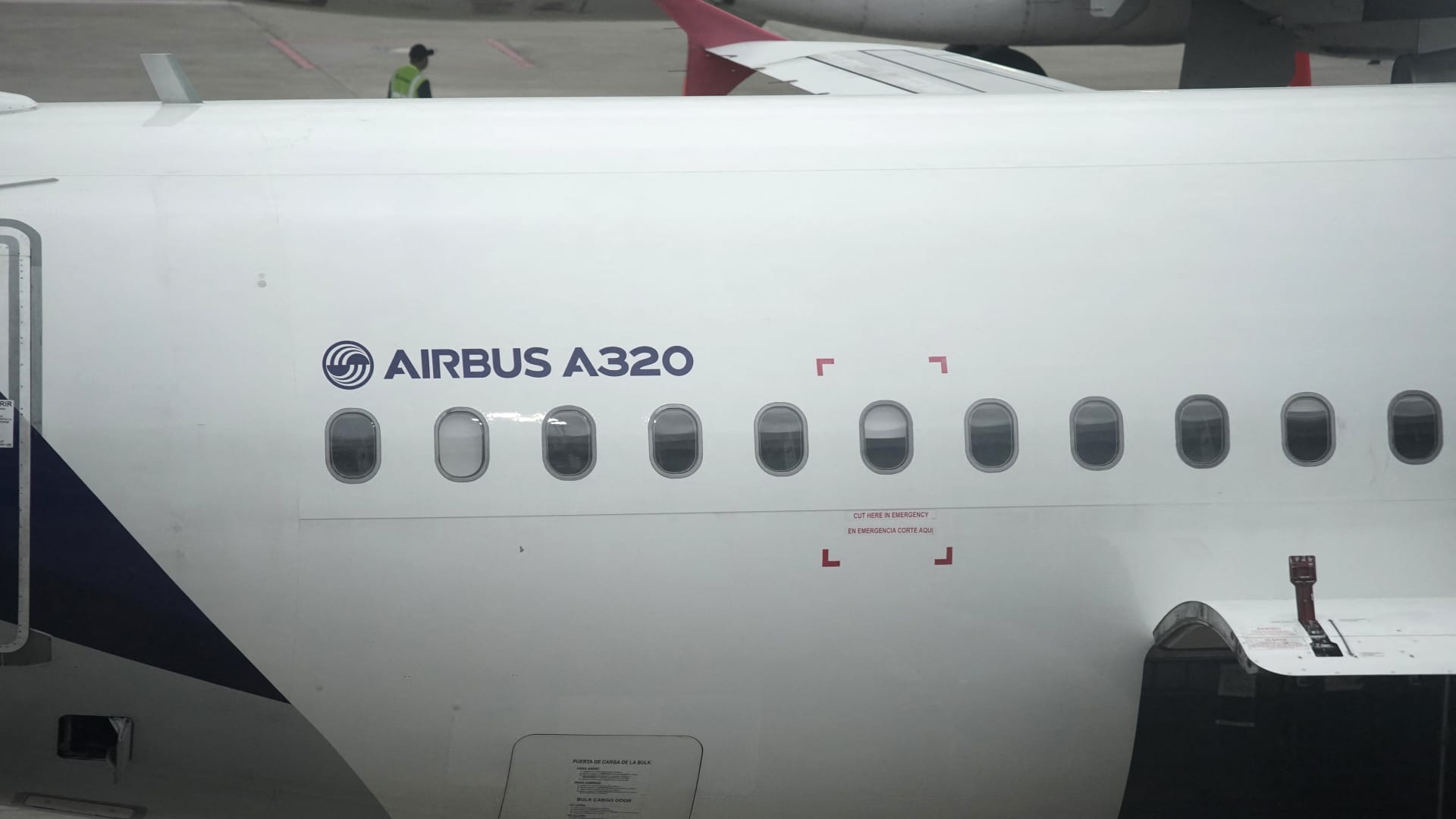
Let us dispense with the pleasantries and the soothing official statements. What transpired over America’s busiest holiday travel weekend was not a mere ‘glitch’ or a proactive safety measure handled with swift efficiency. It was a stark and brutal exposure of the foundational weakness upon which the entire modern aviation duopoly is built. They want you to believe this was a minor software bug. A quick patch. A nuisance. The reality is far more chilling: 6,000 flying supercomputers, the workhorses of global travel, were found to have a potentially catastrophic flaw in their digital nervous system, and the response was a frantic, desperate scramble of public relations masquerading as command and control. The statement from the Transportation Secretary about ‘no major disruptions’ is a masterpiece of political tranquilizer, designed to manage public perception, not to convey the strategic reality of the situation. It’s an insult to intelligence. A few hours of work, a few lines of code changed, and the problem simply vanishes across a global fleet of thousands of aircraft? This narrative is not just improbable; it is a dangerous fiction.
A Battle in a Decades-Long War
To understand the gravity of this event, one must view it not as an isolated incident, but as a single, disastrous battle in the unending war between Airbus and Boeing. This is not about one company’s mistake. It is about a systemic race to the bottom, where complexity is mistaken for progress and market share is pursued with a zeal that sidelines absolute, uncompromising engineering integrity. For decades, these two titans have engaged in a ruthless competition for dominance, pushing the boundaries of technology, materials science, and, most critically, automation. The A320 family, with its revolutionary fly-by-wire system, was Airbus’s great triumph, a definitive move away from the direct mechanical linkages of the past. It turned pilots into system managers, placing its faith in the infallibility of silicon and software. This was both its genius and its original sin. For years, this architecture was the gold standard. Boeing was forced to play catch-up, a dynamic that led directly to the MCAS debacle and the 737 MAX tragedies. What a bitter irony. Now, the very system that defined Airbus’s technological superiority has revealed itself to be a potential single point of failure on a global scale.
Think about the strategic implications. Do you really believe the timing of this announcement, during a peak travel period, was a coincidence or simply bad luck? Corporate strategists are not that naive. This suggests two possibilities, both of which are deeply unsettling. The first is that the flaw was so severe, so imminently dangerous, that they were forced to act immediately, regardless of the catastrophic commercial and logistical consequences. If this is the case, what does it say about their testing and certification processes that such a flaw made it into 6,000 operational aircraft? The second possibility is even more cynical: they knew about the issue and attempted to manage the timing of the disclosure, hoping a holiday weekend would somehow soften the blow or that the rapid ‘fix’ would bury the story. Either incompetence or arrogance. Pick your poison. In the cold calculus of corporate survival and state-backed industrial competition, passenger convenience is a trivial variable. What truly matters is containing the damage to the stock price and preserving the order book.
The Tyranny of Code
The modern aircraft is a miracle of engineering, but it is also a terrifyingly complex ecosystem of code. Millions upon millions of lines of software interacting in ways that no single human can fully comprehend. We are told to trust the process, the simulations, the redundancies. But this event shatters that trust. A ‘glitch’ is not like a faulty mechanical part that shows wear and can be physically inspected. A software flaw is a ghost in the machine. It can lie dormant for years, across thousands of flight hours, only to manifest under a unique and unforeseen set of circumstances. And when it does, the consequences can be instantaneous and absolute. When the code fails, the pilot may be little more than a passenger with a better view of the unfolding disaster. How can anyone be certain that this hastily deployed ‘patch’ has truly solved the root problem? Was it tested under every conceivable condition, on every variant of the A320 in service? Or was it a quick-and-dirty fix designed to get planes back in the air and stop the financial bleeding? The speed of the resolution is not reassuring; it is suspicious. It suggests that the priority was operational continuity, not exhaustive verification. We are being asked to take a leap of faith, to trust that the same corporate and regulatory bodies that allowed this flaw to proliferate have now perfectly and permanently corrected it in a matter of hours. This is not a reasonable expectation. It is a demand for blind obedience.
The long-term consequences will be far-reaching. Boeing, despite its own sullied reputation, has just been handed a powerful weapon. Their sales teams can now whisper into the ears of airline executives, questioning the software integrity of their chief rival. The narrative will be subtle but effective: ‘Our philosophy keeps the pilot in the loop; their philosophy defers to the machine.’ Regulators like the FAA and EASA will be forced into a theatrical display of increased scrutiny, but are they truly equipped to audit millions of lines of proprietary code? Or will they continue to rely on the manufacturer’s own data? This incident has done more than delay a few thousand travelers. It has planted a seed of doubt. It has reminded the world that the gleaming machines we step into are governed by invisible, fragile logic. And that logic, created by fallible humans in a high-stakes corporate environment, is not infallible. This is the new reality. The age of assumed mechanical integrity is over. We are now in the age of software vulnerability, and the battle for the sky will be fought in lines of code, with our safety as the collateral. The system held this time. Will it hold the next?