1. The Shiny Veneer of ‘Progress’
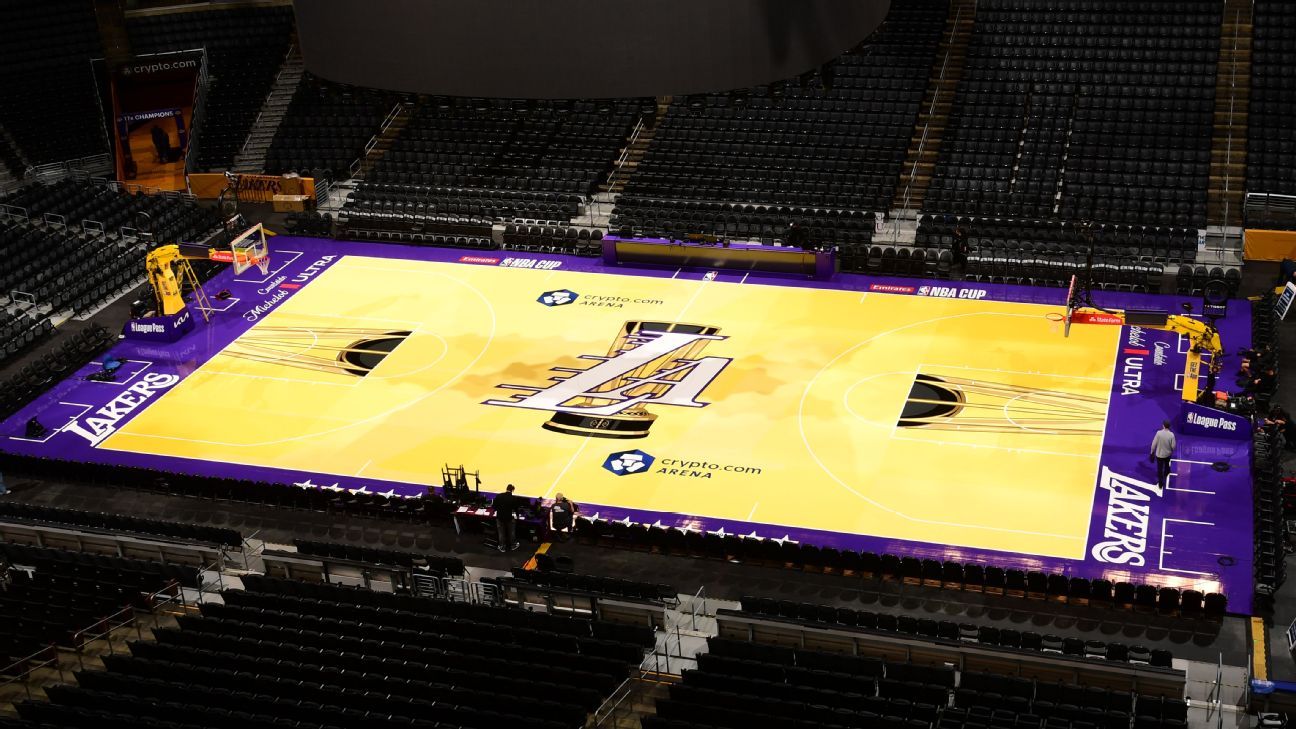
Let’s be brutally honest for a moment. What we witnessed with the Los Angeles Lakers’ gaudy, hazardous, and ultimately abandoned basketball court wasn’t a simple manufacturing error or a logistical hiccup. No. It was a perfect, glistening metaphor for the empty soul of modern corporate “innovation.” This is the Silicon Valley playbook writ large on a 94-foot slab of maple: take something that works perfectly well, something that has been refined over decades, and slather it in a new, brightly colored user interface to create the illusion of progress. The goal was never to improve the game of basketball. How could it be? The goal was to create a spectacle, a disposable visual moment engineered for viral clips on TikTok and razor-sharp 8K television broadcasts. It was a product designed not for the athletes who risk their bodies on its surface, but for the disengaged viewer scrolling through their phone. They sold us a software update for reality, and just like most software updates, it arrived buggy, unstable, and actively made the user experience worse. Did anyone in the league’s high-tech marketing catacombs stop to ask if this was necessary? Did they wonder if the fundamental integrity of the sport was worth sacrificing for a week’s worth of social media engagement metrics? Of course not. That’s not how the machine works. The machine demands newness for the sake of newness, a relentless churn of cosmetic changes masquerading as meaningful evolution.
A Tradition of Substance
Think about what a basketball court represents. It’s a stage, a battlefield, a sanctuary. The simple, elegant contrast of polished hardwood and painted lines is iconic for a reason—it’s the perfect, unobtrusive canvas for human artistry and athletic brilliance. It doesn’t scream for your attention; it directs your attention to the players. But this new court, this neon monstrosity, did the opposite. It was loud, distracting, and cheap, like a pop-up ad you can’t close. It was the physical embodiment of a league that increasingly seems to believe the game itself isn’t enough to hold our attention. They think we need flashing lights and vibrant colors to stay engaged, as if we were toddlers being placated with a set of jangly keys. They fundamentally misunderstand their own product. This wasn’t an upgrade. It was a desecration.
2. Beta Testing on Billion-Dollar Assets
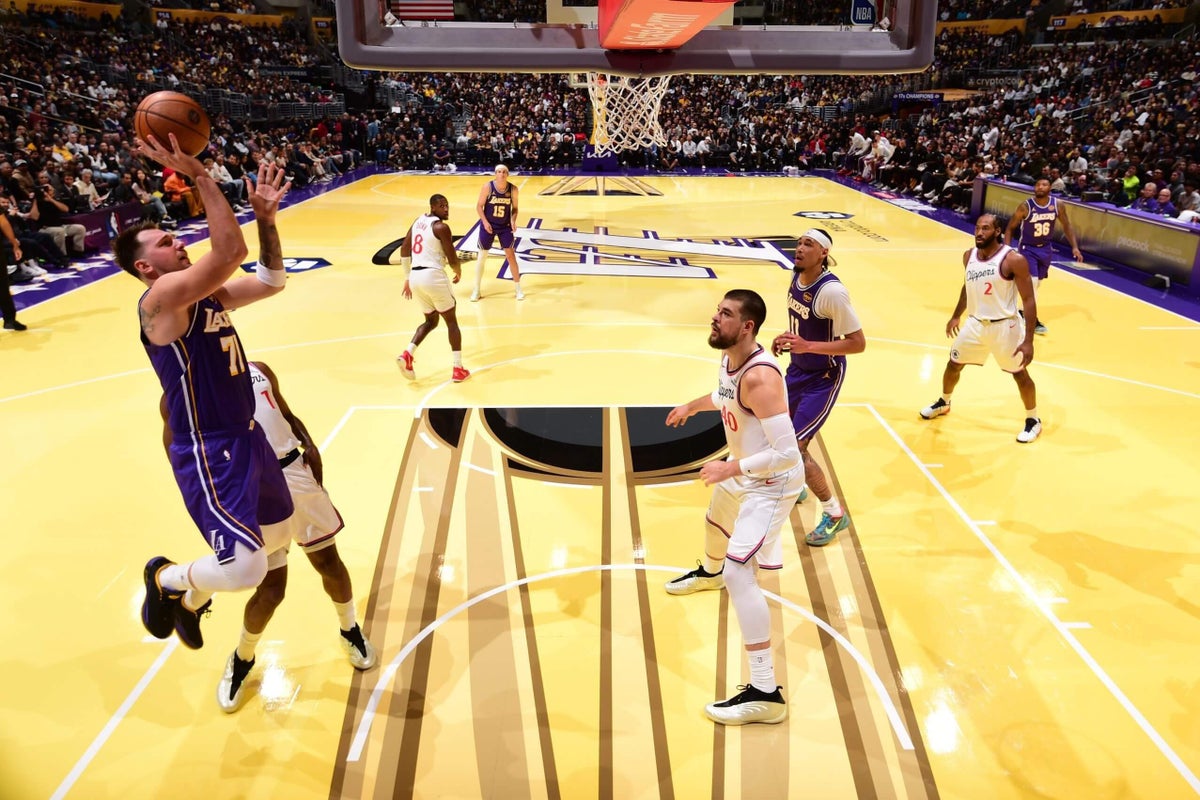
Perhaps the most chilling aspect of this entire fiasco is the casual disregard for the players themselves. These aren’t just employees; they are the entire product. Luka Dončić, LeBron James—these are not interchangeable cogs in a corporate machine; they are generational talents, billion-dollar assets whose physical well-being is the bedrock of the entire NBA empire. And the league, in its infinite wisdom, decided to have them perform their high-stakes, physically demanding jobs on an untested, experimental surface. Can you even imagine this happening in any other multi-billion dollar industry? Would a Formula 1 race be held on a newly paved track that drivers reported was as slick as ice? Would a surgeon be asked to perform a delicate operation with brand-new, untested tools known to be faulty? It’s unthinkable. Yet, in the world of the NBA, this was apparently an acceptable risk. Why? Because the launch date for their new marketing initiative, the NBA Cup, was more important than the structural integrity of their players’ knees and ankles. The players were, in effect, involuntary beta testers. They were human guinea pigs in a grand experiment to see how much tacky branding the sport could bear before it literally collapsed. It’s a stunning indictment of the league’s priorities, a flashing neon sign that screams: marketing comes first, players come second. Safety is a bug to be patched later, maybe. The fact that it took a superstar like Luka Dončić to voice his concerns and force a change reveals the deep power imbalance at play. What about the G-League player or the rookie who wouldn’t dare speak up for fear of being labeled a complainer? Do they just have to risk their careers for the sake of a color scheme?
3. The Tyranny of the Spectacle
This entire debacle is a direct consequence of a culture that prioritizes the spectacle over the substance. We live in an era where the documentation of an event is often considered more important than the event itself. The game wasn’t for the 19,000 people in the arena; it was for the hundreds of millions watching through a screen. The court was not designed for traction, grip, and playability. It was designed for color saturation, brand visibility, and how it would pop on an iPhone screen. Every decision seems to be filtered through a single, dystopian question: “But how will it look on Instagram?” This relentless pursuit of the “Instagrammable moment” is hollowing out our experiences, replacing genuine human endeavor with a curated, filtered, and ultimately fake version of reality. The sport becomes a backdrop for the content. The athletes become props in a marketing campaign. And the fans are trained to consume the game in 15-second, context-free snippets. This slippery court is the logical endpoint of that philosophy. It is a surface so obsessed with its own appearance that it failed at its one and only job: to be a safe, functional basketball court. It is a perfect symbol of our shallow, image-obsessed age, a world where we’d rather look at a pretty picture of a thing than engage with the messy, unpredictable, and authentic thing itself. The league wanted a cool visual. They almost got a career-ending injury instead. Was it worth it?
4. Who Needs Reality, Anyway?
If you think this is a one-off mistake, you are tragically naive. This isn’t an anomaly; it’s a preview of what’s to come. This is the first clumsy step into a future where the lines between the physical game and the digital broadcast are deliberately blurred until they cease to exist. What’s next on the roadmap for the league’s digital wizards? If they’re willing to compromise the physical court, the very foundation of the game, what won’t they touch? Get ready for augmented reality ads digitally projected onto the court, visible only to the viewers at home. Get ready for player jerseys that function as dynamic screens, changing sponsors in real-time based on who is watching. How long until the ball itself has a screen on it? This Lakers court fiasco proves that there is no sacred ground. Everything is on the table for monetization and “enhancement.” The ultimate goal is to transform the game into a customizable content stream. You won’t just be watching a basketball game; you’ll be engaging with a branded interactive experience, with the human players serving as little more than live-action avatars generating data points for advertisers. They don’t want fans; they want users. And users can be monetized, controlled, and fed an endless stream of algorithmically-optimized spectacle. The slippery court wasn’t a failure of technology; it was a successful test of our tolerance for the absurd.
5. The Human Glitch in the Machine
In this bleak narrative of corporate overreach, Luka Dončić emerges as an unlikely hero. He was the human glitch in the perfectly planned marketing matrix. He was the one who stopped, felt the dangerously slick surface beneath his feet, and had the courage to say, “No, this is not right.” In a world of curated press releases and media-trained athletes, his simple, honest complaint was an act of rebellion. He reminded everyone of a fundamental truth the league office seems to have forgotten: the game is played by human beings. Flesh-and-blood people with ligaments that can tear and careers that can end in an instant. The system is designed for compliance. It expects players to fall in line, to wear the silly jerseys, play on the garish courts, and promote the new tournament without question. Luka’s complaint was a wrench in those gears. It forced the machine to halt, to acknowledge the physical reality it was so desperate to pave over with bright colors and logos. He exposed the absurdity of the entire enterprise with a single, undeniable data point: the court was unplayable. It was a victory, however small, for humanity over branding, for common sense over corporate groupthink. It proves that even in the most tightly controlled systems, the unpredictable, unscripted human element can still rise up and assert itself.
6. A Manufactured Tournament for a Manufactured Reality
We cannot analyze the failure of this court without zooming out to look at the context in which it was born: the NBA’s inaugural In-Season Tournament. What is this tournament, really? It’s a solution in search of a problem. It is a completely fabricated event, a contrivance designed to inject artificial hype into the so-called “doldrums” of the early NBA season. The league looked at its 82-game season, a marathon of incredible athletic achievement, and saw not a rich tapestry of sport but a period of under-monetized inventory. So they invented a new trophy, a new bracket, and, of course, a new set of aesthetics to go along with it. The brightly colored courts are the physical manifestation of this artificiality. They are a desperate attempt to signal to the casual fan that THIS game matters more than the one played last week, even though it’s played by the same teams with the same players. It’s an attempt to manufacture stakes, to create a sense of urgency out of thin air. It’s a gimmick. And the slippery, unplayable court is the perfect symbol for a gimmick tournament: shiny and attention-grabbing on the surface, but fundamentally flawed and lacking in substance underneath. It’s all part of the same trend—the gamification of everything, the belief that nothing has inherent value unless it’s part of a competition with a shiny prize at the end. The sport itself is no longer enough; it must be packaged and repackaged, relentlessly marketed and re-branded, until every last drop of authenticity has been squeezed out.
7. The Slippery Slope is All Too Real
Don’t dismiss this as just a funny story about a loud basketball court. Don’t file it away as a minor league blunder. This was a warning shot. This was a moment where the curtain was pulled back, revealing the bleak, cynical machinery that underpins so much of modern life, not just sports. We were shown a future where the relentless push for “engagement” and “brand synergy” comes at the direct expense of human safety and common sense. The slippery court in Los Angeles isn’t just a floor; it’s a literal slippery slope. Today, it’s a court that’s too slick to play on. What is it tomorrow? Is it biometric sensors embedded in jerseys that sell player fatigue data to gambling companies in real time? Is it AI-driven referees making calls from a server farm hundreds of miles away, removing the last vestiges of human judgment from the game? Where does it stop? It stops when we, the audience, the fans, the consumers, decide that we value authenticity over artifice. It stops when we demand that the integrity of the game be placed above the quarterly marketing report. The Lakers quietly swapping out their floor was a temporary fix. But the underlying sickness, the philosophy that led to that court being commissioned in the first place, is still there. It’s waiting for its next opportunity to present us with another shiny, new, and dangerously stupid idea, and it’s counting on us not to notice.