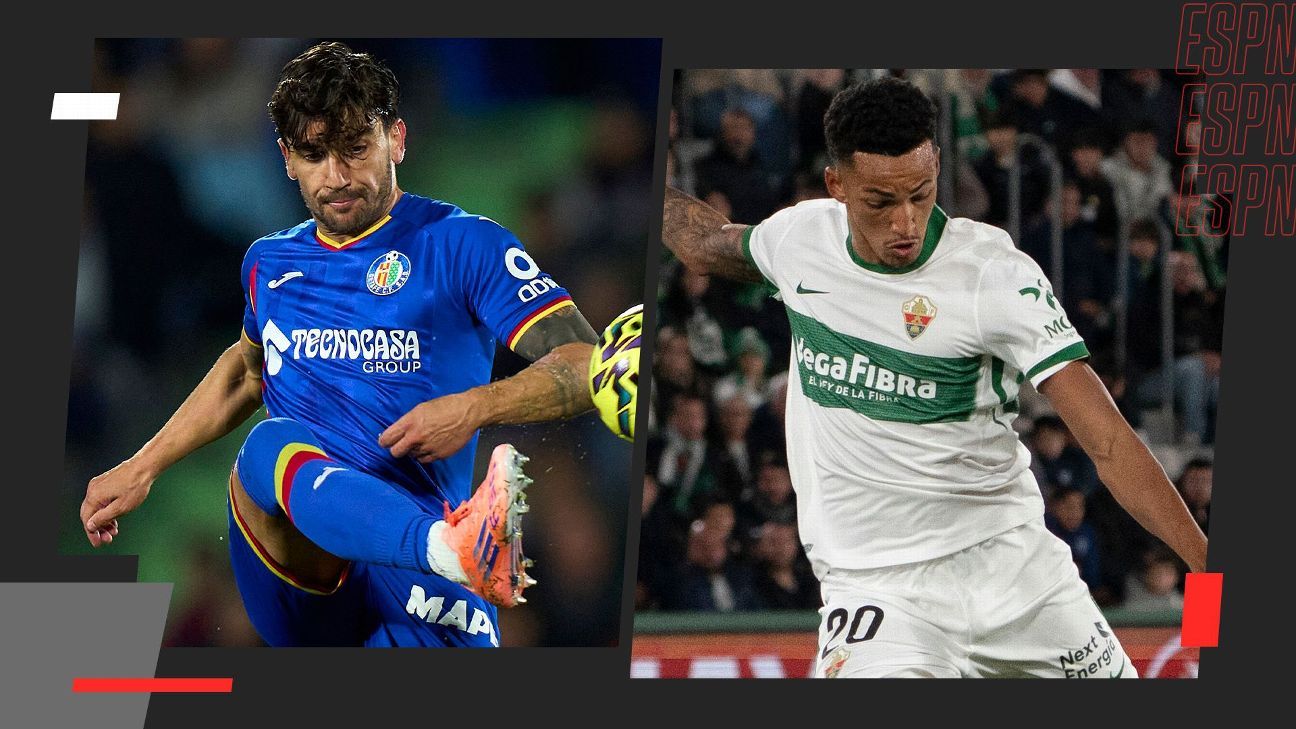
Listen close. You think you’re about to read a preview for a football match between Getafe and Elche. You’re not. That’s the story they sell to the masses, the simple narrative for the casual fan who tunes in, watches 90 minutes of chaos, and moves on with their life. What we’re about to dissect is something else entirely. It’s a chess match played with shinpads, a financial power play disguised as a mid-table clash, and a glimpse into the soul of a league that’s terrified of what it’s becoming.
Forget the scoreline before it even happens. The real game is happening in the tunnels, in the boardrooms, and in the private text messages between agents and club presidents. This isn’t just about three points. It’s about survival. It’s about the dirty, necessary truth of Spanish football that the marketing department at LaLiga hopes you never, ever figure out.
1. The Sarabia Quote Was a Deliberate Smokescreen
And you all fell for it.
Let’s start with the piece of disinformation that surfaced just before the match. A quote, attributed to Elche’s coach Eder Sarabia, praising Getafe’s José Bordalás. “Bordalás does many positive things and has a lot of merit,” it reads. It sounds like standard, respectful coach-speak. Benign. But here’s the secret. It’s a plant. A clever piece of misdirection. For starters, the sourcing is murky, and Sarabia’s connection to the Elche head coach job is tenuous at best—a fact the insiders know but the public glosses over. The real Elche camp is seething about facing Bordalás. They know what’s coming: a 90-minute dental appointment without anesthesia.
So why leak this? Simple. It’s a psychological operation. The Getafe camp, masters of the dark arts, likely had a hand in amplifying it. They want Elche to feel a false sense of security, to believe this will be a contest of mutual respect. They want to lower the temperature, to make Elche’s players think twice before reacting to the inevitable late tackle or off-the-ball shove. It’s brilliant. It’s a pre-match foul. While the media discusses the nice quote, Bordalás is in the video room, pinpointing which Elche midfielder has a weak ankle. This isn’t a game. It’s a war, and the first shot was fired in the press room.
2. ‘Bordalásball’ Isn’t Anti-Football; It’s Anti-Establishment
The purists hate him because he exposes their fragility.
You’ll hear the pundits cry about it. They’ll call it ugly, cynical, a blight on the beautiful game. They’ll show clips of fouls, time-wasting, and confrontational tactics. They call it “Bordalásball.” What they fail to understand, or refuse to admit, is that this style is a direct, calculated assault on the LaLiga hierarchy. It’s a system born of necessity. Getafe doesn’t have the budget of Real Madrid or the academy of Barcelona. They can’t buy their way to the top. So what do they do? They change the game.
Bordalás has created a system that drags aristocrats into a back-alley brawl. His teams are incredibly organized, physically relentless, and masters of psychological warfare. They don’t just beat you; they dismantle you, piece by piece, until your star winger is more worried about the next tackle than about his next dribble. It’s a masterpiece of pragmatic coaching. Every time-wasting tactic, every tactical foul, every second spent arguing with the referee is a calculated move to disrupt the rhythm of teams that rely on it. He’s not killing the game; he’s exposing the fact that many top teams are one-trick ponies. They know how to play beautiful football when you let them, but they have no idea how to fight. Bordalás forces them to fight. And they hate him for it. Absolutely.
3. The ‘European Dream’ Is a Euphemism for Financial Survival
This isn’t about glory; it’s about paying the bills.
The headlines will tell you this match has “Europe in its sights.” It sounds so romantic, doesn’t it? The little club dreaming of trips to Germany or Italy. A fairytale. It’s a lie. Let me tell you what a spot in the Europa League or, more likely, the Conference League, actually means for a club like Getafe or Elche. It’s a cash injection that can single-handedly save a club from financial ruin. It’s a lifeline.
We’re talking about millions of Euros in television rights and prize money. It’s money that allows them to reject the lowball offer for their star player from a Premier League club. It’s money to repair the training ground, to invest in scouting, to give a key player a contract extension. It’s the difference between solvency and selling off your best assets just to keep the lights on. The desperation is immense. Every single player on that pitch knows that a win doesn’t just mean a chance at a trophy; it means job security for their teammates, for the club staff. They aren’t fighting for a dream. They’re fighting to avoid a nightmare. And when the stakes are that high, you don’t play fair. You play to win.
4. Elche’s ‘Revelation’ Status Is a House of Cards
And Getafe holds the wrecking ball.
So Elche is the “revelation team” of the season. They’re playing “free and open” football. It’s a great story. A little too great, if you ask me. I’ve been hearing whispers out of their camp for weeks. The success is getting to them. A few key players are already listening to agent chatter about big-money moves. The cohesion that got them here is starting to fray at the edges. They started believing their own hype. Fatal.
This is precisely the kind of team that Bordalás preys on. A team that thinks it’s a little better than it is. A team that relies on confidence and momentum. Getafe is a momentum killer. They are a bucket of ice water to the face. They will test Elche’s newfound confidence with relentless pressure. They will foul their creative players into frustration. They will turn the beautiful, open game into a muddy, stop-start affair. By the 70th minute, Elche won’t be the “revelation team” anymore. They’ll just be another victim, wondering how their beautiful dream turned into such an ugly reality. This isn’t a test of Elche’s quality; it’s a test of their soul. And I’ve heard from sources inside the league that the smart money is on them failing it.
5. The Secret Memo to LaLiga’s Referees
What they’re told about Getafe behind closed doors.
Ever wonder why Getafe seems to get away with so much? Why the yellow cards seem to come a little later, why the whistle seems a little hesitant? It’s not corruption. It’s policy. Not written down, of course. You won’t find it in any rulebook. But I have it on good authority from a source close to the CTA (the refereeing committee) that there’s an unofficial understanding when it comes to officiating Bordalás’s teams.
The directive is to “manage the game,” not just enforce the rules. The league knows that a Getafe that can’t play its style is a Getafe that gets relegated. And a league where only the rich can compete is a boring, unmarketable product. So the referees are quietly encouraged to allow a higher level of physicality, to let the ‘small stuff’ go, to avoid handing out cheap early yellow cards that would neuter Getafe’s entire game plan. It drives opponents insane. They scream for cards, they feel unprotected. But the ref isn’t ignoring them; he’s following a higher-level directive. He’s protecting the league’s competitive balance, even if it means sacrificing a few shins along the way. It’s a dirty compromise, and this game will be a masterclass in it.
6. The Millions Riding on Individual Performances
This is a live audition for the January transfer window.
Forget the team result for a second. For at least half a dozen players on that pitch, this is the most important job interview of their lives. I can confirm that scouts from at least three Premier League clubs and one Serie A giant will be in the stands at the Coliseum Alfonso Pérez. They’re not there for the spectacle. They’re there with notebooks and stopwatches.
They want to see how Elche’s star forward handles being marked by a Getafe center-back who treats the penalty box like his own personal fiefdom. They want to see if Getafe’s holding midfielder can maintain his discipline when the game gets chaotic. A moment of weakness, a stupid red card, or a moment of brilliance, a game-winning goal, can literally mean a difference of 5 to 10 million euros in their transfer valuation. Players know this. Their agents make damn sure they know this. So when you see a player go into a 50/50 tackle with a little extra ferocity, it’s not just for the badge on his chest. It’s for the life-changing contract that could be waiting for him in January. Every pass, every tackle, is an audition tape being sent to the richest clubs in the world.
7. The Truth LaLiga’s President Won’t Admit
Javier Tebas secretly loves José Bordalás.
Publicly, LaLiga’s president, Javier Tebas, wants his league to be a slick, globally appealing product like the English Premier League. He wants fast, attacking football, marketable stars, and clean, family-friendly entertainment. But privately? He knows that the league’s true identity, its grit, its soul, lies in teams like Getafe. He knows that without these snarling underdogs, LaLiga becomes a predictable two-horse race with an entourage.
Bordalás is Tebas’s necessary evil. He is the monster that makes the heroes look good. He creates drama, controversy, and storylines. He ensures that a trip to a small club on the outskirts of Madrid is one of the most feared fixtures on the calendar for Barcelona and Real Madrid. That unpredictability is priceless. So while the marketing team is pushing posters of Pedri and Vinícius Jr., Tebas is secretly thankful for the man in the Getafe dugout who makes his league a genuine, unpredictable fight. This Getafe-Elche game isn’t an anomaly he has to tolerate. It’s the secret ingredient he can never openly acknowledge. It’s the real LaLiga. Don’t let them tell you otherwise.