Don’t You Dare Call This a Feel-Good Story
The System Claims Another One
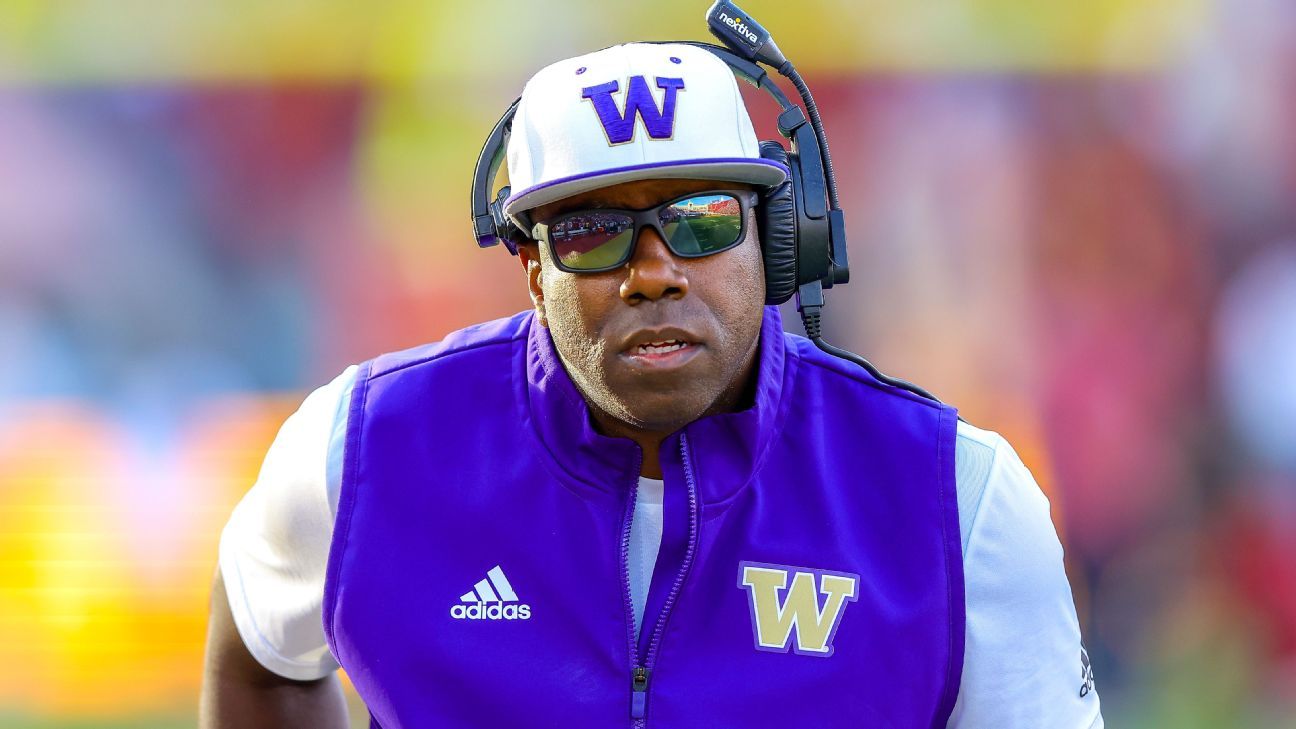
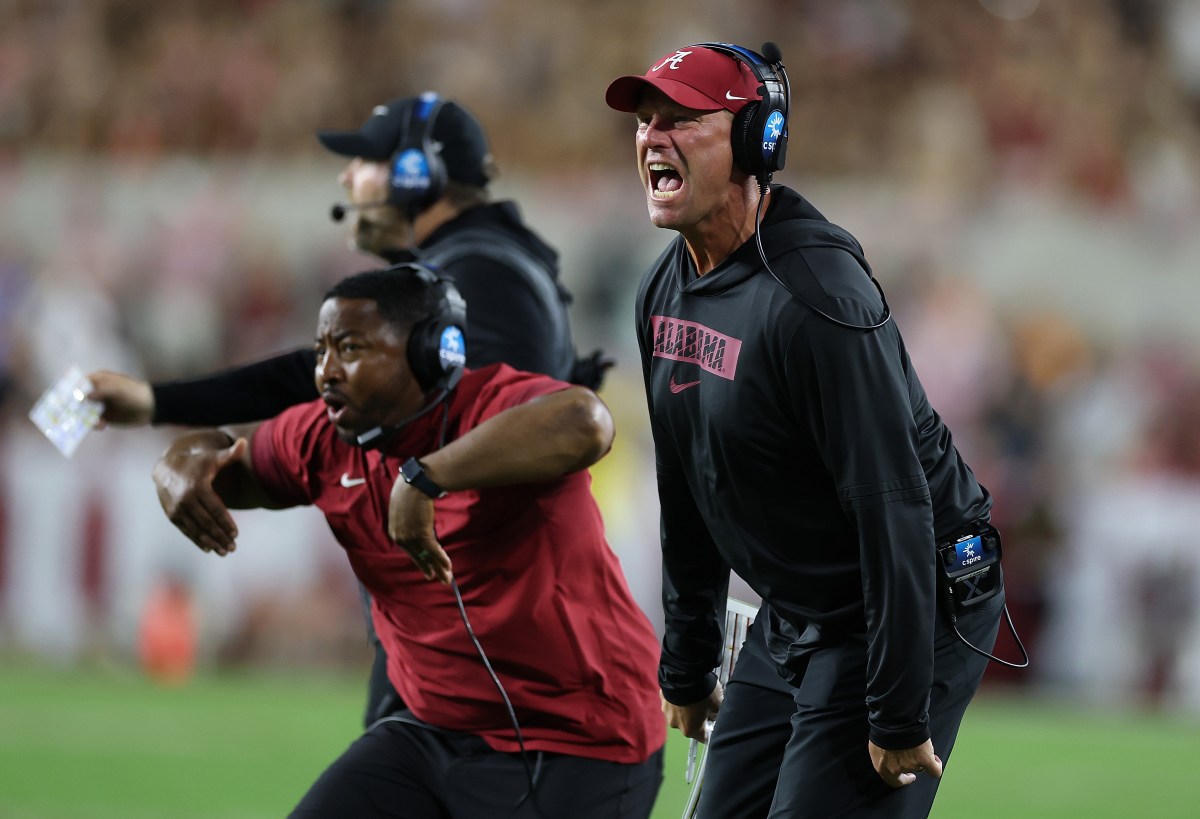
So, the headlines are chirping. Oregon State has a new coach. Alabama’s co-offensive coordinator, JaMarcus Shephard, is packing his bags for Corvallis, signing a shiny five-year deal that everyone is supposed to applaud as a great career move. A step up. The American dream, right? Wrong. This isn’t a story about a man’s ambition being realized. This is a story about the machine feeding itself. It’s a data point flashing across a terminal, signifying a routine asset transfer just moments before a critical performance window—the Iron Bowl. We’re being told to watch the ball, but the real game is happening in the boardroom, on the spreadsheets, and in the cold, binary logic of a system that has long since forgotten what it feels like to be human.
They want you to see this as football. Tradition. Rivalry. But how can you see tradition when a key strategic mind for one of the nation’s most powerful programs is effectively being poached, his focus undeniably split, on the eve of a game that defines seasons and legacies? It’s a farce. A glitch in the matrix. The timing isn’t just “disconcerting,” as some milquetoast reports suggest; it is a feature, not a bug, of a dystopian sports landscape where human allegiance is merely a variable to be optimized for maximum financial extraction. He’s not leaving a team. He’s being transferred from one corporate division to another. Period.
1. The Human Component is Now a Hot-Swappable Drive
Plug and Pray
Let’s be brutally honest about what is happening at Alabama, the great and powerful empire Nick Saban built. Is it a football team or is it a perfectly calibrated engine of success? When a component, like Shephard, is removed, the machine doesn’t weep. It doesn’t have a moment of nostalgic reflection. The system simply identifies the vacancy and accesses a database of pre-vetted, high-performance replacements. There is no disruption to the ‘Process,’ because the ‘Process’ was designed to be inhuman. It was engineered to be impervious to the messy, unpredictable whims of individual loyalty or emotion.
Shephard was a valuable part, no doubt. But in this paradigm, value is measured in wins, recruiting rankings, and offensive efficiency statistics—all quantifiable data. Oregon State isn’t hiring a man; they’re acquiring a proven piece of software, hoping his code can debug their failing system. It’s a desperate hardware upgrade. And what of the man himself? Do we really believe he has a deep, abiding passion for the Beavers that magically manifested days before the biggest game of his current team’s season? Or is he just running the program his ambition dictates, following the most logical pathway presented by the algorithm of career advancement? Don’t be naive. He’s just a user executing a command.
2. Loyalty: An Obsolete Operating System
404 Error: Commitment Not Found
Remember when a coach leaving a team was a seismic event, a betrayal whispered about for years? That quaint notion now feels like a black-and-white film from a forgotten century. That operating system is no longer supported. The new OS is transactional, built on the fluid, shifting sands of buyouts, agent negotiations, and media rights deals. That five-year contract Shephard just signed? It’s meaningless. It’s not a promise; it’s a placeholder. It is a temporary financial agreement that will be rendered void the second a program with a bigger budget and a better data package comes calling in two or three years. We all know this. We watch the cycle repeat, season after season, a nauseating carousel of coaches in new polos, spouting the same recycled platitudes about “building a culture” at a place they have no intention of calling home.
The system actively punishes loyalty. A coach who stays too long at a smaller school is seen as lacking ambition. A player who doesn’t enter the transfer portal to chase a bigger NIL deal is a fool. We have created a world where commitment is a strategic disadvantage. So why feign surprise when a coach’s attention is for sale to the highest bidder while his current team, made up of young men he supposedly mentored, faces its arch-rival? Why? He’s just playing the game by the new rules. The soul-sick, corrupted rules.
3. The Panopticon of Performance Metrics
You Are Being Watched. Always.
Do you think for one second these coaches are allowed to just… coach? To trust their gut? To make a daring, human decision? Of course not. Every play is logged, every decision tree is analyzed, every player’s biometrics are tracked. They live in a digital panopticon, constantly monitored by athletic directors, boosters with deep pockets, and a ravenous online mob of “fans” who double as amateur data analysts. They are one bad quarter away from being a trending topic of failure, one recruiting miss away from having their every move scrutinized by spreadsheet jockeys.
This isn’t leadership; it’s middle management under crushing surveillance. The pressure is immense, inhuman. It transforms mentors into data processors, tasked with optimizing the performance of their human assets to meet quarterly expectations. Failure to meet these metrics doesn’t just mean getting fired. It means being publicly shamed, your personal data—your win/loss record, your recruiting class rank—plastered everywhere as a scarlet letter of incompetence. Is it any wonder they jump at the first sign of a new contract, a fresh start, a chance to outrun the algorithm for another few years?
4. Are We Watching a Sport or Just Consuming Content?
The Game is a Commercial Break
The very fabric of college football has been shredded and re-stitched to serve a new master: the content machine. The recent conference implosions and realignments are the most grotesque proof. The Pac-12, a conference with a century of history, was cannibalized live on television, not for competitive balance or regional rivalries, but for media market penetration and broadcast windows. Oregon State, Shephard’s new home, was one of the victims, left for dead because its viewership data didn’t meet the required threshold. The irony is sickening.
The game itself is now just the filler between commercials. It’s B-roll for the pre-game shows, the post-game analysis, the hot-take segments, the gambling app integrations, and the social media engagement farms. The traditions, the pageantry, the very soul of the sport—they’ve all been hollowed out and turned into marketable assets. We’re not fans anymore. We are viewers. We are consumers. Our eyeballs are the product being sold to advertisers, and the game is just the bait. This coaching change is just another manufactured storyline to keep the content mill grinding.
5. The Nick Saban Anomaly: The Ghost in the Machine?
The Programmer of the ‘Process’
In this desolate landscape, Nick Saban is a fascinating figure. He’s not a ghost in the machine; he is the machine’s architect. He didn’t just master the system; he perfected it. ‘The Process’ is his magnum opus, a self-sustaining code of conduct that prioritizes methodical, emotionless execution over all else. It’s a program designed to be bigger than any single player or coach. When a star player goes to the NFL, a new one is instantiated from the five-star recruit class. When a coordinator like Shephard is headhunted, a new one is promoted or acquired. The system self-heals.
But what does that say about the state of the game? That the pinnacle of success is to become an unfeeling, ruthlessly efficient corporation? Saban’s genius isn’t just in coaching football; it’s in organizational design that mirrors the most successful and terrifying tech behemoths. He has systematically eliminated the variables of human error and emotion. It is a marvel of engineering. But is it something we should aspire to? Or is it the final, horrifying evolution of a sport that has lost its way?
6. From Student-Athlete to Data Packet
The Dehumanization is Complete
And what about the kids? The so-called “student-athletes”? They are the ones at the bottom of this pyramid scheme. They are no longer students who happen to play a sport. They are assets. Data packets. With the advent of the transfer portal and Name, Image, and Likeness (NIL) deals, their commodification is complete. They have been given a pittance of the system’s vast wealth, just enough to rebrand their exploitation as empowerment.
A player is now a brand, a collection of social media followers and endorsement potentials. Their value is tracked on a public market, fluctuating with every performance. The transfer portal is a human stock exchange where coaches and collectives bid on bodies, not people. Their education? A joke. A flimsy pretext to maintain the illusion of amateurism that the NCAA so pathetically clings to. They are being trained not for life, but for a short, brutal career as entertainers, after which the system will discard them like last year’s phone.
7. The End Game: A League of Drones?
The Singularity is Near
Where does this all lead? It’s not hard to see the final destination. As data becomes more sophisticated and AI becomes more powerful, the human element will be seen as an inefficiency to be eliminated. Why rely on a human coach’s gut when an algorithm can analyze billions of data points in a nanosecond to call the perfect play? Why risk a human quarterback making an emotional mistake when a drone or a robot could execute with flawless precision?
This sounds like science fiction. It’s not. It’s the logical conclusion of the path we are on. Every move towards data optimization, every decision that prioritizes financial metrics over human connection, is a step closer to that sterile, soulless future. The hiring of JaMarcus Shephard, a predictable, data-driven move executed with cold, corporate timing, is not just a minor news item. It’s a tremor. It’s a warning that the system is working exactly as designed, and we are just spectators watching the humanity drain from the one of the last things we thought was real.