1. The Tyranny of the Tiny Cloud Icon
Your Anxiety is Their Product
So, a snow storm is threatening to ruin Thanksgiving travel. The headlines are screaming, the alerts are pinging, and everyone is dutifully refreshing their little weather apps, watching the angry red blotches creep across a digital map. They think they’re being informed. Empowered, even. What a joke. That feeling of control you get from knowing a storm is coming three days out? It’s a complete fabrication, a digital pacifier designed to keep you addicted to the screen.
It’s not about the weather anymore. It never was. It’s about engagement. It’s about conditioning. Every time you open that app, you’re feeding the beast. You’re telling an algorithm what you fear, how you react to uncertainty, and what kind of push notification will make you jump. They’ve monetized your anxiety, packaging it up and selling it back to you as a 10-day forecast that’s about as reliable as a politician’s promise. But you keep checking. You have to. They’ve made you believe you’re naked without their data stream. It’s pathetic.
2. Our Glass House of Interconnectivity
One Snowflake from Total Collapse
We’ve built a society so complex, so hyper-efficient, that it has zero resilience. None. It’s a Jenga tower built on a fault line. The “just-in-time” delivery systems that stock our grocery stores, the automated airline scheduling that packs us into flying metal tubes, the power grids humming on a knife’s edge of capacity—all of it is predicated on a perfect, predictable world. A world that doesn’t exist.
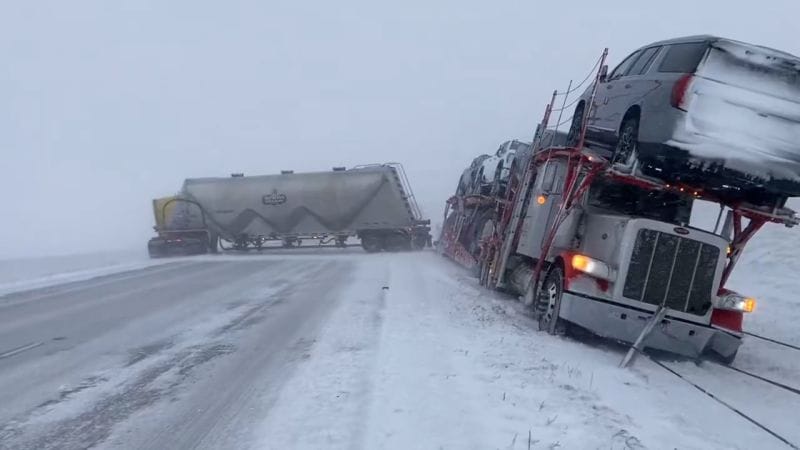
This Thanksgiving storm isn’t a fluke. It’s a stress test. And we are failing. A few feet of snow in the wrong place at the wrong time doesn’t just cancel flights; it triggers a cascade failure that ripples through the entire system. Gas prices spike because a refinery can’t get a part. Hospital supplies dwindle because a truck is stuck in Nebraska. Your precious holiday plans? They are the least of the problems. We’ve traded robustness for the illusion of technological perfection, and a single storm is all it takes to expose the lie. The system isn’t broken; it was built this way—fragile, profitable, and designed to fail upwards for the people who own it.
3. The Algorithm Will See You Now
Predictive Models Aren’t Predicting Weather; They’re Predicting You
Let’s get one thing straight. The immense computational power being used for weather modeling isn’t just about figuring out where it’s going to rain. That’s the surface-level excuse. The real prize is human behavioral data at scale. They know a storm is coming, so they watch. They watch how flight bookings change, what people search for online (generators, bottled water, travel insurance), and where the population moves in response to their digital prompts.
This storm is a giant, real-world experiment. Are people more likely to comply with a “Blizzard Warning” alert if it’s red or orange? Does a 70% chance of snow cause more panic buying than a 60% chance? They are A/B testing our collective psyche. We are lab rats in a digital Skinner box, and the pellet is a false sense of security. The goal isn’t to create a better weather forecast; the goal is to create a better, more predictable *us*. A population that can be steered, managed, and controlled with a few lines of code and a timely notification. (And you thought it was just about bringing an umbrella).
4. The Climate Change Feedback Loop from Hell
Silicon Valley Sells the Cure and the Disease
Where do you think all this glorious weather data is processed? In magical cloud castles run by elves? No. It’s processed in monstrous, energy-guzzling data centers that require entire rivers to cool them. The very tech industry that provides us with these climate prediction tools is a primary driver of the climate instability making the weather so unpredictable in the first place. Irony is dead. It was murdered and buried in a landfill of last year’s smartphones.
They create a problem (a carbon-intensive digital infrastructure), then sell us the “solution” (an app that tells us when the climate they helped break is about to kill us). It is the most brilliant, diabolical business model ever conceived. They pump out CO2 to power the servers that warn you about the superstorms fueled by that same CO2. And we thank them for it! We praise their innovation. We are cheering on our own demise, led by tech bros in sustainably-sourced merino wool sweaters who think they can code their way out of the apocalypse they’re actively creating.
5. Who Owns the Sky?
From Cloud Seeding to Climate Control
This is where it gets really dark. If you don’t think governments and private corporations are already well past the theoretical stage of weather modification, you are dangerously naive. They’ve been seeding clouds for decades. What do you think comes next? Do you honestly believe that the people who want to control information, markets, and populations would stop at the sky? The weather is the ultimate lever of power. Create a drought to cripple a rival nation’s economy. Steer a hurricane to wipe out an inconvenient piece of infrastructure. Or, on a more mundane level, guarantee a sunny weekend for a major sporting event (for the right price, of course).
These early, chaotic storms are the perfect cover. As climate change makes weather more extreme, it provides the perfect justification for “intervention.” First, they’ll call it geoengineering. A solution. A necessity to save us from ourselves. But once you hand someone the thermostat for the entire planet, you have created a new kind of god. A corporate, quarterly-earnings-driven god. And we will all be subject to its whims. This Thanksgiving blizzard could easily be a clumsy, early experiment. A beta test. How would we know if it wasn’t? We wouldn’t. We’d just check our apps and complain about the delay.
6. Your Travel Plans Are a Data Point
The Panopticon Knows You’re Visiting Your Aunt in Ohio
You book a flight online. You reserve a rental car. You use a map app for directions. You post on social media about how you “can’t wait for mom’s turkey.” Every single step of your holiday travel plan is logged, tracked, and analyzed. They know where you are, where you’re going, and who you’re with. When the storm alert hits, they don’t just see a weather pattern; they see a data pattern.
They see millions of predictable data points (people) reacting in predictable ways. They see a market for last-minute hotel rooms, for overpriced airport food, for surge-priced ride-shares. But more importantly, they see the grid. They see how to shut it down, how to redirect it, and how to profit from its chaos. This isn’t about safety. It’s about market and population analysis. We’ve willingly handed over the keys to our lives, our movements, our relationships, all for the low, low price of a little convenience. And now that data is being cross-referenced with weather patterns to build a profile of you that is so terrifyingly accurate, it can predict your next move before you even think of it.
7. We’ve Forgotten How to Be Human
The Lost Art of Looking Out the Window
What is the ultimate tragedy in all of this? We’ve lost our own instincts. A generation is being raised that doesn’t know how to read the sky. We’ve outsourced our senses, our intuition, our self-reliance to a device in our pocket. Humanity survived for millennia by observing nature, by understanding its rhythms and respecting its power. We built resilient communities and had the common sense to prepare for winter.
Now? We wait for a push notification to tell us to be afraid. We put our blind faith in a percentage spit out by a black box algorithm, unable to function without its guidance. The storm is a physical reality, but our reaction to it is entirely synthetic, managed, and mediated through a screen. We have become utterly dependent on the very system that is making our world more fragile and dangerous. We traded the wisdom of generations for a 5-day forecast. And that is a storm we will never recover from.