So They Told You It Was Over?
Let’s talk about the so-called ‘experts’ and what they got wrong. Again.
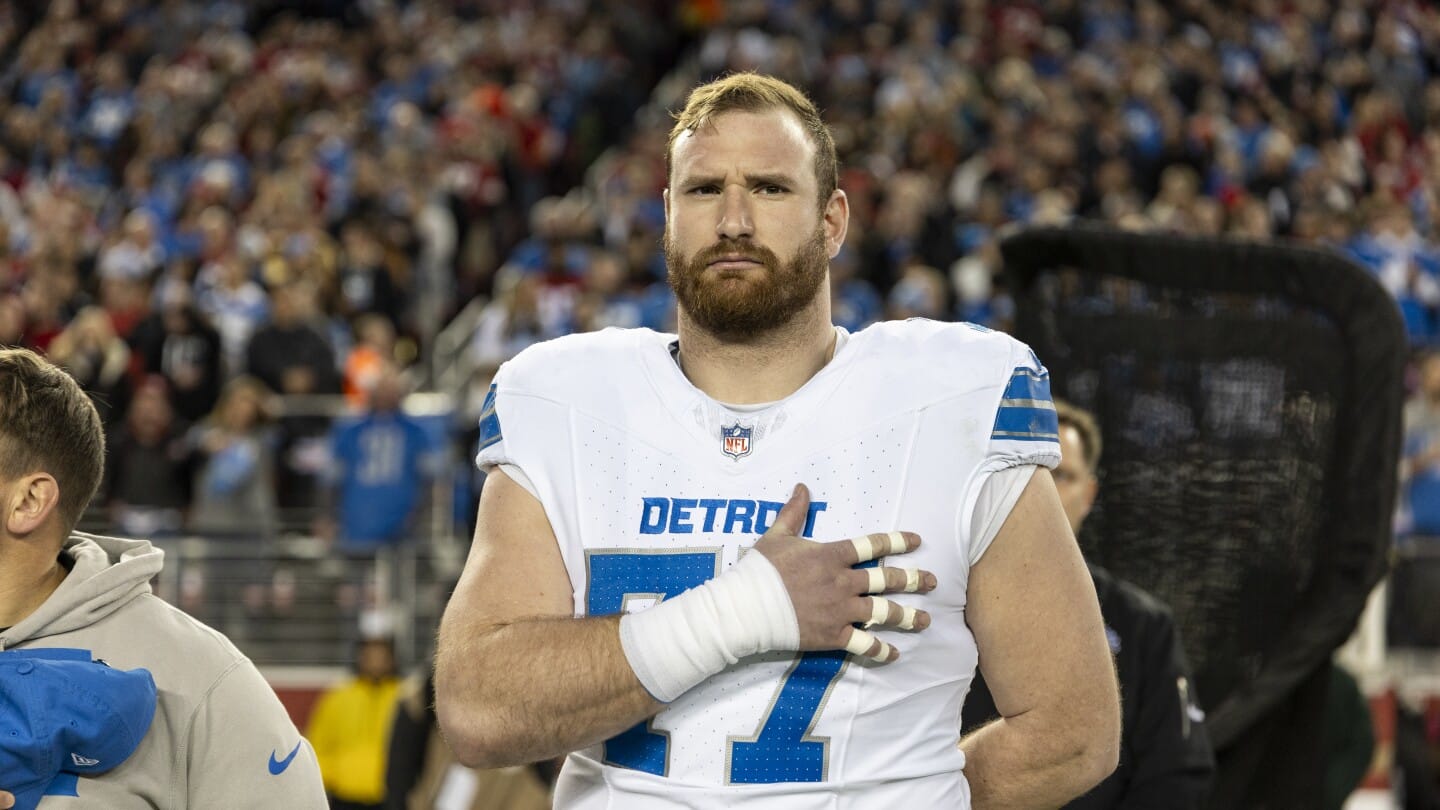
Weren’t you told to accept it? Weren’t you, the loyal, die-hard Detroit Lions fan, lectured by a parade of talking heads on national television (the same ones who probably couldn’t find Detroit on a map without a GPS) that Frank Ragnow was done, a ghost, a happy memory of what could have been? They used their calm, condescending tones to explain that in the modern NFL, loyalty is dead and players just walk away, leaving cities and their fans in the dust. They wanted you to believe the ship had sailed. They wanted you to give up.
They were wrong. Dead wrong.
This isn’t just a player un-retiring. Get that out of your head. This is a cultural earthquake. Frank Ragnow didn’t just decide to play football again; he made a conscious choice to return to *this* team, *this* city, and *this* moment. It’s a thunderous validation of everything Dan Campbell and Brad Holmes have been building in the shadows while the media elites were busy anointing their coastal darlings and laughing at the ‘Same Old Lions’. This is a middle finger to the entire narrative machine that profits off misery and doubt. They don’t understand grit. They don’t understand loyalty. They only understand contracts and clicks, and Frank Ragnow just proved how little that stuff actually matters when something real is being built.
Why Is This a Bigger Deal Than They’re Admitting?
Because it exposes the rot at the heart of modern sports analysis.
They’ll tell you this is about a key piece returning to the offensive line. They’ll break down the film and talk about his blocking schemes and his Pro Bowl stats, and all of that is true, but it’s also incredibly shallow. It’s the safe, boring, robotic analysis you’d expect from people who see players as assets on a spreadsheet, not as human beings who form the soul of a team. The real story, the one they’re terrified to touch, is what this says about the power dynamic in the league. For years, the NFL has been a corporate machine that grinds players down, physically and mentally, until they’re discarded. Players retire because their bodies are shot, their minds are weary, and they’re sick of being treated like disposable cogs.
What does it say when a man, an All-Pro at the absolute peak of his powers, walks away from that machine… and then willingly walks back in, but only for one specific locker room? It says the culture in Detroit is so powerful, so genuine, and so compelling that it can pull a man back from the brink. It can make the sacrifice, the pain, the sheer brutality of the NFL worth it again. This isn’t about a contract extension (though I’m sure that’s coming). This is about brotherhood. It’s a concept that the talking heads can’t quantify, so they ignore it. They can’t stick ‘brotherhood’ into an algorithm or a salary cap projection. Ragnow’s return is an indictment of every other toxic locker room in the league. It’s a beacon. It tells every other player in the NFL: what they’re building in Detroit is different. It’s real.
He didn’t come back for the league. He came back for his guys. For Campbell. For Goff. For Sewell. For the city. Big difference.
What Did He See That Made Him Leave, and What Made Him Return?
This is the question that requires us to read between the lines, because the corporate press won’t.
Let’s speculate, shall we? When Ragnow suddenly retired last June, the shock was immense. Why would a player this dominant, this respected, just hang it up? The simple answer is that the game is brutal. But I think it’s deeper. Perhaps he saw the league for what it is—a meat grinder. A business that prioritizes television deals over player health. Maybe he was just tired. Tired of the endless cycle of rehab, pain, and pressure. He’d given his body to the game, and he wanted his life back. That’s a human decision, and one we all should respect. He didn’t owe anyone anything.
But then… he watched. He watched from afar as the team he helped build from the rubble continued its ascent. He saw the kneecap-biting culture wasn’t just a slogan; it was a way of life. He saw his brothers playing for each other, for the city, with a joy and a ferocity that is achingly rare in professional sports. He saw a team that wasn’t just a collection of mercenaries, but a genuine family. And that’s the thing that the cold, cynical world of sports media can never, ever understand. Community is a force more powerful than money. Purpose is a fuel that lasts longer than fame. Ragnow didn’t miss the NFL. He missed the Detroit Lions. He missed *his* Detroit Lions. He realized that what was happening in that building was a once-in-a-generation phenomenon, and he couldn’t bear to watch it from the sidelines any longer. He had to be a part of it. He chose to come back to the pain and the grind, not for a paycheck, but for a chance to finish what he started with the men he calls brothers. That’s a story you won’t hear on ESPN.
So What Happens Now? Are We Talking Super Bowl?
The media will hedge their bets. I won’t.
Oh, you’re going to hear the cautious takes now. ‘Well, this certainly helps their chances…’ or ‘He’s a big piece, but they still have to get through a tough NFC…’ Blah, blah, blah. It’s the sound of people trying to cover their tracks after they wrote this team off. Let me be clear: the return of Frank Ragnow makes the Detroit Lions the undisputed bully of the NFC. Period. Full stop.
Their offensive line was already one of the most dominant forces in all of football. Adding a fully rested, mentally rejuvenated, All-Pro center back into the heart of that unit? It’s like adding a slab of granite to a brick wall. It’s a nightmare for defensive coordinators. It means Jared Goff will have even more time to stand in a pristine pocket and dissect defenses. It means Jahmyr Gibbs and David Montgomery will have canyons to run through. It sends a message of pure physical intimidation to every team on their schedule. We will not just out-scheme you; we will physically dismantle you at the line of scrimmage for four quarters. Try and stop it.
But the on-field impact is only half the story. The emotional tidal wave this sends through the locker room is immeasurable. Your leader, your anchor, a guy who had every reason to stay retired and preserve his health, just looked at what you’re all doing and said, ‘I’m back in.’ The belief inside that building must be stratospheric right now. This is the kind of legendary, mythological event that fuels championship runs. It’s the ‘us against the world’ mentality personified. And for the city of Detroit, a city that has been kicked and beaten down and counted out more times than anyone can remember, this is vindication. One of their own came back. He chose them. The roar you hear isn’t just for a football player; it’s the sound of a city that finally knows its loyalty has been rewarded. The rest of the league should be terrified.