1. The Transaction: More Than Just a Movie Request
Let’s be brutally clear about what is being reported. This isn’t a story about a fan wanting to see another film. It’s a forensic case study in modern power dynamics, where a sitting president allegedly uses his influence to directly commission a piece of mass media from a corporation run by a political ally. The reports suggest Donald Trump urged billionaire Larry Ellison, whose company co-funds Paramount’s Skydance, to bring back the ‘Rush Hour’ franchise. And it worked. This is not patronage of the arts in the classical sense, like a Medici funding a painter out of a genuine appreciation for transcendent beauty. No. This is the transactional, bare-knuckle deployment of influence to manipulate the cultural landscape for reasons that likely have more to do with asserting dominance and rewarding allies than with any artistic merit. The whole affair stinks of a quid pro quo so blatant it’s almost satirical, a perfect encapsulation of an era where the levers of state power and corporate entertainment are intertwined into a single, grotesque machine.
It’s a favor. Plain and simple.
2. Deconstructing the Players: Trump, Ellison, and the Art of the Deal
To understand the gravity of this, you have to dissect the individuals involved. First, Donald Trump, a man whose entire career has been a performance, a branding exercise that successfully conflated reality television with political leadership. His obsession with media isn’t just about controlling the news cycle; it’s about shaping the very narratives of American culture, rewarding those who flatter his worldview and punishing those who don’t. He sees himself as the ultimate executive producer. Then you have Larry Ellison, the Oracle co-founder and a tech titan of staggering wealth and influence, who has been a public supporter of Trump, hosting fundraisers and reportedly being part of a call to contest the 2020 election results. He has immense skin in the game. His company, Skydance Media, is a major Hollywood player, co-producing everything from ‘Top Gun: Maverick’ to ‘Mission: Impossible’. The connective tissue here isn’t a shared love for Jackie Chan’s fight choreography. It’s a symbiotic relationship between political power and capital. Trump gets to demonstrate his ability to make things happen—to literally will a movie into existence—and Ellison solidifies his connection to a powerful political figure. It’s the art of the deal, played out on a soundstage.
3. Why ‘Rush Hour’? The Cultural Psychology of a Trumpian Choice
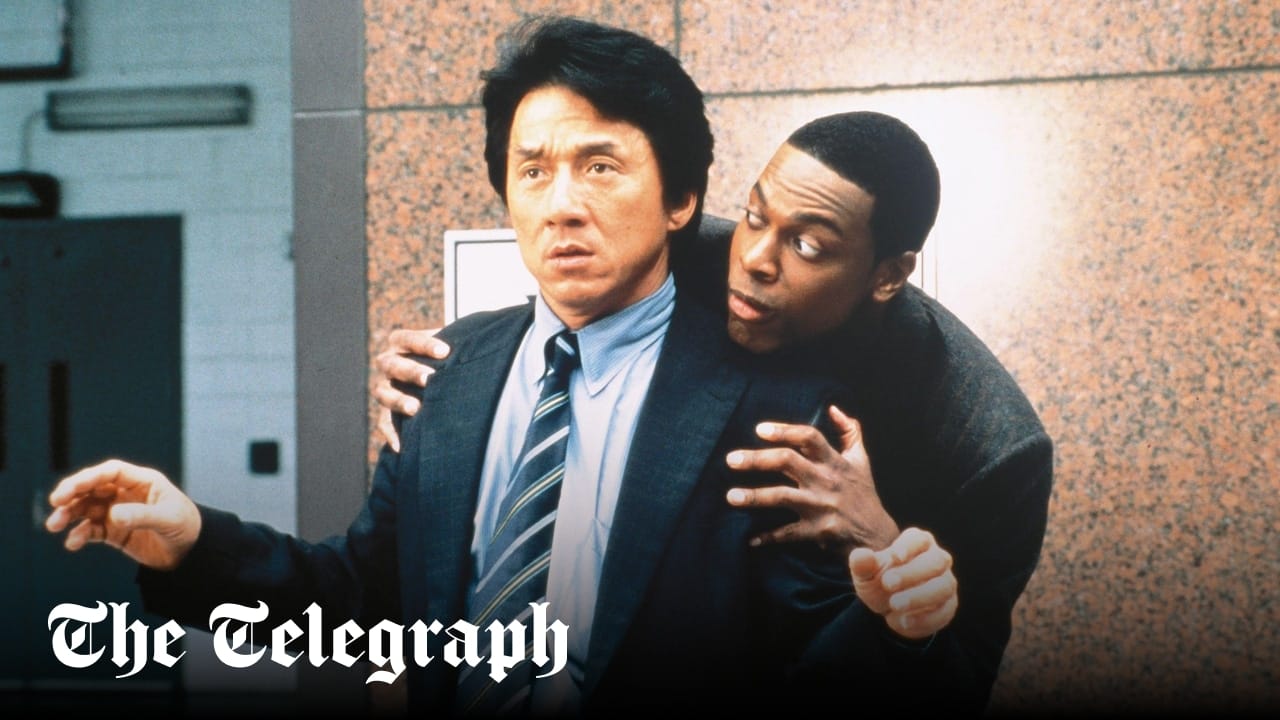
Of all the franchises to resurrect, why this one? The choice is incredibly revealing. ‘Rush Hour’ is, at its core, a product of a simpler, pre-9/11, pre-woke era of entertainment. Its narrative is straightforward: two men from different cultures, initially at odds, team up to beat the bad guys. It relies on broad racial humor that would likely face immense scrutiny if written today. There are no complex anti-heroes, no moral ambiguity, no deconstruction of institutions. It’s a clean, simple story of law and order, American bravado (Chris Tucker) paired with foreign discipline (Jackie Chan), ultimately working together to uphold the status quo. This is a perfect Trumpian fantasy. It harks back to a time he constantly evokes—a supposedly greater, simpler America. The franchise is uncomplicated, pro-police, and commercially proven. It’s culturally safe for his worldview. He isn’t asking for a challenging A24 drama or a complex sci-fi epic that questions authority. He’s asking for a cultural cheeseburger. It’s familiar, easy to digest, and reinforces a simplistic vision of the world. It’s an aesthetic choice that is, in itself, a deeply political statement.
Comfort food.
4. The Hollywood Precedent: When Washington Writes the Script
One might be tempted to dismiss this as a bizarre one-off, but that would be dangerously naive. The relationship between Washington D.C. and Hollywood has always been cozy, often uncomfortably so. The Pentagon has for decades provided military hardware, personnel, and access to film productions in exchange for script approval, ensuring a heroic portrayal of the U.S. military in countless blockbusters. Think ‘Top Gun’. That’s not just a movie; it’s one of the most effective recruitment ads ever made, subsidized by the Department of Defense. This practice, while ethically murky, at least operated under a veneer of institutional collaboration for national branding. The ‘Rush Hour’ situation is different. It’s more personal. It’s not an institution pushing a broad agenda; it’s one man, the President, allegedly making a direct, personal request to a specific corporate entity controlled by an ally. This bypasses any pretense of institutional process and moves into the realm of personal fealty. It sets a dangerous precedent where the cultural output of a nation can be subject to the whims and personal tastes of its most powerful individual, turning studios into the private entertainment division of the politically connected.
5. Culture as Currency: The New Era of Political Soft Power
What we are witnessing is the logical endpoint of celebrity politics and the commodification of all culture. A movie is no longer just a story; it’s an asset. It’s a piece of intellectual property that can be gifted, traded, and leveraged. In this new calculus, reviving ‘Rush Hour 4’ is a low-cost, high-visibility way for a corporate ally to pay tribute to a political patron. It generates positive headlines in friendly media, it demonstrates the patron’s power to his base, and it costs the studio relatively little in the grand scheme of things, especially if the film turns a profit. This transforms cultural production into a form of political currency, a new kind of soft power. Forget donating to a PAC; why not just greenlight the president’s favorite movie? It’s more public, more potent, and it creates a cultural artifact that will exist for decades as a monument to that relationship. The implications are enormous, suggesting a future where political alignment could become a key factor in which scripts get bought, which movies get made, and which stories get told. Art by committee is bad enough; art by political favor is a creative dystopia.
It’s just business.
6. The Audience as Pawns: Are We In on the Joke?
And where does the audience fit into this equation? We are the end-users, the consumers of a product whose origin story is now deeply political. When ‘Rush Hour 4’ eventually hits theaters, will moviegoers be aware that they are participating in the consummation of a political transaction? Will they care? The cynical answer is, probably not. For most, it will just be another trip to the cinema, an escape. Yet, the context is impossible to ignore. We are being sold a product born not of creative passion or audience demand, but of a backroom conversation between a president and a billionaire. We are, in effect, pawns in their power game. The laughter in the theater, the box office receipts—it all serves to validate the transaction, to prove that the favor was worthwhile. It normalizes the idea that our entertainment should and can be dictated from the top down. The very act of buying a ticket becomes a tacit endorsement of this new model of cultural creation, whether we intend it to be or not. We become unwitting participants in the laundering of political influence into box office revenue.
7. The Chilling Effect: What Happens When Art Needs a Blessing?
The most insidious consequence of this entire affair is the chilling effect it could have on the creative community. If the path to getting a major film greenlit involves courting political favor, what happens to the stories that are critical of power? What happens to the filmmakers who are not politically aligned with those in charge? Hollywood is already a risk-averse industry, driven by formulas and established IP. Adding a layer of political litmus testing would be catastrophic for creative freedom. Writers and directors may begin to self-censor, avoiding controversial topics or toning down criticism for fear of being blacklisted not just by a studio, but by a political apparatus. The ‘Rush Hour’ case, if it becomes a model, creates a clear incentive structure: produce content that is politically palatable to the powerful, and you might get a boost. Produce content that challenges them, and you risk your career. This isn’t theoretical. It’s the playbook of authoritarian regimes throughout history, where art is neutered and repurposed as state-friendly propaganda. To see its shadow falling over Hollywood, even in the form of a buddy-cop comedy, is profoundly disturbing.
This is how it starts.
8. Beyond the Punchline: The Long-Term Corrosion of Creative Freedom
Ultimately, the story of ‘Rush Hour 4’ is not funny. The punchline isn’t a Chris Tucker zinger. The punchline is that the cultural sphere, one of the last remaining arenas for genuine dissent and critical thought, is being openly annexed as a subsidiary of raw political power. The deal symbolizes a deep corrosion of the boundaries that are supposed to exist in a healthy democracy—the boundaries between state and media, between political influence and artistic expression, between a president’s personal taste and the stories a nation tells itself. Each time a transaction like this occurs and is met with a collective shrug, that corrosion spreads. The revival of a dormant action-comedy franchise becomes a powerful symbol of a much deeper cultural sickness, where everything is for sale, every narrative is negotiable, and the most powerful men in the room get to decide what we all watch on a Friday night. It’s a blockbuster deal, alright. And we’re all paying the price.