The Asset Goes Offline
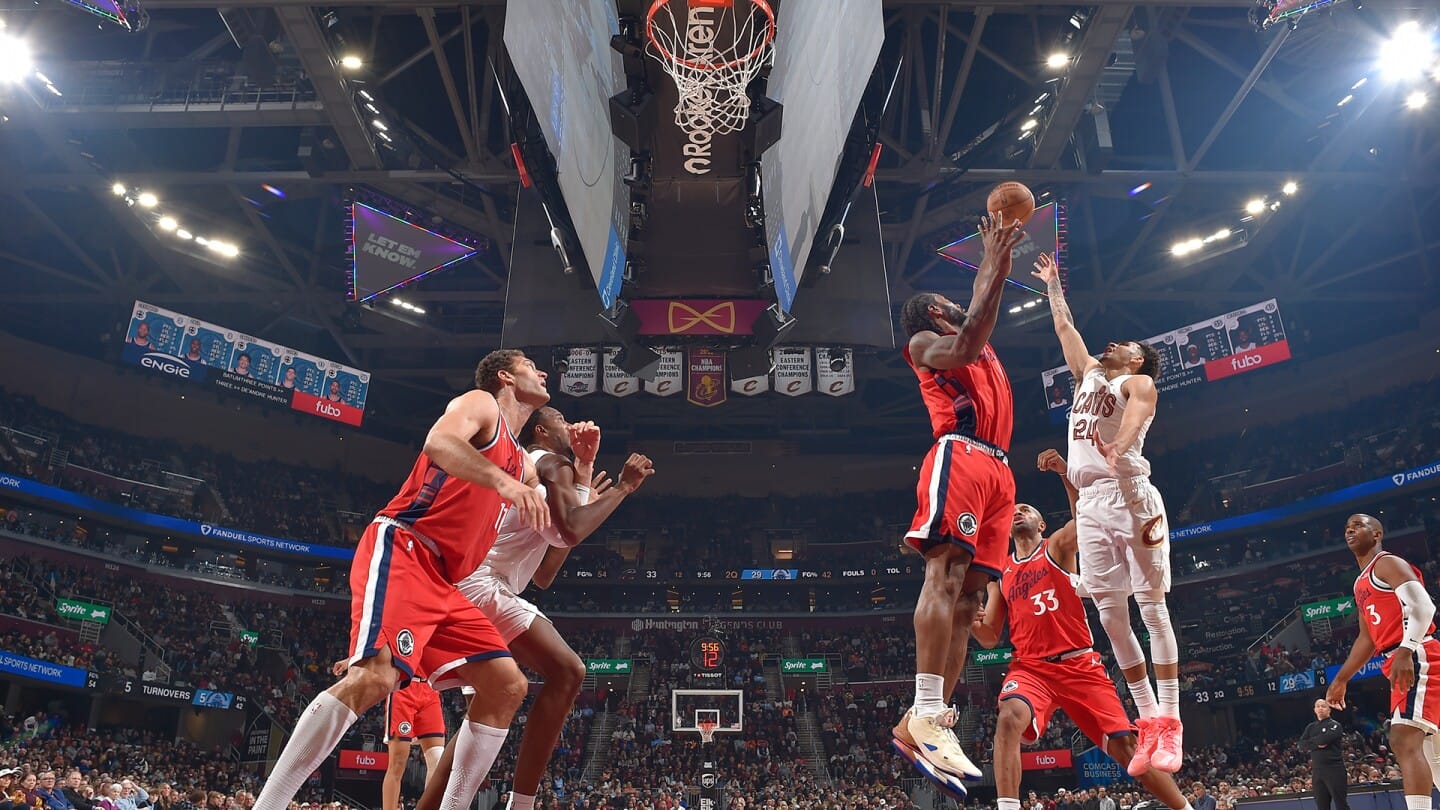
So, the news broke. The data stream flickered and the information disseminated through the usual channels, the designated couriers of the machine. Shams Charania, a high-priest of the inner workings, announced that the LA Clippers ‘plan’ to have star forward Kawhi Leonard return. The word ‘plan’ is doing a lot of work there, suggesting a corporate strategy session, a whiteboard filled with risk-reward matrices and probability calculus, rather than a conversation with a human being about how his body feels. Let’s not kid ourselves. This wasn’t a human decision. It was the output of an algorithm, a conclusion reached after processing terabytes of biometric data, stress-test results, and market analysis regarding ticket sales and betting odds. Kawhi the man didn’t decide he was ready. A system decided its asset was sufficiently repaired to be redeployed into the field for a live-fire stress test against the Cleveland Cavaliers.
It was never about basketball.
Think back to the initial injury, the ‘shutdown event’. For the fan, it was a moment of sporting tragedy. A gasp. A hope for a championship dashed. But for the entities that truly run this spectacle—the franchise owners, the broadcast networks, the betting syndicates, the data analytics firms—it was something far colder. It was a critical asset failure. A multi-million dollar piece of biological hardware suffering a catastrophic component malfunction. The immediate response wasn’t empathy; it was damage control and asset valuation. How long is the downtime? What is the projected depreciation? What is the optimal repair protocol to maximize future performance while minimizing re-failure risk? The human element, the pain, the psychological grind of recovery, these are just inconvenient variables to be managed and, if possible, mitigated through controlled PR narratives. He wasn’t a patient; he was a product under warranty, sent back to the manufacturer for extensive repairs.
The Black Box of ‘Rehabilitation’
We are told he underwent rehabilitation, a word that sanitizes the process into something relatable, like going to physical therapy after a sprain. This is a grotesque understatement. For an athlete of this caliber, a piece of machinery this valuable, ‘rehab’ is a deep dive into a technological abyss that would make a DARPA engineer blush. Imagine a secret facility, a clean room where the biological is merged with the digital. Every single moment of his recovery was undoubtedly a data-harvesting opportunity. They weren’t just measuring the flexion in his knee; they were tracking nerve response times at the microsecond level, analyzing his gait with motion capture technology used for CGI monsters, monitoring his metabolic output in real time, and feeding every single data point into a predictive model. This model, this soulless oracle of code, is what gave the green light. Not a doctor with a hunch, not a coach with a gut feeling, and certainly not Kawhi himself. The oracle declared the probability of re-injury to be within an acceptable financial risk parameter. So, the switch was flipped.
On.
The whispers from ‘sources’ that percolate through ESPN and other media outlets are not journalism. They are carefully curated data leaks, designed to manage the market. They are signals to the vast, interconnected web of fantasy sports leagues and global betting markets. A positive report on Leonard’s progress isn’t for the fans; it’s to stabilize his value in the fantasy player pool, to adjust the betting lines in Las Vegas and beyond. We are merely the consumers of the final product, the game itself. The real action happens in the background, in the buying, selling, and trading of human performance data. We are watching the wrapper, while the real meal is being consumed by financial institutions who see players not as people but as tickers on a screen. LAL vs. LAC isn’t a rivalry; it’s a volatile stock market matchup.
The Reboot Sequence: More Machine Than Man
So he will step onto the court in Cleveland. Don’t call it a comeback. Call it a deployment. A beta test. The Clippers’ medical and data science staff will be watching with more intensity than any fan. They won’t be looking at the scoreboard. They will be looking at their tablets, watching the live feeds of biometric data from the sensors likely woven into his compression gear, maybe even his shoes. They’ll be monitoring the torque on his ACL with every cut, the explosive load on his quadriceps with every jump, his heart rate variability, his lactic acid buildup. They are monitoring the hardware under load. The game is just a diagnostic program. Is the patch stable? Does the new code work with the old operating system? Are there any critical bugs? The opponent, the Cavaliers, are functionally just a set of test parameters, a series of obstacles designed to push the asset to specific performance benchmarks.
This is the grim reality of modern elite sports. We cling to the romantic notion of human spirit, of will, of determination. That is the marketing. The reality is a cold, hard process of biomechanical optimization. The goal of every franchise is to eliminate the unpredictability of the human element. Why rely on ‘heart’ when you can quantify muscle fiber recruitment? Why talk about ‘chemistry’ when you can model player interactions based on positional data tracking? Kawhi, with his famously stoic, almost robotic demeanor, is the perfect vessel for this new paradigm. He is the quiet embodiment of the post-human athlete. He does not emote; he executes. He does not complain; he processes. He is the ghost in the machine, a consciousness strapped into a high-performance chassis that is owned, operated, and maintained by a corporation.
The True Audience: Gamblers and General Managers
What does his return mean for the Clippers and for fantasy? The question itself reveals the whole charade. It’s not about what it means for the city of Los Angeles, or for the sport of basketball. It’s about what it means for two very specific demographics: the people who own the assets, and the people who gamble on their performance. For the Clippers front office, it means their portfolio is rebalanced. Their primary investment is active again, and the potential for a championship—the ultimate return on investment—is back on the table. For the fantasy player, the person who ‘owns’ Kawhi in their digital league, it means activating a key data-producer. They don’t care about his knee, not really. They care about his statistical output. Points, rebounds, steals. He is an abstraction, a row on a spreadsheet. His physical reality is an inconvenience that can, unfortunately, interrupt the data stream. His return is celebrated not as a human triumph, but as the resumption of reliable data production. He is, in essence, a sentient mining rig, and he’s back online.
This entire ecosystem reduces human beings to commodities. Nothing more. Their bodies are the factories, and their stats are the product. We, the fans, are told to cheer for the logo on the jersey, but the real game is played on trading floors and on betting apps, a silent, global, digital affair where fortunes are won and lost on the tensile strength of a man’s ligament.
The Inevitable Obsolescence: A Grim Blueprint
Make no mistake, this is the future, and we are just seeing the prototype. Kawhi Leonard’s journey is the blueprint for the athlete of 2050. The line between therapy and enhancement is already blurry; soon it will be gone entirely. The next generation of athletes won’t just be repaired; they will be upgraded. Why settle for a healed ACL when you can have one woven with synthetic polymers that is stronger than the original? Why rely on natural muscle growth when gene therapies like CRISPR can unlock biological potential far beyond our current limits? Today they track a player’s load management to prevent injury. Tomorrow, they will use nanobots in the bloodstream to make microscopic repairs on the fly, ensuring the asset never has to go offline at all. The athlete will become a platform, a chassis that is constantly being updated with new biological and cybernetic software.
They won’t have careers; they will have operational lifecycles. They will be leased, not signed. Their contracts will look like software licensing agreements. And when their performance metrics inevitably decline, when their hardware can no longer be efficiently upgraded to compete with the newer models, they won’t retire. They will be decommissioned. Their operational data will be archived, studied, and used to build the next, more efficient version. The human spirit, the very thing we claim to love about sports, is being systematically engineered out of the equation because it is inefficient and unpredictable. It is a bug, not a feature.
So as you watch Kawhi Leonard return to the court, by all means, watch the game. Enjoy the spectacle. But do not for one second believe you are watching a simple story of human resilience. You are not. You are witnessing a successful systems check on a piece of advanced biomechanical property. You are watching the silent, sterile, and terrifyingly efficient future of sport, a future where the human is just a ghost in a very, very expensive machine.
A machine that is owned by someone else.