
The Political Wasteland We Call 2026
We’re being fed scraps about ‘midterms’ and ‘local races’ to keep us distracted, aren’t we? (It’s the oldest trick in the book, frankly.) But the real show, the one they don’t want you analyzing too closely, is 2026. That’s the year the whole façade supposedly celebrates 250 years of ‘freedom’ while everything underneath is held together with duct tape and outright lies. It’s a grand, cynical anniversary, perfect for deep rot to become visible.
The Illusion of Choice vs. The Map’s True Face
The chatter about redistricting and ‘maps’ isn’t just bureaucratic nonsense; it’s the architectural blueprint for managed decline. They spend millions drawing lines to ensure the outcome is predetermined, cementing power structures so rigid that real dissent becomes impossible without triggering a massive, predictable backlash. It’s gerrymandering dialed up to eleven, creating legislative bunkers where ideology goes to fossilize. Think about the sheer arrogance required to assume voters are too dense to notice when every district looks like a pretzel designed by a paranoid cartographer. (They’re banking on apathy winning the day.)
This isn’t about winning hearts and minds; it’s about creating unassailable fortresses. The implication for the future is bleak: If 2024 is a skirmish, 2026 is the planned systemic capture, ensuring the next generation inherits a structure incapable of self-correction. We watch the midterms fade, waiting for the next round of manufactured outrage to mask the slow strangulation of actual representation. It’s a slow-motion political coup, executed via spreadsheet.
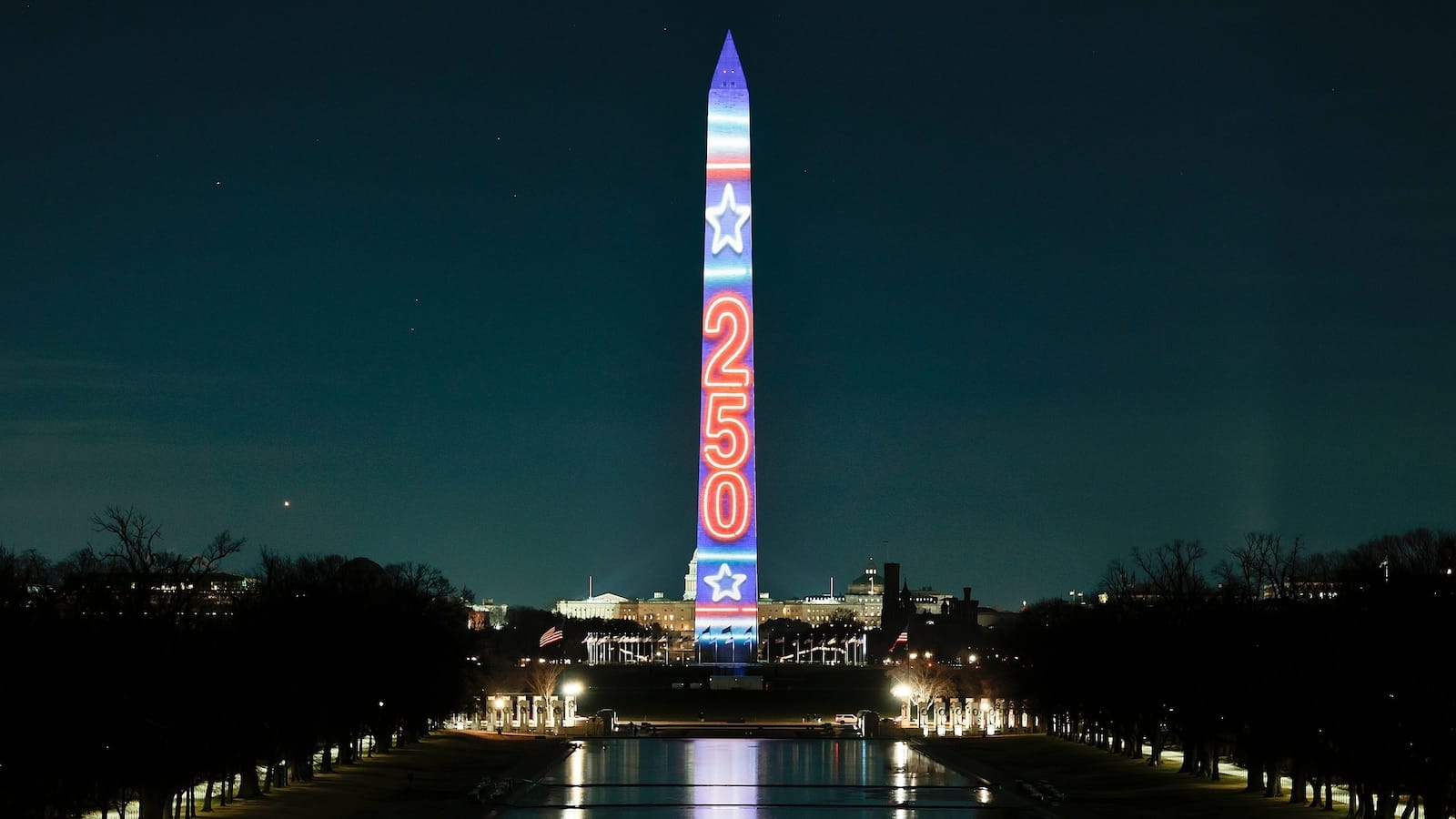
The 250th Anniversary: A Milestone or a Mausoleum Marker?
America hits 250. What are they celebrating? The invention of the administrative state? The refinement of surveillance capitalism? (Probably that last one.) The historical context they feed us is sanitized, whitewashed pap designed to foster a sense of national pride that frankly, doesn’t match the lived reality for vast swathes of the population. When you look at the socioeconomic divides, the infrastructure crumbling, and the political discourse reduced to tribal grunts, that 250th celebration feels less like a birthday party and more like the unveiling of a highly polished tombstone.
This anniversary year provides the perfect cover for dramatic, performative actions—big speeches, bigger budgets for meaningless projects—all designed to distract from the fundamental instability bubbling just beneath the surface. (Watch for manufactured historical ‘revelations’ designed to shift blame to an even older enemy.) The elites need the spectacle to maintain the illusion of control. They need us looking backward at a myth instead of forward at the mess they’ve created.
Six Stories That Aren’t Really Six Stories
The press feeds us these neat little packages—’Six Stories to Watch.’ It’s designed to make chaos digestible, to box up existential threats into easy-to-read chunks. But these aren’t six separate stories; they are six symptoms of the same massive, underlying systemic failure. Take, for example, the constant drumbeat of economic anxiety contrasted with the obscene wealth accumulation at the top. That’s one story: the great siphon. Or the weaponization of local governance against federal mandates, a slow-motion civil disagreement played out in county board meetings across the country. That’s another: the fracturing of shared reality.
And what about the international repositioning? That’s story number three, where perceived enemies abroad are merely convenient foils to justify domestic overreach. (It never fails.) The biggest story, the one that subsumes all others, is simply the erosion of institutional trust to the point where the only thing people trust is their own immediate, often misinformed, echo chamber. Everything else—midterm results, candidate gaffes—is just noise created to obscure the deafening silence where actual leadership used to be.
The Midterm Echo vs. The 2026 Roar
People obsess over the midterms, treating them like the Super Bowl of politics. They are not. They are the opening act for a mediocre touring band. The midterms merely set the table for 2026, determining the temperament of the legislative bodies that will either rubber-stamp the status quo or actively sabotage governance in preparation for the main event. It’s never about fixing things in the off-years; it’s about positioning the pieces for the main siege.
If the results favor one faction, the other side screams foul play and doubles down on obstructionism. If the results are mixed, everyone claims victory while implementing minor procedural hurdles. The energy spent analyzing whether a few seats flip is energy *not* spent analyzing the underlying mechanics of power maintenance. (It’s a classic misdirection play.) The real political earthquakes happen when the electoral map is completely redrawn, which is what the 2026 cycle ultimately revolves around: who controls the baseline reality upon which the next decade is built.
The Cynic’s View on Political Infrastructure
Look at the logistics. Voter rolls, counting technology, funding streams—it’s all opaque. We are told to trust the process because ‘it’s complicated’ and ‘we must have faith in democracy.’ But faith is the opposite of investigation, isn’t it? When you dig into the sheer complexity of modern election administration, you realize it’s not designed for transparency; it’s designed for plausible deniability across multiple layers of bureaucracy. This complexity ensures that when things go sideways—and they inevitably will—the blame lands everywhere and nowhere simultaneously. It’s a beautiful piece of engineering, if you appreciate systems designed to fail upwards.
Consider the role of dark money flowing into state and local races leading up to 2026. It’s not about convincing the undecided voter anymore; that constituency is nearly extinct. It’s about buying regulatory capture at the ground level, ensuring that whatever national policy direction is attempted, local implementation is either suffocated or actively subverted by vested interests. That influence seeps into zoning boards, school administrations, and planning commissions, making the entire political environment hostile to genuine bottom-up change. (It’s death by a thousand municipal cuts.)
The Scars of the Past Shaping the Next Fight
To understand the fervor surrounding 2026, you have to remember how we got here. The foundational cracks weren’t formed last Tuesday; they’ve been widening since the late 1960s, accelerating sharply after 2001. Every failed intervention abroad, every financial collapse bailed out by the very people who caused it, every social issue deliberately weaponized for electoral gain—these are the historical precedents fueling the absolute lack of faith heading into that critical year. 2026 won’t be a contest of ideas; it will be a collision of mutually exclusive narratives, each fully armed with its own ‘facts’ scraped from whatever digital corner confirms their bias.
Why is the tone so apocalyptic? Because the stakes *are* existential, but not in the way the cable news pundits scream about. The existential threat isn’t simply which party controls the levers of government; it’s whether the very concept of a shared governing framework can survive another cycle of outright rejection by half the electorate. If 2026 confirms that large segments of the population believe the system is irrevocably rigged against them, the next logical step isn’t reform—it’s secession, either political or cultural. (And the political class thrives on that tension; it justifies their bloated budgets.)
Speculation on the 2026 Aftermath
If the maps are successfully redrawn to maximize insulation, expect a hyper-partisan legislative landscape where compromise is treated as treason. This leads to federal gridlock so profound that the Executive Branch is forced into ever-more aggressive unilateral actions, further eroding the separation of powers. (The checks and balances become purely theoretical artifacts mentioned in civics classes.) This executive creep is precisely what the architects of the new maps often desire—a weakened legislature makes the presidency, regardless of who holds it, an overwhelmingly powerful entity, easier to co-opt or rally against depending on your pre-existing tribal affiliation. It’s a self-fulfilling prophecy of centralized power.
What happens if the narrative of ‘election integrity’ becomes the absolute litmus test for every single candidate running in 2026? Then the political landscape ceases to be about policy—tax rates, healthcare, foreign engagement—and becomes solely about loyalty oaths to the ongoing, unverified narrative of past grievances. It turns the entire political apparatus into a perpetual grievance committee, incapable of forward planning. You can’t build a bridge if you’re still fighting over who stole the blueprints for the last one. That’s the danger lurking behind those seemingly dull discussions of electoral maps and midterm standings.
This whole situation is less a healthy political debate and more like watching a highly sophisticated clock slowly seize up, moment by moment. The 250th anniversary won’t be celebrated with genuine pride; it will be utilized as a massive stage for performance art, where one side attempts to project stability and the other side demonstrates—through sheer force of sustained protest or legislative obstruction—that the foundation has cracked beyond repair. (And don’t forget the economic levers being pulled behind the scenes; money always talks loudest when ideology is shouting.) The midterms are just setting the volume for the inevitable, catastrophic crescendo in 2026. Stay cynical, because the alternative is delusion.

Photo by jhenning on Pixabay.